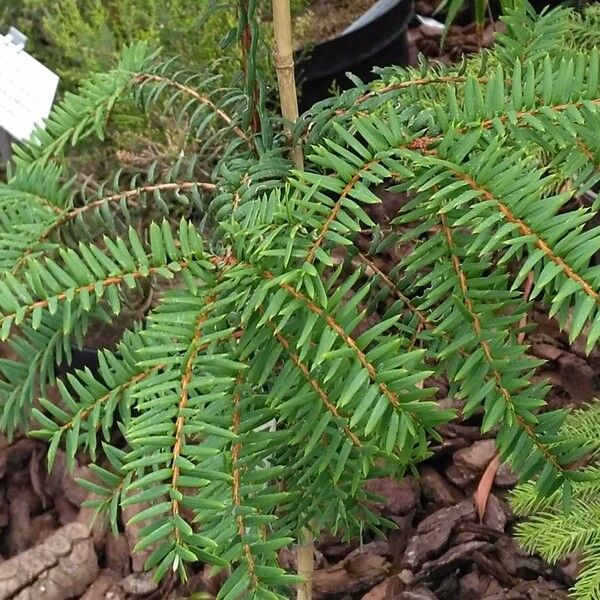
Plant Overview
Known as the White-berry Yew, Pseudotaxus chienii is a rare botanical treasure and a "living fossil" from the misty mountains of southern China. It is the only member of its genus, making it a unique lineage that has survived since the prehistoric era. While it looks remarkably like a common Yew at first glance, its ghostly white seeds give it an ethereal, moonlit appearance that has captivated plant collectors for decades.
🔍 How to Identify
- 🌿 Needle-Like Foliage: The leaves are flat, dark green needles arranged in two neat rows. If you flip a leaf over, you will see two distinct, pale white bands (stomatal bands) that help the plant breathe.
- ⚪ White Arils: Unlike the bright red "berries" of common Yews, this species produces a singular seed wrapped in a fleshy, cup-like structure that is pure, snowy white.
- 🌳 Growth Habit: It typically grows as a slow-moving, multi-stemmed shrub or a small, elegant tree with fibrous, reddish-brown bark that peels away in thin strips.
🏡 In Your Garden
- ⛰️ Mountain Mimicry: In the wild, it grows in humid, evergreen forests. To keep it happy, it requires a "cool-root" environment—high humidity, dappled shade, and protection from harsh afternoon sun which can scorch its ancient needles.
- 🌱 Acidic Soil Needs: It is quite picky about its feet; it demands well-draining, acidic soil. Because it has a sensitive root system, it often "sulks" or fails if transplanted, so choose its forever-home in your garden very carefully.
⚠️ Safety & Toxicity
- 🚫 Status: Highly Toxic.
- 🐾 Details: Much like its relatives in the Taxaceae family, most parts of this plant contain taxines or similar alkaloids. These are dangerous if ingested by humans, dogs, or cats. Always wear gloves when pruning to avoid potential skin irritation, and keep it well out of reach of curious nibblers.
✨ Fun Fact
- 🧬 The Lone Survivor: Pseudotaxus chienii is a "monotypic" genus. This means it is the only species of its kind left on Earth; it has no brothers, sisters, or cousins within its specific genus, standing alone as a unique branch on the tree of life.

Detailed Care Instructions
Pseudotaxus chienii, also known as Chien's yew, is a rare and endangered species of tree that is native to China. Growing this plant can be challenging, but with the right care and conditions, you can successfully cultivate it. Here are some tips on how to grow Pseudotaxus chienii:
- Location: Chien's yew thrives in a well-drained soil that is slightly acidic. Plant it in a location that receives partial to full shade, as it does not tolerate direct sunlight well.
- Watering: Keep the soil consistently moist, but not waterlogged. Ensure good drainage to prevent root rot. Water the plant regularly, especially during hot and dry periods.
- Fertilization: Use a balanced fertilizer formulated for evergreen trees to feed Pseudotaxus chienii during the growing season. Avoid over-fertilizing, as this can harm the plant.
- Pruning: Prune the plant sparingly to maintain its natural shape and encourage healthy growth. Remove any dead, damaged, or crowded branches to improve air circulation and prevent disease.
- Mulching: Apply a layer of organic mulch around the base of the plant to retain moisture, suppress weeds, and provide nutrients as it decomposes.
- Protection: Protect young Chien's yew plants from harsh winter weather by wrapping them in burlap or providing a windbreak. Avoid exposing the plant to extreme heat or cold.
- Propagation: Propagate Pseudotaxus chienii from seeds or cuttings. Collect seeds in the fall and plant them in a potting mix. Cuttings can be taken in the spring and rooted in a rooting hormone before planting.
- Monitoring: Keep an eye out for pests and diseases that may affect Chien's yew, such as scale insects or root rot. Treat any issues promptly to prevent damage to the plant.
By providing the proper care and conditions, you can successfully grow and cultivate Pseudotaxus chienii in your garden. Happy gardening!

Place in a dark room with little light, like a dark bedroom or a spot far away from a window or directly in a north-facing window.

To water the plant, gently pour room temperature water directly onto the soil until it is moist but not waterlogged. Allow the top inch or so of soil to dry out slightly before watering again. Avoid getting water on the leaves and be sure not to let the plant sit in standing water. It is important to maintain consistent, moderate levels of moisture for optimal growth. Avoid overwatering as this can lead to root rot and other issues.
To fertilize Pseudotaxus Chienii, apply a balanced fertilizer with equal parts nitrogen, phosphorus, and potassium. Use a slow-release fertilizer in the spring or early summer. Spread the fertilizer evenly around the base of the plant, being careful not to allow it to come into contact with the leaves or stems. Water the plant thoroughly after applying the fertilizer to help it absorb the nutrients. Repeat this process every 4-6 weeks during the growing season, but avoid fertilizing in the fall and winter.
The soil that is best suited for the Pseudotaxus Chienii plant is a well-draining, slightly acidic soil mix that contains a good amount of organic matter. The plant prefers a soil that is rich in nutrients and moisture-retentive without becoming waterlogged. The pH range of the soil should be between 6.0 and 6.5 to maintain healthy growth. It is recommended that the soil mix consists of peat moss, perlite, sand, and a small amount of fertilized, composted matter. Additionally, it is important to ensure that the soil does not dry out completely, as the plant requires consistent moisture to thrive.
To propagate Pseudotaxus Chienii plant, you can use either seeds or cuttings. Here is how you can propagate this plant using these methods:
- Propagation from seeds:
- Collect fresh seeds from mature Pseudotaxus Chienii fruits.
- Clean the seeds and soak them in water for 24 hours.
- Prepare a well-draining potting mix and sow the seeds at a depth of 1/4 inch.
- Keep the soil consistently moist but not waterlogged.
- Place the pot in a warm, bright location with indirect sunlight.
- Germination may take several weeks to months, so be patient.
- Propagation from cuttings:
- Take semi-hardwood cuttings from healthy, disease-free Pseudotaxus Chienii plant in late spring or early summer.
- Remove the lower leaves from the cutting and dip the cut end in rooting hormone powder.
- Plant the cutting in a well-draining potting mix and water thoroughly.
- Cover the pot with a plastic bag or place it in a propagator to retain moisture.
- Keep the cutting in a warm, bright location with indirect sunlight.
- Rooting may take several weeks to months, so regularly check for root development by gently tugging on the cutting.
With proper care and patience, you can successfully propagate Pseudotaxus Chienii plant from seeds or cuttings to grow new plants.








