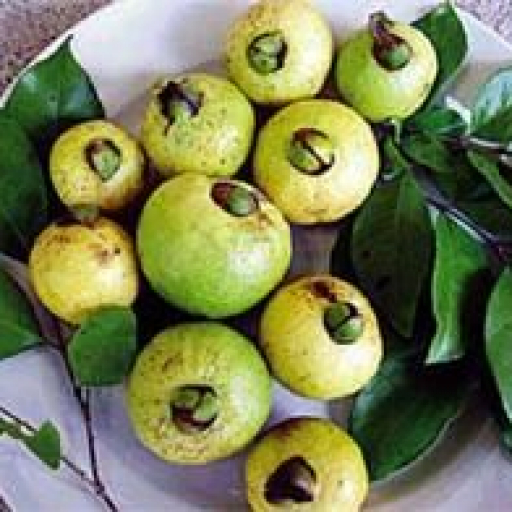
Plant Overview
Often called the Costa Rican Guava or simply Cas, Psidium friedrichsthalianum is a tropical gem prized for its mouth-puckeringly tart fruit and elegant, peeling bark. Native to the rainforests of Central America, this tree is a celebrity in Costa Rica, where its fruit is the star ingredient in refreshing summer juices. Its glossy foliage and white, pom-pom-like flowers make it a stunning ornamental choice for warm-climate gardens.
🔍 How to Identify
- ✨ The Bark: The trunk is a standout feature, displaying smooth, reddish-brown bark that peels away in thin, papery scales to reveal lighter patches beneath.
- 🍃 The Foliage: It sports glossy, dark green leaves that are elliptic in shape and feel leathery to the touch, arranged oppositely along the stems.
- 🍈 The Fruit: It produces small, round fruits (about the size of a golf ball) that turn a pale, waxy yellow when ripe; the flesh inside is white, creamy, and contains several hard seeds.
🏡 In Your Garden
- 💧 Soil & Thirst: Unlike its cousin the common guava, the Cas thrives in acidic, well-draining soil and prefers consistent moisture. It does not handle long periods of drought well, especially when the fruit is setting.
- ☀️ Sun & Space: It loves basking in full sun to produce the best harvest. While it can grow into a small tree, many gardeners prefer to prune it into a multi-stemmed shrub to keep the tangy fruits within arm's reach.
⚠️ Safety & Toxicity
- ✅ Status: Generally safe and non-toxic.
- 🐶 Details: The fruit is edible for humans and is not known to be toxic to cats or dogs. However, because the fruit is extremely acidic, eating large quantities of raw fruit might cause a temporary upset stomach for pets or people with sensitive digestions.
✨ Fun Fact
In Costa Rica, the Cas is so popular that you will find "Sirope de Cas" in almost every grocery store. Interestingly, while it looks like a common guava, it contains significantly more Vitamin C and has a much sharper, lime-like acidity that makes it nearly impossible to eat raw without a sprinkle of salt!

Detailed Care Instructions
To effectively grow Psidium friedrichsthalianum (Cattley guava), follow these steps:
- Choose the right location: These plants thrive in full sun to partial shade. Ensure your chosen location has well-drained soil with a pH between 5.5 and 6.5.
- Propagation: Psidium friedrichsthalianum can be propagated through seeds or cuttings. If using seeds, soak them in water for 24 hours before planting. If using cuttings, take a 4 to 8-inch long stem cutting with multiple nodes.
- Planting: If using seeds, plant them at a depth of ¼ inch in seed trays or small pots filled with seed-starting mix. For cuttings, dip their base in a rooting hormone and insert them in a well-draining potting mix.
- Watering: Water the plants regularly, keeping the soil slightly moist. Avoid overwatering, as it can lead to root rot. Ensure adequate drainage to prevent waterlogging.
- Fertilizing: Feed the plants with a balanced fertilizer, such as a 10-10-10 or 20-20-20, once a month during the growing season. Follow the fertilizer package instructions for application rates.
- Pruning: Prune the plant to maintain its shape and encourage bushier growth. Remove any dead, damaged, or diseased branches. Pruning can be done in spring before new growth emerges.
- Pests and diseases: Psidium friedrichsthalianum is relatively pest and disease resistant. However, watch out for common pests like aphids, scale insects, and whiteflies. Treat infestations with insecticidal soap or neem oil.
- Harvesting: Psidium friedrichsthalianum typically starts producing fruits within 2-3 years after planting. Harvest the ripe fruits when they turn yellow and have a sweet fragrance. Twist and pull the fruits gently to avoid damaging the plant.
Remember to provide regular care, monitoring for any signs of nutrient deficiencies or pest problems. With proper attention, Psidium friedrichsthalianum can thrive and provide you with delicious fruits.
- Understand the specific water requirements of the plant: Psidium Friedrichsthalianum has unique water requirements that may differ from other plants in your garden or home. Before you start watering this plant, research its specific watering needs or consult with a gardening expert.
- Pay attention to the soil conditions: The quality of your soil can impact how often you need to water your Psidium Friedrichsthalianum plant. If the soil is compacted or lacks drainage, it can block water absorption, leading to root rot or mold growth. Make sure to check the soil moisture before watering and choose the right soil mix to ensure optimal drainage.
- Water consistently and adequately: Psidium Friedrichsthalianum plants require adequate water to thrive, but overwatering can be detrimental. Aim for consistent watering, ensuring the soil is always slightly moist but not saturated. In general, it's better to water deeply rather than frequently, as this encourages root growth and reduces the risk of mold or fungus buildup.
- Use the right watering method: Depending on the plant size and location, you may need to use different watering methods, such as a watering can, hose, or drip irrigation system. Avoid splashing water on the leaves or stem, as this can promote disease and pest infestations.
- Adjust water intake based on environmental changes: As the weather changes or the plant enters different growth phases, you may need to adjust watering frequency and amount. For example, during the hot summer months, you may need to water more frequently to prevent the soil from drying out. Similarly, if the plant enters dormancy, you may need to reduce watering to avoid over-hydration.
To fertilize this plant, apply a balanced, slow-release granular fertilizer in early spring and then again in late summer. Use a fertilizer with an NPK ratio of 10-10-10 or 12-12-12. Apply at a rate of 1 tablespoon per square foot of soil surface. Water the fertilizer in well after application. Also, consider adding a layer of compost or well-rotted manure around the base of the plant in early spring to provide additional nutrients. Avoid over-fertilizing as this can lead to excessive growth and reduced fruit production.
Psidium Friedrichsthalianum plants thrive best in well-draining soil that is slightly acidic to neutral in pH. A mix of sandy loam and organic matter, such as compost or peat moss, can provide the ideal growing medium for these plants. Adding perlite or sand to the soil mix can further improve drainage and aeration, which is important for healthy root development. Additionally, incorporating a slow-release fertilizer specifically formulated for woody plants can help provide essential nutrients for vigorous growth. Regularly checking the moisture level of the soil and adjusting watering frequency accordingly is also essential for the overall health and vitality of Psidium Friedrichsthalianum plants.
To propagate this plant, take a cutting from a healthy parent plant using a sharp, sterile knife or pruning shears. The cutting should be about 6-8 inches long and include a few leaves. Remove any leaves from the lower half of the cutting, leaving only a few at the top.
Prepare a pot with well-draining soil and create a hole using a pencil or similar object. Dip the bottom of the cutting in rooting hormone and place it in the hole. Gently pack the soil around the cutting and water it thoroughly.
Place the pot in a warm and humid location, but out of direct sunlight. Keep the soil moist but not waterlogged, and mist the cutting with water daily to maintain humidity. After a few weeks, new growth should appear, indicating that the cutting has rooted.
Gradually acclimate the new plant to brighter light and drier conditions, then transplant it into a larger pot or into your garden when it is large enough.








