Plant Overview
Often called the Parrot-flower Mistletoe, Psittacanthus cucullaris is a flamboyant "thief" of the tropical canopy. Native to the lush forests of Central and South America, this plant doesn't bother with the soil; instead, it perches high on the branches of host trees, stealing water while showing off its own brilliant, fire-colored blooms. In many regions, these bright clusters are considered the "jewelry" of the jungle, marking the spots where tropical birds gather to feast.
🔍 How to Identify
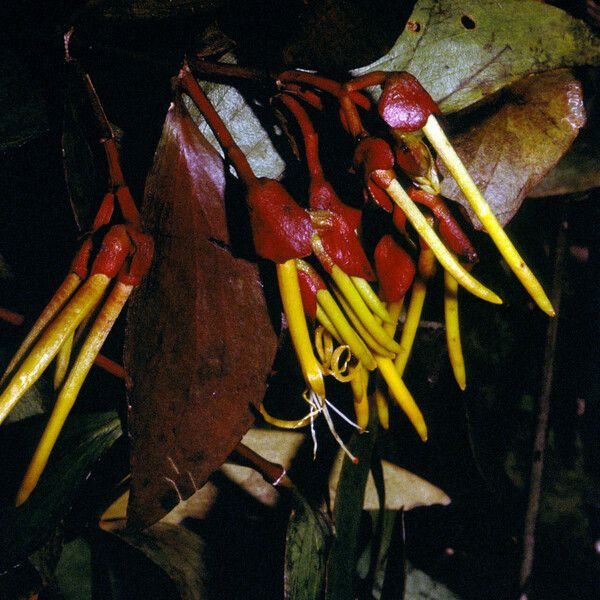
- 🦜 The "Parrot" Blooms: The flowers are long, tubular, and usually a striking shade of orange-red with yellow tips, mimicking the vibrant colors of a macaw or parrot.
- 🍃 Leathery Foliage: Its leaves are thick, waxy, and deep green. Unlike many other parasites, this plant produces its own energy through photosynthesis, so the leaves look healthy and robust.
- 🌳 The Attachment: Look for a woody swelling (called a haustorium) where the plant’s stem meets the branch of a host tree. It will never be found growing directly out of the ground.
🏡 Habitat & Ecology
- 💧 A Hemiparasitic Lifestyle: This plant is a "half-parasite." While it can make its own food from the sun, it relies entirely on its host tree for water and minerals. Because of this, it can be quite taxing on a host tree if the infestation becomes too heavy.
- 🐦 The Hummingbird Diner: The tubular shape of the flowers is no accident; it is perfectly evolved for the long beaks of hummingbirds. These birds are the plant's primary pollinators and are responsible for its survival in the wild.
⚠️ Safety & Toxicity
- 🚫 Toxic if Ingested: Like many members of the mistletoe family, the berries and leaves of Psittacanthus cucullaris contain viscins and other compounds that are toxic to humans and pets.
- 🐾 Pet Warning: Keep curious cats or dogs away from any fallen branches or berries, as ingestion can lead to digestive upset, blurred vision, or more serious cardiovascular issues.
✨ Fun Fact
The seeds of this plant are covered in a super-sticky substance called viscin. When a bird eats the fruit and tries to wipe its beak on a branch (or "discards" the seed later), the seed glues itself instantly to the wood, ensuring it stays high in the canopy where it can begin its parasitic life!

Detailed Care Instructions







