Plant Overview
Commonly called the Four-eared Brake Fern or Striped Brake, this elegant tropical beauty is a favorite for terrarium enthusiasts and indoor gardeners alike. Originating from lush, humid regions across the globe, it brings a prehistoric, feathery texture to any plant collection. Its delicate fronds often look like they’ve been hand-painted with silver, making it a standout in a sea of solid green.
🔍 How to Identify
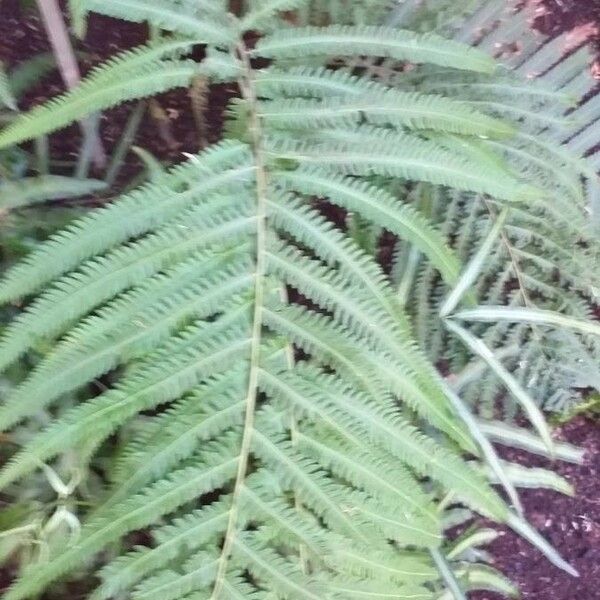
- 🌿 The "Four-Ears": Its name quadriaurita comes from the way the lower leaflets often fork into two, creating a distinct "four-eared" appearance at the base of the frond.
- 🎨 Silver Variegation: Most cultivated varieties feature a striking, bright silvery-white stripe running down the center of each emerald-green leaflet.
- ✂️ Serrated Edges: The pinnae (leaflets) are long and slender with finely toothed margins, giving the plant a delicate, comb-like silhouette.
🏡 In Your Garden
- ☁️ Humidity Lover: This fern is a true child of the tropics; it breathes through its leaves and will quickly develop crispy, brown edges if the air in your home is too dry.
- 💧 Thirst for Consistency: Unlike succulents, this plant lacks water-storage organs. It prefers its soil to stay "wrung-out sponge" moist—never bone dry, but never sitting in a stagnant puddle which can lead to root suffocation.
- 🛡️ Sheltered Spaces: Because of its thin, papery fronds, it is highly sensitive to cold drafts and direct midday sun, which can bleach the beautiful variegation right off the leaves.
⚠️ Safety & Toxicity
- ✅ Pet Friendly: Good news for animal lovers! The Pteris genus is generally considered non-toxic to cats, dogs, and horses.
- 🧤 Mild Sensitivity: While not poisonous, the tiny spores found on the underside of mature fronds can occasionally cause mild respiratory or skin irritation for individuals with extreme plant sensitivities.
✨ Fun Fact
Ferns like the Pteris quadriaurita are known as "hyperaccumulators." They are scientifically famous for their incredible ability to suck heavy metals, particularly arsenic, out of the soil, effectively cleaning the environment as they grow!

Detailed Care Instructions
| Humidity | Normal |
| Lighting | Full Sun |
| Difficulty | Medium |
| Temperature | 15°C - 24°C |
| Hardiness Zones | 10 - 11 |
To grow Pteris Quadriaurita (also known as the four-leaf brake fern), you can follow these steps:
- Acquire the plant: You can obtain Pteris Quadriaurita through online nurseries, local garden centers, or by propagation from an existing plant.
- Select a suitable location: Pteris Quadriaurita prefers partial shade or filtered sunlight. Choose a location that receives indirect light for a few hours a day.
- Soil requirements: Use a well-draining potting mix with a balanced pH level. Adding organic matter like compost can help improve the soil's fertility and drainage.
- Planting: Choose a pot or container that has drainage holes to prevent waterlogging. Plant the Pteris Quadriaurita in the pot, making sure the crown of the plant is level with the soil surface.
- Watering: Keep the soil consistently moist but avoid overwatering. Pteris Quadriaurita prefers high humidity, so mist the foliage occasionally.
- Temperature and humidity: Pteris Quadriaurita thrives in a warm and humid environment. Ensure the temperature remains between 60-80°F (15-27°C) and maintain a relative humidity of around 50-70%.
- Fertilization: Apply a balanced, water-soluble fertilizer every two to three weeks during the growing season (spring and summer). Follow the package instructions for correct dilution and application.
- Pruning: Regularly remove any dead, damaged, or discolored fronds to maintain the plant's health and appearance. Use clean and sharp pruning shears to avoid the spread of diseases.
- Repotting: As the Pteris Quadriaurita grows, it may outgrow its container. Repot it into a slightly larger pot with fresh potting soil, preferably in spring. This will provide more room for the roots to grow.
- Pest control: Keep an eye out for common pests like aphids, spider mites, or mealybugs. If you notice any infestation, apply an appropriate insecticidal soap or organic pest control solution.
Remember to regularly monitor the plant's health and adjust care practices accordingly. With proper care, your Pteris Quadriaurita should thrive and grow into a beautiful fern.

Place in a dark room with little light, like a dark bedroom or a spot far away from a window or directly in a north-facing window.

1. Determine the watering needs of the plant: Before watering the plant, it is important to understand how much water it needs. Pteris Quadriaurita plants prefer moist but well-draining soil, and they do not like to be kept too wet.
2. Check the soil moisture: Check the soil moisture level by inserting your finger about one inch into the soil. If the soil feels dry, it is time to water.
3. Water the plant thoroughly: Once you have determined that the plant needs water, water it deeply and thoroughly. Use room temperature water and pour it directly onto the soil, avoiding the leaves.
4. Drain excess water: Allow the water to drain out of the bottom of the pot, and then discard any excess water. Do not allow the plant to sit in standing water.
5. Monitor soil moisture: Check the soil moisture regularly, and only water the plant when the soil feels dry to the touch. Over-watering can result in root rot and other problems.
6. Adjust watering frequency: Depending on the environment, the plant may require more or less water. Adjust the watering frequency accordingly, and avoid over-watering or under-watering the plant.
To fertilize this plant, use a balanced, water-soluble fertilizer. Mix the fertilizer according to the manufacturer's instructions and apply it to the soil once a month during the growing season, avoiding getting any on the leaves. Water the plant thoroughly after fertilizing to ensure the nutrients are distributed evenly throughout the soil. Avoid over-fertilizing, as this may lead to burns on the plant's roots and leaves.
Pteris Quadriaurita plant thrives well in well-draining soil that is rich in nutrients with a slightly acidic to neutral pH level. The soil should be a mix of organic and inorganic matter, ideally with a mix of peat moss, perlite, vermiculite, and sand. The plant prefers slightly moist soil, therefore, the soil should retain moisture while allowing for proper drainage to prevent over-watering. The use of a good quality potting mix is recommended to ensure proper soil properties and nutrient balance. Additionally, the plant should be regularly fertilized with a balanced liquid fertilizer to support healthy growth.
To propagate this plant, you will need to identify the fronds that have spores on the undersides. These are small, brownish dots that usually appear in clusters near the tips of the fronds. Once you have located a frond with spores, cut it off at the base and place it in a plastic bag. Shake the bag gently to release the spores.
Next, prepare a container of sterile potting mix and moisten it lightly. Spread the spores evenly over the surface of the potting mix and cover the container with plastic wrap. Place the container in a warm, bright location out of direct sunlight.
After a few days, tiny green filaments will begin to emerge from the spores. As they grow, they will develop into small ferns with fronds that look like miniature versions of the parent plant. Once the new ferns have grown to a sufficient size, they can be transplanted into their own individual containers or directly into the garden.
Common pests of the silver leaf fern include Mealybugs, spider mites, aphids. Make a habit of checking your silver leaf fern frequently for pests so that any infestations can be caught and managed early.








