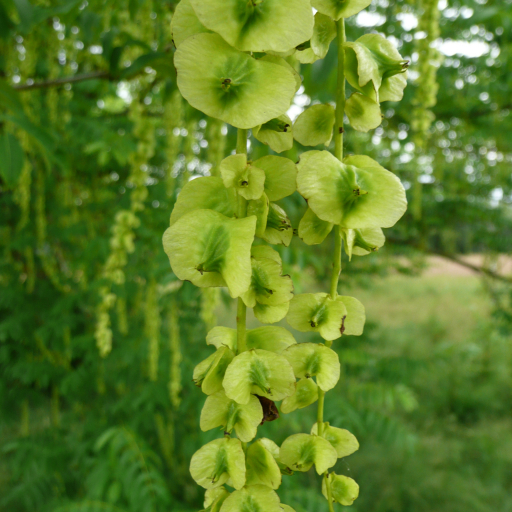
Plant Overview
Known as the Caucasian Wingnut, this tree is the botanical equivalent of a grand emerald chandelier. Native to the lush riparian forests of the Caucasus and Iran, it is cherished for its majestic, spreading canopy and dramatic, hanging seed chains. While it resembles an Ash tree at first glance, its distinctive "winged nuts" reveal its true identity as a relative of the Walnut.
🔍 How to Identify
- 🍃 The Foliage: Large, pinnate leaves that can reach up to 2 feet long, consisting of 11 to 21 serrated leaflets. They create a dense, tropical-looking canopy.
- ⛓️ The Seed Chains: Its most striking feature is the pendulous "racemes" (flower/seed strings) that can hang down up to 20 inches, looking like green necklaces draped from the branches.
- 🪵 The Bark: Mature trees develop a rugged, deeply furrowed grey bark that adds a sculptural quality to the landscape even in winter.
🏡 In Your Garden
- 💧 Water Lover: Because it naturally grows along riverbanks, this tree has a "thirst" for moisture. It is an excellent choice for stabilizing damp soils or planting near large ponds, though it hates drying out completely.
- 🌳 Space & Suckering: This is not a tree for small suburban plots. It grows rapidly and has a habit of "suckering"—sending up new shoots from the roots—which can create a small forest if not managed. It needs a wide berth to showcase its expansive, low-branching crown.
⚠️ Safety & Toxicity
- 🟢 Status: Generally Non-Toxic.
- 🐾 Details: The Caucasian Wingnut is not considered poisonous to humans, dogs, or cats. However, like many large trees, its fallen nutlets and heavy leaf litter can be a tripping hazard, and the vigorous root system can lift nearby pavement or pipes if planted too close to structures.
✨ Fun Fact
The "Wingnut" name isn't just a quirky label; the tiny nuts are actually flanked by two circular, leafy wings that help them spin like miniature helicopters as they fall, allowing the wind to carry them far away from the parent tree.

Detailed Care Instructions
To water this plant, it is important to first check the soil moisture level before adding any additional water. This can be done by sticking your finger roughly 2-3 inches into the soil and checking for moisture. If the soil feels dry to the touch, it is time to water the plant.
The amount of water needed will vary depending on the size of the plant and the environment it is in. It is important to water thoroughly, ensuring that the water reaches all parts of the root system. However, it is also important not to overwater, as this can lead to waterlogged roots and other issues.
During hot, dry weather, the plant may require more frequent watering than during cooler, wetter periods. Additionally, the type of soil the plant is growing in can also impact how often it needs to be watered.
Finally, it is important to avoid getting water on the leaves or foliage of the plant, as this can lead to fungal and bacterial diseases. Instead, aim to water at the base of the plant, allowing the water to soak into the soil and reach the roots.
When planting Pterocarya Pterocarpa, it is important to choose the right soil type to ensure healthy growth. The ideal soil should be well-draining and have a pH of 6.0 to 7.5. The plant prefers a rich and fertile soil that contains a good amount of organic matter to support its growth. A mixture of loamy soil, sand, and organic compost is recommended. The soil should be prepared and amended before planting to ensure that it is loose and well-draining. It should also be kept moist, but not waterlogged, to avoid root rot. Pterocarya Pterocarpa prefers full sun to partial shade, and should be planted in an area where it can receive at least six hours of direct sunlight a day.








