Plant Overview
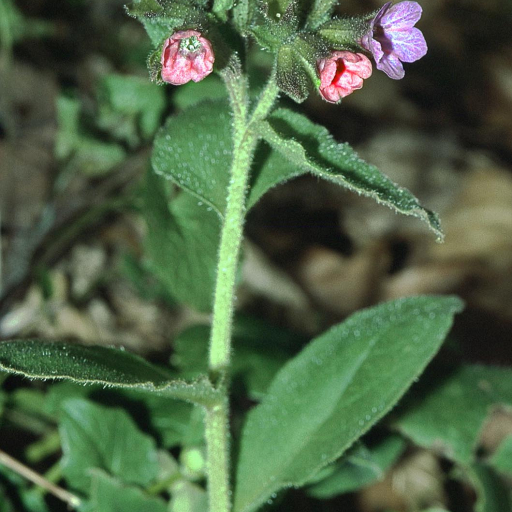
Often called the Unspotted Lungwort, Pulmonaria obscura is a woodland gem that heralds the arrival of spring with its charming color-changing blossoms. Unlike its more famous cousins with silver-speckled leaves, this variety remains a deep, lush green, allowing its vibrant clusters of pink-to-blue flowers to take center stage. In medieval folklore, it was tied to the "Doctrine of Signatures," where the lung-like shape of its leaves led healers to believe it could cure respiratory ailments.
🔍 How to Identify
- 🍃 Foliage: Broad, heart-shaped leaves that are a solid, deep green. Unlike other Lungworts, these lack the characteristic silvery-white spots, giving the plant a more understated, "obscure" look.
- 🌸 Dual-Colored Blooms: Clusters of funnel-shaped flowers that transition from a soft rose-pink to a deep violet-blue as they age, often showing both colors on the same stem.
- 🧸 Bristly Texture: The entire plant is covered in fine, stiff hairs, giving the leaves and stems a rough, sandpaper-like feel.
🏡 In Your Garden
- 🌳 The Shade Specialist: This plant thrives in the dappled light of a woodland garden or under the canopy of deciduous trees. It acts as a perfect groundcover for those tricky, low-light corners where grass refuses to grow.
- 🐝 Early Pollinator Magnet: As one of the earliest bloomers in the spring, it provides a vital nectar source for bumblebees and the first butterflies emerging from hibernation.
- 💧 Moisture Sensitivity: It is quite dramatic about its water needs. If the soil dries out completely, the large leaves will wilt flat against the ground as a distress signal, though they usually "bounce back" quickly after a deep drink.
⚠️ Safety & Toxicity
- 🐕 Pet & Human Safety: Generally considered non-toxic to humans and pets, though it is not a culinary herb. Ingestion may cause mild stomach upset.
- 🧤 Skin Sensitivity: The stiff, bristly hairs on the foliage can cause minor skin irritation or a "scratchy" sensation for gardeners with sensitive skin. It is best to wear gloves when dividing or pruning the plant.
✨ Fun Fact
🧪 Nature's pH Strip: The dramatic color change in the flowers is caused by a shift in the acidity (pH) of the cell sap as the flower matures. This serves as a "traffic light" for bees; the younger, nectar-rich pink flowers are the primary target, while the older blue flowers signal that the "kitchen is closed."

Detailed Care Instructions
To grow Pulmonaria obscura, also known as lungwort, follow these steps:
- Choose a suitable location: Pulmonaria obscura prefers partial to full shade. It is best suited for woodland gardens or shaded borders. Ensure the location has well-draining soil.
- Prepare the soil: Amend the soil with organic matter like compost to improve drainage and enrich it with nutrients.
- Planting: Dig a hole that is slightly larger than the root ball of the plant. Place the plant in the hole, making sure the crown (where the stem meets the roots) is level with or slightly above the soil surface. Backfill the hole with soil and firm it gently around the plant.
- Watering: Keep the soil consistently moist but not waterlogged. Water the plant regularly, especially during dry periods. Avoid overhead watering, as it can encourage fungal diseases.
- Mulching: Apply a layer of organic mulch around the plant, such as wood chips or shredded leaves. Mulching helps retain moisture and suppresses weed growth.
- Fertilizing: Pulmonaria obscura generally doesn't require additional fertilization if the soil is well-amended. However, you can apply a balanced slow-release fertilizer in early spring if desired.
- Pruning: Prune any dead or faded foliage in early spring before new growth appears. This helps maintain the plant's appearance and prevents disease.
- Division: Every few years, divide the plant to rejuvenate it and control its spread. Divide the clumps in early spring or after flowering, carefully separating the rootball into smaller sections and replanting them at the same depth.
- Pest and disease control: Pulmonaria obscura is generally resistant to pests and diseases. However, keep an eye out for slugs and snails, which can munch on the leaves. An organic slug control method, such as beer traps or copper tape, can help keep them away.
By following these guidelines, you should be able to successfully grow Pulmonaria obscura and enjoy its attractive foliage and flowers.

Place in a window with dappled sun or a spot in the middle of a room. Or directly in a window facing west or east.

To water the Pulmonaria Obscura plant, it is important to consider a few factors in order to provide the ideal conditions for its growth. Begin by assessing the soil moisture level before watering, as it prefers slightly moist but well-draining soil. Insert your finger about an inch into the soil near the plant's base to determine whether it feels dry or still retains moisture.
When watering, make sure to do so slowly and evenly, allowing the water to soak into the soil and reach the plant's roots. Avoid overwatering, as this can lead to root rot or other issues. It is recommended to water the plant thoroughly, allowing the excess water to drain away. Empty the saucer or tray beneath the pot to prevent the roots from sitting in water.
Keep an eye on the plant to monitor its water needs. If the soil dries out too quickly, it may need more frequent watering. Conversely, if the leaves become yellow or the plant starts to wilt, it may be a sign of overwatering. Adjust the watering frequency accordingly to maintain the moisture level that suits the plant's requirements.
Consider the environmental conditions when determining the watering schedule. During hotter or sunnier periods, the soil may dry out more quickly, necessitating more frequent watering. In contrast, during cooler or more humid periods, the plant may require less water. Additionally, if the plant is placed in a pot or container, it may need more frequent watering compared to those planted directly in the ground, as containers tend to dry out faster.
Lastly, keep in mind that every plant is unique, and factors such as sunlight, temperature, humidity, and pot size can all influence its water needs. Regularly observe the Pulmonaria Obscura plant, and adjust the watering routine accordingly to promote healthy growth and maintain optimal moisture levels.
To fertilize the Pulmonaria Obscura plant, use a balanced, water-soluble fertilizer with equal ratios of nitrogen, phosphorus, and potassium (NPK). Dilute the fertilizer according to the instructions on the packaging. Apply the diluted solution around the base of the plant, taking care not to let it come into direct contact with the leaves or stems. Fertilize the plant once every four to six weeks during the growing season, typically from early spring to late summer. Additionally, ensure the plant is thoroughly watered before fertilizing to prevent root burn. Monitor the plant's response to the fertilizer and adjust the frequency or concentration if necessary.
The ideal soil for the plant should be well-draining with moderate water retention capacity. It should be slightly acidic to neutral in pH, with a range of 6.0-7.5. The soil should be loamy and rich in organic matter, with good aeration and texture. It should be free from any harmful toxins or contaminants that may affect the plant's growth or health. Adding compost or well-rotted manure to the soil can enhance its fertility and improve the overall soil structure. It is also advisable to supplement the soil with a balanced fertilizer to provide the necessary nutrients required for optimal growth. Overall, the soil should offer the plant a suitable environment for healthy growth and development.
Propagation of Pulmonaria Obscura plant can be done through various methods such as division, stem cuttings, and seed propagation.
- Division: To propagate Pulmonaria Obscura through division, wait until the plant is established and has formed multiple clusters of leaves. Carefully dig up the plant and separate the clusters, ensuring each division has a good amount of roots and leaves. Replant the divisions in a suitable location with well-draining soil, keeping them adequately watered until they establish themselves.
- Stem Cuttings: To propagate Pulmonaria Obscura using stem cuttings, select a healthy and mature stem with a node, preferably during the growing season. Make a clean cut just below a node and remove any lower leaves. Dip the cut end in rooting hormone to encourage root development, then plant the cutting in a container with moistened potting soil. Place the container in a warm and shaded area, ensuring the soil remains consistently moist. Over time, the cutting will develop roots and can be transplanted into individual pots.
- Seed Propagation: To propagate Pulmonaria Obscura from seeds, collect mature seeds from the plant when they are fully ripe. Sow the seeds in a seed-starting tray filled with well-draining potting mix, and lightly cover them with a thin layer of soil. Keep the tray in a partially shaded area and maintain consistent moisture. Germination can take anywhere from a few weeks to a few months. Once the seedlings have developed a few sets of true leaves, they can be transplanted into individual pots or directly into the garden.
Regardless of the propagation method used, it is important to provide the newly propagated plants with suitable growing conditions. Pulmonaria Obscura prefers partial shade to full shade, well-draining soil, and regular watering. Monitor the plants closely, protecting them from extreme weather conditions and providing appropriate care to promote healthy growth.








