Plant Overview
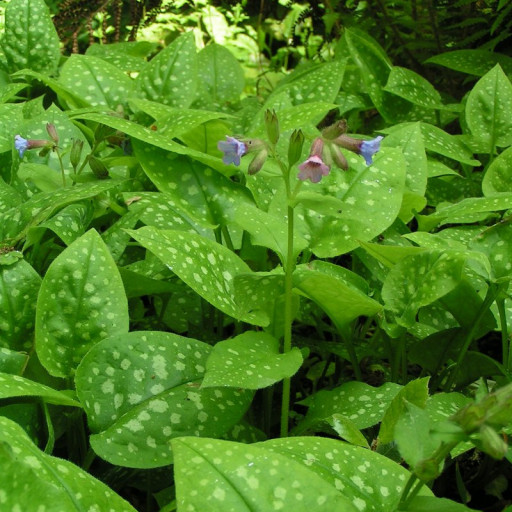
Often called "Lungwort" or "Mary’s Tears," this woodland charmer is famous for its silver-spotted leaves that look like a constellation across the forest floor. In medieval times, practitioners of the "Doctrine of Signatures" believed its lung-shaped, spotted leaves were a sign from nature that it could cure respiratory ailments. Today, it is a beloved shade-garden staple, prized for its early spring blooms that magically shift colors.
🔍 How to Identify
- 🍃 The Spotted Foliage: Broad, oval leaves that are deep green but decorated with irregular, silvery-white splotches.
- 🌸 Multicolor Blooms: Small, funnel-shaped flowers that often appear in two colors simultaneously—starting as a bright pink or red and maturing into a deep violet-blue.
- 🧥 Bristly Texture: The entire plant is covered in short, stiff hairs, giving the leaves a rough, sandpaper-like feel.
🏡 In Your Garden
- 🌳 The Perfect Understory: Naturally a forest-dweller, it thrives in damp, shaded spots where other plants might struggle, making it an excellent groundcover beneath deciduous trees.
- 💧 The "Fainting" Plant: Lungwort is very expressive about its needs; if the soil dries out too much, the leaves will wilt flat to the ground. However, it is remarkably resilient and usually perks up within an hour of being watered.
- 🌬️ Mildew Watch: Because of its hairy leaves, it prefers good air circulation. If the foliage looks "dusty" in late summer, it may have powdery mildew—simply shear the old leaves back to encourage fresh, healthy growth.
⚠️ Safety & Toxicity
- 🐾 Mildly Toxic: The plant contains small amounts of pyrrolizidine alkaloids. While not usually life-threatening, it can cause stomach upset if ingested by cats, dogs, or curious children.
- 🖐️ Skin Irritant: The stiff, bristly hairs on the stems and leaves can cause "contact dermatitis" (an itchy rash) for people with sensitive skin. It is best to wear gloves when dividing or pruning this plant.
✨ Fun Fact
- 🧪 The pH Signal: The color change in the flowers isn't just for show! As the flower ages or is pollinated, the sap inside the petals changes its acidity (pH) level, which triggers the shift from pink to blue. This acts as a signal to bees, helping them identify which flowers are currently the richest in nectar.

Detailed Care Instructions
| Color | Brilliant Blue, Pink, And White |
| Soil Ph | 7 To 7.5 |
| Humidity | Normal |
| Lighting | Shade |
| Soil Type | Organically Rich, Moist Soil |
| Bloom Time | Early Spring |
| Difficulty | Medium |
| Plant Type | Perennial Flower |
| Hibernation | Cold Period |
| Mature Size | Up To 14 Inches Tall; Spread 1.5 To 2 Feet Wide |
| Native Area | Widespread Throughout Europe |
| Temperature | Min 16°C |
| Sun Exposure | Part Shade To Full Shade |
| Hardiness Zones | 4 To 8 |
To grow Pulmonaria Officinalis (also known as Lungwort), you can follow these steps:
- Start with a young plant: Purchase a young Pulmonaria Officinalis plant from a reputable nursery or garden center. It is easier to establish and grow a young plant rather than starting from seeds.
- Choose the right location: Pulmonaria Officinalis prefers partial shade to full shade, so select a spot in your garden that receives filtered sunlight or only a few hours of direct sunlight per day. It also prefers moist and well-draining soil.
- Prepare the soil: Before planting, prepare the soil by removing any weeds, rocks, or debris. Loosen the soil and amend it with organic matter such as compost or well-rotted manure to improve drainage and fertility.
- Plant the Pulmonaria: Dig a hole slightly larger than the root ball of the plant. Place the plant in the hole, ensuring that the crown (where the stems meet the roots) is level with or slightly above the soil surface. Fill the hole with soil and gently firm it around the plant, ensuring there are no air pockets.
- Water the plant: After planting, thoroughly water the Pulmonaria to help settle the soil and provide moisture. Keep the soil consistently moist but not waterlogged during the growing season.
- Mulch around the plant: Apply a layer of organic mulch such as wood chips or straw around the base of the plant to conserve moisture, suppress weeds, and protect the roots from temperature extremes.
- Maintain regular watering: Pulmonaria Officinalis prefers consistently moist soil, so water it regularly, especially during dry periods. Avoid overwatering, as it can lead to root rot.
- Prune as needed: Pulmonaria Officinalis tends to spread through underground rhizomes, so it may require occasional pruning to contain its growth. Remove any dead or damaged leaves and spent flower stalks to maintain the plant's overall appearance.
- Fertilize sparingly: Pulmonaria Officinalis generally does not require heavy fertilization. However, if the plant shows signs of nutrient deficiency, you can apply a balanced, slow-release fertilizer in spring.
By following these steps, you should be able to successfully grow Pulmonaria Officinalis in your garden and enjoy its attractive foliage and delicate flowers.

Place in a window with dappled sun or a spot in the middle of a room. Or directly in a window facing west or east.

To water this plant, you should first identify its preferred growing conditions. Pulmonaria Officinalis prefers moist, well-draining soil and partial to full shade. You will want to water it regularly, enough to keep the soil consistently moist but not waterlogged. Overwatering can lead to root rot and other fungal diseases, so it's important not to let the soil become too saturated.
When watering the plant, aim to keep the water around the roots and avoid getting it on the leaves or flowers. This can help prevent issues with fungal diseases or other problems. You may also want to consider using a drip irrigation system or a watering can with a narrow spout to ensure precise watering.
Finally, keep an eye on the plant throughout the growing season and adjust your watering routine as needed. If you notice the soil becoming too dry, increase the amount of water you give the plant. If you see signs of overwatering, cut back on how much you're watering. With a little care and attention, your Pulmonaria Officinalis plant should thrive and produce lovely flowers each year.
To fertilize this plant, mix a balanced fertilizer, such as a 10-10-10, with soil or compost and apply it around the base of the plant in early spring before it begins actively growing. Repeat the application once more in mid-spring. Avoid over-fertilizing as this plant prefers a nutrient-rich but well-draining soil.
The ideal soil for this plant should be well-draining and rich in organic matter. It should have a slightly acidic to neutral pH, ranging from 6.0 to 7.0. It is recommended to use a mix of loam, compost, and peat moss, as this will provide the necessary nutrients and moisture retention for healthy growth. It is important to avoid using soil that is too heavy or dense, as this can lead to waterlogging and root rot. Additionally, this plant prefers partial to full shade, so it is important to choose a location that provides adequate light conditions for optimal growth.
The plant can be propagated by division in the early spring or fall. Carefully excavate the plant and separate the roots into smaller clumps, making sure each clump has a sufficient amount of roots and foliage. Transplant the divisions into new soil that has been well-amended with compost or other organic matter. Keep the new plants consistently moist until they are established. Alternatively, the plant can be propagated by seed. Harvest the seeds in the summer or fall, and sow them in a seed tray or directly into the soil in the spring. The seeds will germinate in 1-2 weeks and should be kept moist until they are well-established.








