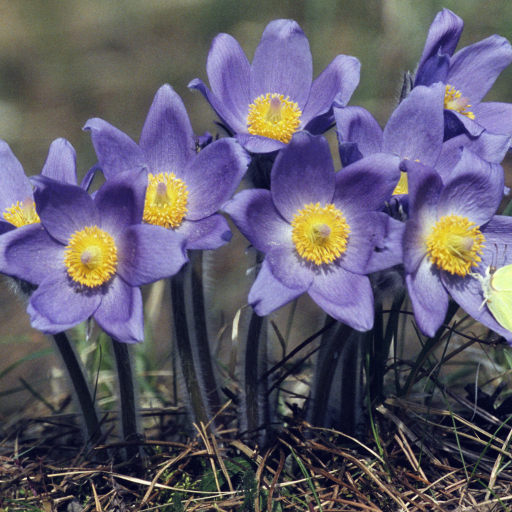
Plant Overview
Often called the "Prairie Crocus" or the "Windflower," Pulsatilla patens is a legendary harbinger of spring. This hardy perennial is famous for blooming while snow is still on the ground, looking like a delicate purple chalice wrapped in a cozy fur coat. In many indigenous cultures, its arrival signaled the end of winter and the awakening of the earth.
🔍 How to Identify
- 🌸 The Bloom: Large, upright, bell-shaped flowers that range from pale lavender to deep violet, featuring a striking cluster of bright yellow stamens at the center.
- 🧶 Silvery Fuzz: The entire plant—stems, buds, and leaves—is covered in long, silky white hairs. This "fur" isn't just for looks; it acts like a thermal jacket to protect the plant from late-season frosts.
- 💨 Feathery Seed Heads: Once the petals fall, the plant develops dramatic, plume-like seed heads that look like puffs of smoke or wild, grey hair blowing in the wind.
🏡 In Your Garden
- 🏜️ The Taproot Rule: This plant grows a long, stubborn taproot to find water deep underground. Because of this, it is notoriously difficult to transplant. Once you plant it, avoid moving it at all costs, as the root is very sensitive to disturbance.
- ☀️ Lean and Mean Soil: It thrives in "poor" soil that is sandy or gravelly. If you give it too much fertilizer or rich compost, it may grow too quickly and flop over. It craves full sun and sharp drainage to prevent its roots from rotting during the winter.
⚠️ Safety & Toxicity
- 🚫 Toxic if Ingested: Like many members of the Buttercup family, the Pasqueflower contains protoanemonin. It is toxic to humans, cats, dogs, and horses if eaten, causing gastrointestinal distress.
- 🧤 Skin Sensitivity: The sap can be a skin irritant. If you have sensitive skin, it is a good idea to wear gloves when handling the plant or cutting the seed heads to avoid redness or blistering.
✨ Fun Fact
The Pasqueflower is a "heliotropic" plant, meaning its blossoms act like tiny satellite dishes. They follow the sun across the sky during the day to maximize heat absorption, making the inside of the flower significantly warmer than the chilly spring air outside!

Detailed Care Instructions

Place in a bright room that is sun drenched almost all day. Or directly in a south-facing window.

Some plants require more regular watering than others, which should be done every few days. It's critical to maintain the soil moist all of the time. The water requirements of the same plant placed in pots with varying sizes will differ. Because the water in the smaller pot evaporates faster than the water in the larger pot, it will require more watering. Regardless of pot size, the surface should constantly be maintained moist.








