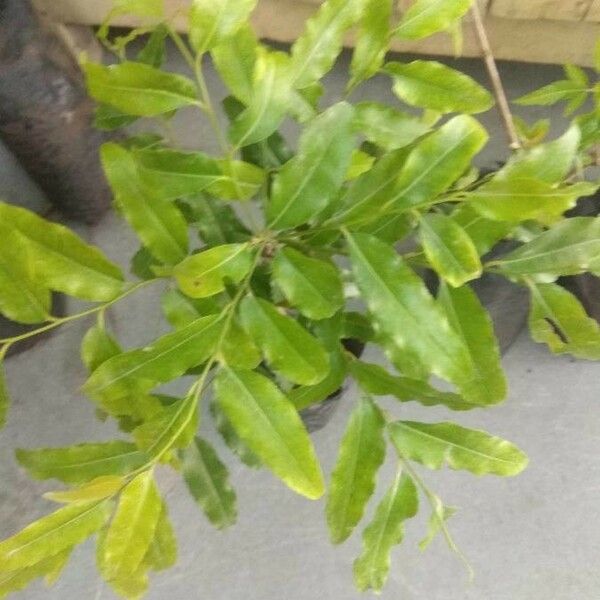
Plant Overview
Often called the "Lucky Bean Tree" or the "Child’s Life Tree," this graceful evergreen is deeply rooted in South Asian tradition. Its Sanskrit name, Putranjiva, literally translates to "life of the son," stemming from an ancient belief that the tree possesses the power to protect children and ensure their longevity. Beyond its spiritual significance, it is a favorite for its elegant, weeping silhouette and dense, cooling shade.
🔍 How to Identify
- 🌿 The Weeping Silhouette: It features long, pendulous branches that droop toward the ground, giving the tree a majestic, willow-like appearance.
- 🍃 Wavy Foliage: The leaves are dark green, glossy, and lance-shaped with distinctively wavy (undulate) edges that catch the light beautifully.
- 🫒 Stone Fruit: It produces small, oval, gray-green fruits. When the flesh is removed, it reveals a single, hard, wrinkled seed—the "lucky bean."
🏡 In Your Garden
- 💧 Humidity and Hydration: This tree thrives in tropical and subtropical climates. It loves moisture and humidity; if the air is too dry, the leaf tips may turn brown and crisp.
- 🧱 Slow and Steady: Because it is a relatively slow grower with a deep root system, it doesn't like being moved once it is in the ground. Choose its permanent home carefully, ensuring it has plenty of room to reach its full 12–15 meter height.
⚠️ Safety & Toxicity
- ✅ Generally Safe: The plant is non-toxic to touch and is frequently used in traditional herbalism.
- 🐕 Pet Caution: While the seeds are used in jewelry, they contain mustard oils and glycosides that can cause stomach upset if chewed or swallowed by curious dogs or cats. Keep the "beans" out of reach of pets.
✨ Fun Fact
The hard, stony seeds of the Putranjiva are traditionally strung together to create protective amulets or "Malas." In many Indian villages, these necklaces are still gifted to children as a biological "good luck charm" to ward off illness and evil spirits.

Detailed Care Instructions
To grow a Putranjiva Roxburghii plant, also known as the child-life tree, you can follow these steps:
- Purchase seeds or young plants: Find a reputable nursery or online retailer that sells Putranjiva Roxburghii seeds or young plants. Make sure you are buying from a trusted source.
- Choose an appropriate location: Putranjiva Roxburghii prefers well-drained soil, so select a location in your garden or yard where the soil drains well. The plant also prefers partial shade, so choose a spot that receives some sunlight, but is not in direct sunlight all day.
- Prepare the soil: Prepare the soil by loosening it with a garden fork or tiller. Remove any weeds or grass.
- Sow the seeds or plant the young plant: If you have seeds, sow them in the prepared soil at a depth of about 0.5 inches. If you have a young plant, dig a hole slightly larger than the root ball and place the plant in the hole. Gently backfill the hole and firm the soil around the plant.
- Water regularly: Water the plant regularly, especially during the initial stages of growth. Keep the soil moist, but not waterlogged.
- Provide some shade: If your location receives intense sunlight, provide some shade to protect the plant from the heat of the sun. You can use stakes and shade cloth or plant the Putranjiva Roxburghii near taller trees or shrubs that provide shade.
- Fertilize: Every few months, you can add a balanced, slow-release fertilizer to provide the plant with essential nutrients. Follow the instructions on the fertilizer packaging for proper application.
- Pruning: Prune the plant occasionally to maintain its shape and promote healthy growth. Remove any dead or damaged branches.
- Monitoring pests and diseases: Look out for pests such as aphids or mealybugs, and treat them accordingly if detected. Keep an eye on common plant diseases like leaf spots or powdery mildew. If you notice any signs of disease, follow appropriate treatments.
- Patience: Putranjiva Roxburghii is a slow-growing plant, so be patient and give it time to establish itself and grow.
Remember to research and understand the specific requirements and characteristics of the Putranjiva Roxburghii plant to provide the best care possible.
- Understand the water needs: It is important to understand the specific water requirements of the Putranjiva Roxburghii plant. This can vary depending on factors such as the plant's age, size, the prevailing climate conditions, and the type of soil it is planted in.
- Observe the soil moisture: The best way to determine when to water the plant is by observing the moisture level of the soil. Insert your finger about an inch deep into the soil near the base of the plant to check for moisture. If the soil feels dry, it is an indicator that watering is required.
- Watering frequency: Water the Putranjiva Roxburghii plant deeply, but allow the soil to dry out slightly between watering sessions. Overwatering can lead to root rot and other fungal diseases, so it is crucial not to water excessively. Generally, watering once or twice a week is sufficient, but this may vary depending on the factors mentioned earlier.
- Watering method: To water the plant, use a watering can or a garden hose with a gentle spray nozzle to avoid damaging the foliage or disturbing the roots. Water slowly and evenly around the base of the plant, ensuring that the water penetrates the root zone to promote healthy growth.
- Water quality: Use clean, fresh water when watering Putranjiva Roxburghii plants. If your tap water has a high mineral content or chlorine, consider collecting rainwater or using filtered water for watering. This will prevent potential adverse effects on the plant's health.
- Avoid overwatering: It is crucial not to overwater the Putranjiva Roxburghii plant. If the soil remains excessively damp for extended periods, it can lead to root suffocation and the onset of diseases. Ensure proper drainage in the pot or planting area to allow excess water to easily drain away.
- Monitor plant health: Regularly inspect the plant for any signs of under- or overwatering. Look for wilting leaves, yellowing or browning foliage, or any other unusual symptoms. Adjust your watering practices accordingly to maintain optimal plant health.
- Adjust watering during different seasons: During the plant's active growing period, which is usually spring and summer, you may need to water more often to meet its increased needs. However, as the weather cools down in fall and winter, reduce the frequency of watering to prevent waterlogged soil during dormant periods.
Remember that these guidelines serve as general advice, and to ensure the best care for your specific Putranjiva Roxburghii plant, it is always advisable to consult additional resources or seek guidance from experienced gardeners or horticulturists.
To fertilize the Putranjiva Roxburghii plant, follow these instructions:
- Choose a balanced fertilizer that includes all essential nutrients, including nitrogen (N), phosphorus (P), and potassium (K). Look for a slow-release fertilizer to provide long-term nourishment.
- Start feeding the plant in early spring when new growth begins. This ensures that the nutrients are readily available for the developing leaves and roots.
- Dilute the fertilizer according to the package instructions. Generally, a ratio of 1 tablespoon of fertilizer per gallon of water is recommended.
- Water the plant thoroughly before applying the fertilizer to avoid burning or shocking the roots.
- Apply the diluted fertilizer solution around the base of the plant, making sure it reaches the root zone. Avoid splashing the foliage as it may cause burning.
- Adjust the frequency of fertilization based on the growth of the plant. Generally, regular feeding every 4-6 weeks during the growing season is sufficient.
- Monitor the plant for any signs of nutrient deficiencies or excesses, such as yellowing leaves or stunted growth. Adjust the fertilization accordingly, but be cautious not to over-fertilize as it can harm the plant.
- During winter or dormant periods, reduce or stop fertilizing as the plant's metabolic activity slows down.
Remember to read and follow the specific instructions provided by the fertilizer manufacturer, as different brands may have variations in application rates.
The suitable soil for the Putranjiva Roxburghii plant should possess certain characteristics to promote healthy growth. It is recommended to use a well-draining soil mixture that is rich in organic matter. This type of soil allows excess water to easily drain out, preventing waterlogging and root rot.
The ideal soil composition for this plant should contain a good balance of sand, silt, and clay particles. Sand helps improve drainage, while silt and clay retain moisture and provide essential nutrients to the roots. This balanced soil texture allows for proper air circulation and moisture retention, lending support to the plant's overall growth.
The soil pH should be slightly acidic to neutral, preferably between 6.0 and 7.0, as this range promotes optimal nutrient uptake by the plant. Additionally, a slightly acidic pH level prevents the occurrence of certain diseases and nutrient deficiencies.
To ensure proper nutrition, it is beneficial to mix organic matter such as well-rotted compost or leaf mold into the soil. This organic matter enhances soil fertility, improves water-holding capacity, and provides essential nutrients to the plant. It also aids in the development of beneficial microbial activity, which further contributes to the plant's overall health.
Regularly monitoring the soil moisture levels is crucial for the proper care of the Putranjiva Roxburghii plant. While it requires consistent moisture, it is important to avoid waterlogging. Overwatering can suffocate the roots and lead to fungal growth. Conversely, excessively dry soil can cause stress and hinder the plant's growth. Therefore, maintaining a balanced level of soil moisture is vital for the plant's well-being.
Overall, using a well-draining soil mixture with a balanced texture, slightly acidic to neutral pH, and enriched with organic matter is essential for ensuring the proper growth and development of the Putranjiva Roxburghii plant.
Putranjiva Roxburghii, a botanical species, can be propagated using several methods. One way to propagate this plant is through seed germination. Collect mature seeds from the parent plant and soak them in water overnight to enhance germination rates. Next, sow the seeds in a well-draining potting mix, ensuring they are covered with a thin layer of soil. Maintain a warm and humid environment, ideally around 25-30°C (77-86°F), by covering the pot with a plastic bag or using a propagator. Regularly water the seeds to keep the soil moist but not waterlogged. The seeds usually take several weeks to germinate, and once they sprout, you can gradually expose them to more light.
Another propagation method for Putranjiva Roxburghii is through stem cuttings. Select healthy and mature stems from the parent plant, preferably during the early spring. Cut the stem into 4 to 6-inch sections, making sure each cutting has at least two leaf nodes. Remove the lower leaves to expose the nodes and dip the bottom end in a rooting hormone to encourage the development of roots. Plant the cutting in a pot filled with well-draining soil or a mixture of peat moss and perlite. Place the pot in a shaded area with indirect sunlight and maintain moist soil. Mist the cutting regularly to maintain humidity and prevent it from drying out. After a few weeks, roots should start to form, signaling successful propagation.
If you want to propagate Putranjiva Roxburghii using air layering, select a healthy branch and make an upward, 1-inch long cut beneath a node or leaf. Apply a rooting hormone to the cut area and then wrap damp sphagnum moss around the wounded section. Cover the moss with plastic wrap, ensuring it is securely held in place. Keep the moss consistently moist throughout the rooting process by spritzing it with water regularly. After a few weeks, roots will develop within the moss. Once the roots are well-established, cut the branch below the rooted section and plant it in a pot or desired location with well-draining soil.
Overall, these propagation methods can help expand your Putranjiva Roxburghii plant collection and contribute to its conservation efforts.








