Plant Overview
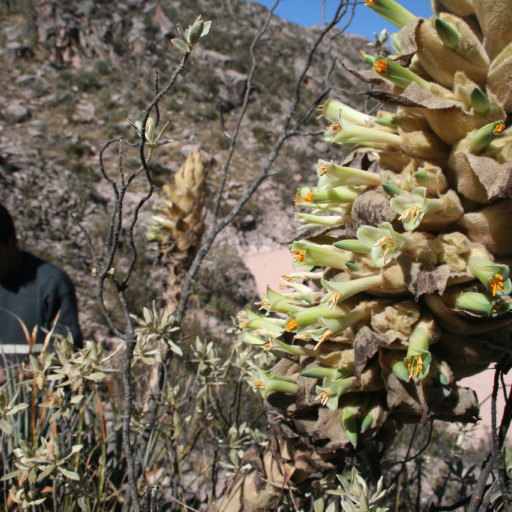
Often called the "Ghost of the Puna," Puya herzogii is a prehistoric-looking giant that reigns over the high-altitude rocky slopes of Bolivia. Looking like something straight out of a science fiction novel, this terrestrial bromeliad is a master of endurance, spending decades as a silver-green rosette before erupting into one of the most spectacular flowering displays in the plant kingdom.
🔍 How to Identify
- ⚔️ Saw-Toothed Rosette: The base consists of hundreds of long, arching, sword-shaped leaves lined with dark, needle-sharp hooked spines.
- ☁️ Woolly Tower: The central flower spike can reach heights of 2 to 4 meters, characterized by a dense, velvety coating of white or tan "fuzz" that protects the buds from freezing.
- 🌌 Indigo Blossoms: Tucked within the woolly spike are striking, deep-purple or midnight-blue flowers that provide a vivid contrast to the pale stalk.
🏡 In Your Garden
- 🏔️ High-Altitude Mimicry: This plant is adapted to the harsh conditions of the Andes; it requires extremely well-draining, gritty soil and can withstand intense UV rays and chilly nights that would kill tropical bromeliads.
- ⏳ A Lifetime Investment: Puya herzogii is monocarpic, meaning it grows for 20 to 50 years, blooms once in a magnificent finale, and then naturally dies after setting seeds.
- 🌬️ Space Requirements: Due to its massive size and defensive spines, it is rarely kept as a traditional houseplant and is best suited for large, Mediterranean-style rock gardens or botanical conservatories.
⚠️ Safety & Toxicity
- 🌵 Physical Hazard: The primary danger is mechanical. The leaves are essentially "living barbed wire" with hooks designed to snag fur or skin; handle only with heavy-duty leather gloves.
- 🐾 Non-Toxic: It is not known to be chemically poisonous to humans, cats, or dogs, but the sharp spines make it naturally "pet-unfriendly" as it can cause deep scratches.
✨ Fun Fact
The thick "wool" covering the flower spike acts as high-tech insulation! It traps a layer of air around the developing flowers, keeping them several degrees warmer than the freezing mountain air outside, ensuring the seeds can develop even in the snow.

Detailed Care Instructions
Growing Puya herzogii, a fascinating bromeliad native to the high altitudes of South America, can be rewarding if you provide the right conditions. Here's a detailed guide to help you get started:
1. Climate and Environment
- Temperature: Puya herzogii thrives in cooler, temperate climates. It can handle some frost but performs best in areas where temperatures do not drop too far below freezing.
- Sunlight: This plant prefers full sun to partial shade. In very hot climates, some afternoon shade can be beneficial.
- Humidity: While it can tolerate dry conditions, some humidity will be beneficial, especially in drier climates.
2. Soil Requirements
- Well-Draining Soil: Use a sandy or gritty, well-draining soil mixture. You can mix cactus or succulent soil with perlite or coarse sand to enhance drainage.
- pH: Slightly acidic to neutral soil is ideal (pH 6.0 to 7.0).
3. Planting and Repotting
- Container vs. Ground: Puya herzogii can be grown in a container or directly in the ground. If growing in a container, make sure it has good drainage holes.
- Spacing: If planted in the ground, space plants at least 2 feet apart to allow for growth and air circulation.
4. Watering
- Regular Watering: Water regularly but allow the soil to dry out between waterings. Overwatering can lead to root rot.
- Watering Technique: Water at the base of the plant and avoid getting the leaves overly wet.
5. Fertilization
- Moderate Feeding: Use a balanced, water-soluble fertilizer during the growing season (spring and summer). Dilute the fertilizer to half-strength to avoid burning the plant.
- Frequency: Fertilize once a month during the growing season.
6. Maintenance
- Pruning: Remove any dead or damaged leaves to maintain a healthy appearance.
- Pests and Diseases: Puya herzogii is generally pest-resistant but watch out for common bromeliad pests like scale or aphids. Use insecticidal soap if necessary.
7. Propagation
- Offsets (Pups): Puya herzogii can produce offsets around the base. Wait until these pups are at least a third of the size of the parent plant before separating. Gently remove the pup and replant it in a well-draining soil mix.
- Seeds: If growing from seeds, sow them on the surface of a well-draining soil mix and mist gently. Keep the soil lightly moist until germination, which can take several weeks. Provide bright, indirect light for seedlings.
8. Protection During Winter
- Cold Climate: If grown in an area that experiences harsh winters, consider bringing container plants indoors or providing a protective mulch layer for in-ground plants.
By meeting these requirements, you can successfully grow Puya herzogii and potentially enjoy its unique, dramatic blooms. Patience is key as it can take several years for the plant to mature and flower.
Puya herzogii is a type of bromeliad that requires specific watering practices to thrive. Here's a detailed guide on how to water this plant:
Watering Frequency:
- Growing Season (Spring and Summer):
- Regular Watering: Water the plant thoroughly, aiming to keep the soil consistently moist but not waterlogged. Typically, watering once or twice a week should suffice, but this can vary depending on your local climate and the potting medium.
- Regular Watering: Water the plant thoroughly, aiming to keep the soil consistently moist but not waterlogged. Typically, watering once or twice a week should suffice, but this can vary depending on your local climate and the potting medium.
- Dormant Season (Fall and Winter):
- Reduced Watering: During the cooler months, reduce the watering frequency. Allow the topsoil to dry out slightly between waterings. You might need to water only once every two to three weeks, depending on ambient humidity and temperature.
Method of Watering:
- Reduced Watering: During the cooler months, reduce the watering frequency. Allow the topsoil to dry out slightly between waterings. You might need to water only once every two to three weeks, depending on ambient humidity and temperature.
- Soil Watering:
- Directly to the Soil: Apply water directly to the soil around the plant. Ensure that the water penetrates deeply to reach the root system. Avoid letting the plant sit in standing water to prevent root rot.
- Drainage: Ensure the pot has good drainage to prevent water from accumulating at the bottom, which can cause the roots to rot.
- Directly to the Soil: Apply water directly to the soil around the plant. Ensure that the water penetrates deeply to reach the root system. Avoid letting the plant sit in standing water to prevent root rot.
- Foliage Watering:
- Water in the Morning: If you choose to water the foliage, do it in the morning so the leaves have time to dry out during the day, reducing the risk of fungal diseases.
- Avoid Water in Central Cup: Be cautious not to let water sit in the central rosette for extended periods, as this can lead to crown rot.
Water Quality:
- Water in the Morning: If you choose to water the foliage, do it in the morning so the leaves have time to dry out during the day, reducing the risk of fungal diseases.
- Use Soft Water: This plant benefits from using collected rainwater or distilled water, as it is sensitive to the salts and chemicals often found in tap water.
- Temperature: Ensure the water is at room temperature. Cold water can shock the plant, while very warm water can damage it.
Environmental Considerations:
- Humidity: This plant appreciates higher humidity levels. If you live in a dry area, consider using a humidity tray or a room humidifier to maintain adequate moisture in the air.
- Air Circulation: Good air circulation helps prevent fungal infections and ensures the leaves dry out promptly after watering.
By following these detailed watering practices, you can help ensure that your Puya herzogii plant remains healthy and thrives in your care.
Here are the fertilizing instructions for Puya herzogii:
- Type of Fertilizer: Use a balanced, water-soluble fertilizer with an equal ratio of nitrogen, phosphorus, and potassium, such as a 10-10-10 or 20-20-20 formula.
- Dilution: Dilute the fertilizer to half the recommended strength provided by the manufacturer. These plants are adapted to lean soils and do not require heavy feeding.
- Frequency: Fertilize during the growing season, which typically spans from spring to early fall. Apply the fertilizer once every 4-6 weeks.
- Application Method:
- Mix the diluted fertilizer solution with water.
- Water the plant thoroughly with this solution.
- Ensure even distribution around the base of the plant.
- Mix the diluted fertilizer solution with water.
- Special Instructions:
- Avoid fertilizing during the dormant season, which is typically in winter.
- Do not over-fertilize; excessive nutrients can harm the plant.
- Preferably, fertilize in the morning or early evening to avoid the heat of the day, which can cause the fertilizer to evaporate too quickly.
- Avoid fertilizing during the dormant season, which is typically in winter.
- Monitoring: Keep an eye on the plant for any signs of nutrient deficiency or over-fertilization, such as yellowing leaves or burnt tips. Adjust the fertilization frequency or strength accordingly.
Following these instructions will help your Puya herzogii thrive in its environment.
Puya herzogii, a striking bromeliad native to the high-altitude regions of Bolivia, thrives best in well-draining soil. Given its natural habitat, the plant is accustomed to conditions that prevent water from lingering around its roots, which helps avert root rot—a common issue with many bromeliads. Here’s a detailed guide to the best soil mix for this plant:
- Drainage: Ensure the soil has excellent drainage capabilities. A cactus or succulent mix can serve as a suitable base because these blends are designed to let water pass through quickly.
- Organic Material: Incorporate organic matter like small amounts of compost or peat moss. This helps retain some moisture and nutrients while still promoting adequate drainage.
- Perlite or Pumice: Mix in perlite or pumice to improve aeration and further enhance drainage. These materials prevent soil compaction, allowing roots to breathe.
- Sand: Adding coarse sand can also help increase the drainage quality of the mix. It mimics the natural, gritty soil conditions the plant's roots would encounter in the wild.
- Low Nutrient Requirement: These plants don't require nutrient-rich soil. They are adapted to survive in relatively nutrient-poor conditions, so avoid heavy use of fertilizers. If necessary, a slow-release, low-nitrogen fertilizer can be added sparingly.
- pH Level: Aim for a slightly acidic to neutral pH level in the soil, ideally between 6.0 and 7.0. Most commercial cactus or succulent mixes fall within this range naturally.
- Container: If you’re potting the plant in a container, make sure it has ample drainage holes to allow excess water to escape easily.
By replicating these conditions, you can create an ideal growing environment for Puya herzogii, ensuring it remains healthy and vibrant.
Propagating Puya herzogii can be an intriguing and rewarding experience for plant enthusiasts. Puya herzogii, a fascinating member of the Bromeliaceae family, can be propagated through two main methods: from seeds and through offsets (pups).
Propagation by Seeds:
- Seed Collection:
- Seeds of Puya herzogii are typically collected from mature seed pods that form after the flowering period. These pods should be left on the plant until they are fully dry and begin to split open naturally.
- Seeds of Puya herzogii are typically collected from mature seed pods that form after the flowering period. These pods should be left on the plant until they are fully dry and begin to split open naturally.
- Seed Preparation:
- Once collected, ensure the seeds are clean and free from any debris. It's often a good idea to soak them in water for a few hours to help speed up the germination process.
- Once collected, ensure the seeds are clean and free from any debris. It's often a good idea to soak them in water for a few hours to help speed up the germination process.
- Sowing Seeds:
- Use a well-draining sterile seed starting mix to prevent fungal issues. Seeds should be scattered thinly on the surface of this mix and pressed down gently, but not covered, as they require light for germination.
- Use a well-draining sterile seed starting mix to prevent fungal issues. Seeds should be scattered thinly on the surface of this mix and pressed down gently, but not covered, as they require light for germination.
- Germination Conditions:
- Maintain consistent moisture levels by misting and cover the seed tray with a clear lid to create a humid environment.
- A temperature range of 70-75°F (21-24°C) is ideal for germination. Using a seed heat mat can help achieve and maintain this temperature.
- Place the tray in a bright location with indirect light. Germination typically takes a few weeks but may take longer, so patience is essential.
- Maintain consistent moisture levels by misting and cover the seed tray with a clear lid to create a humid environment.
- Post-Germination Care:
- Once the seedlings are large enough to handle, they can be carefully transplanted into individual pots with a well-draining bromeliad mix.
- Gradually acclimate the seedlings to normal humidity levels by slightly opening the cover each day.
Propagation by Offsets (Pups):
- Once the seedlings are large enough to handle, they can be carefully transplanted into individual pots with a well-draining bromeliad mix.
- Identifying Offsets:
- Puya herzogii usually produces offsets, known as pups, at the base of the parent plant. These can be used for vegetative propagation.
- Puya herzogii usually produces offsets, known as pups, at the base of the parent plant. These can be used for vegetative propagation.
- Separating Offsets:
- Wait until the pup has developed a few roots and is large enough to handle, typically one-third the size of the parent plant.
- Gently remove the pup by cutting it away from the parent with a clean, sharp knife. Ensure the cut is clean to avoid damage to both the parent plant and the pup.
- Wait until the pup has developed a few roots and is large enough to handle, typically one-third the size of the parent plant.
- Preparing Offsets for Planting:
- Let the cut end of the offsets dry and callous over for a few days to prevent rot, especially if your environment is particularly humid.
- Let the cut end of the offsets dry and callous over for a few days to prevent rot, especially if your environment is particularly humid.
- Planting Offsets:
- Plant the offset in a well-draining potting mix suitable for bromeliads. A mix of orchid bark, perlite, and sphagnum moss works well.
- Water the pup lightly, and keep the soil just moist but not waterlogged. Place the new plant in a location with indirect light.
- Plant the offset in a well-draining potting mix suitable for bromeliads. A mix of orchid bark, perlite, and sphagnum moss works well.
- Establishment:
- Initially, the pup may rely on its roots for moisture so ensure a humid environment by misting the plant regularly.
- Over time, as the pup establishes, it will need the same care as a mature Puya herzogii plant including sufficient light, well-drained soil, and careful watering practices.
Both methods require patience and appropriate care to be successful, but propagating Puya herzogii can significantly expand your plant collection and provide a remarkable insight into the growth and development of this unique bromeliad.
- Initially, the pup may rely on its roots for moisture so ensure a humid environment by misting the plant regularly.








