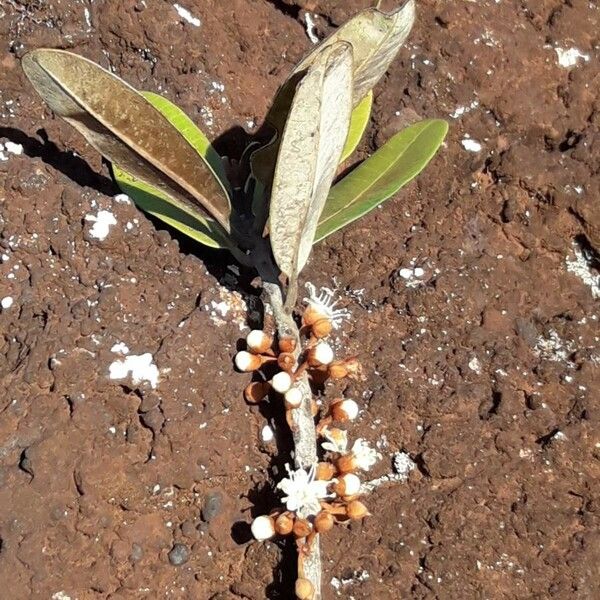
Plant Overview
Known as the "Blue-Sap Tree," Pycnandra controversa is one of nature’s most extraordinary chemical wonders. Native only to the rainforests of New Caledonia, this rare evergreen tree has evolved a superpower: it drinks heavy metals from the soil that would kill almost any other living thing. If you were to nick its bark, you wouldn't see amber resin or clear sap—instead, a vibrant, turquoise-blue liquid oozes out, looking more like alien blood than a botanical fluid.
🔍 How to Identify
- 💧 The Blue Sap: The most unmistakable feature. When the bark is cut, it releases a thick, latex-like sap that is a striking shade of teal or blue-green due to its extreme nickel content.
- 🍃 Leathery Foliage: Its leaves are thick, glossy, and oval-shaped, typical of trees that have adapted to survive in harsh, mineral-rich environments.
- 🌳 Growth Habit: It grows as a medium-to-large woody tree, often reaching heights of 10 to 15 meters in its native habitat, with a sturdy, greyish bark.
🏡 Habitat & Ecology
- 🧪 Hyperaccumulator: This tree is a "hyperaccumulator," meaning it actively vacuums nickel from the soil and stores it in its tissues. This is likely a defense mechanism to make its leaves and wood toxic to hungry insects.
- 🌋 Ultramafic Soil: In the wild, it thrives in "ultramafic" soils—ground that is naturally heavy in toxic metals like magnesium and iron. While most plants wither in these conditions, Pycnandra controversa treats it like a specialized buffet.
⚠️ Safety & Toxicity
- 🚫 Highly Toxic: This plant is not edible and is considered toxic due to its extreme concentration of heavy metals.
- 🧤 Skin Sensitivity: The blue sap contains up to 25% nickel. Contact with the sap can cause severe allergic dermatitis (nickel itch) in sensitive individuals, and it should never be ingested by humans, pets, or livestock.
✨ Fun Fact
The sap of the Blue-Sap Tree is so concentrated with metal that it is literally a liquid ore. If you dried the sap, about a quarter of its weight would be pure nickel—making it one of the most metal-rich biological substances on the planet!

Detailed Care Instructions
To properly water the Pycnandra Controversa plant, you should first ensure that the soil is dry to the touch before adding water. Then, slowly pour water into the soil until it is soaked through, being careful not to oversaturate or flood the soil. The plant should be watered thoroughly but infrequently, allowing the soil to dry out between waterings. This plant prefers well-draining soil and does not tolerate standing water, so it is important to ensure proper drainage and avoid stagnant water in the soil.
The recommended soil for the plant in question is a well-draining, loose, and aerated soil mix. It should have a neutral to slightly acidic pH level, typically in the range of 6.0-7.0. The soil should contain organic matter, such as compost or peat moss, to provide nutrients and retain moisture. It is important to avoid using heavy, clay-like soils that can easily become waterlogged and promote root rot. A mix that includes perlite or coarse sand can help improve drainage. The plant prefers a consistently moist soil but not waterlogged. Finally, it is advisable to avoid using synthetic fertilizers because they can burn the plant's roots instead use organic or slow-release fertilizers.








