Plant Overview
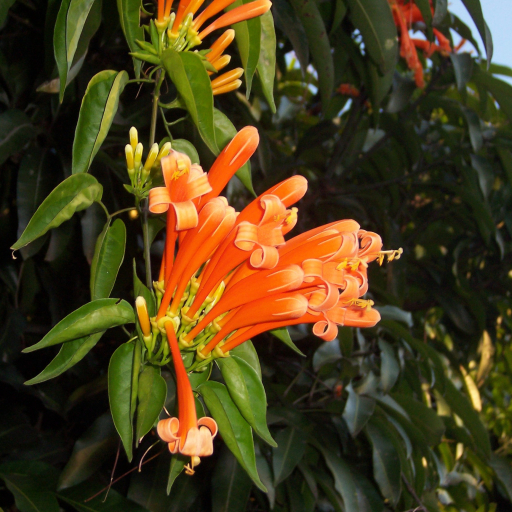
Often called the Flame Vine or Orange Trumpet Creeper, Pyrostegia venusta is a high-octane spectacle of the botanical world. Native to South America, it earned its nickname from the sheer volume of fiery orange blooms that can completely smother a fence, roof, or tree in a sheet of molten gold. It is a favorite for gardeners in warmer climates who want to transform vertical spaces into vibrant, living murals during the winter and spring.
🔍 How to Identify
- 🔥 The Flowers: Its most striking feature is the dense, hanging clusters of tubular, bright orange flowers. Each bloom has petals that gracefully curl backward, revealing long, delicate stamens.
- 🌿 The Foliage: The leaves are glossy and dark green, usually growing in pairs or triplets. Look for the middle leaflet, which often transforms into a three-forked tendril that the plant uses to "hook" and climb.
- 🧗 Growth Habit: This is a vigorous, woody evergreen vine. It doesn't just grow; it colonizes, using its branching tendrils to scale heights of up to 40 feet if left unchecked.
🏡 In Your Garden
- ✂️ The Pruning Paradox: While it is low-maintenance, the Flame Vine's greatest strength is also its weakness. It grows incredibly fast, meaning you must prune it heavily after the flowering season to prevent it from becoming a tangled "rat’s nest" or overwhelming nearby structures.
- ☀️ Sun for Blooms: To get that iconic "wall of fire" look, this plant requires full sun. While the vine itself will grow in shade, it will sacrifice its flowers for more leaves, leaving you with a wall of green instead of orange.
- 💧 Established Resilience: Once its root system is established, it is remarkably drought-tolerant. It prefers well-draining soil and hates "wet feet," so avoid planting it in areas where water tends to pool after rain.
⚠️ Safety & Toxicity
- 🟢 Status: Generally considered non-toxic to humans and pets.
- 🧤 Skin Sensitivity: While not poisonous, the milky sap found in the stems can cause mild skin irritation or "contact dermatitis" in people with sensitive skin. It is always a good idea to wear gloves when performing heavy pruning.
✨ Fun Fact
In its native Brazil, the Flame Vine is known as "Flor-de-São-João" (St. John's Flower) because it peaks during the midsummer festivities of June. It is also one of the most effective "hummingbird magnets" in the world—the tubular shape of the flower is perfectly evolved for a hummingbird's beak!

Detailed Care Instructions
| Lighting | Full Sun |
| Hardiness Zones | 9B - 11 |
To grow Pyrostegia venusta, also known as flame vine or orange trumpet vine, you can follow these steps:
- Select a suitable location: Choose a spot that receives full sun or partial shade. The plant prefers warm temperatures and can tolerate a range of soil types.
- Prepare the soil: Pyrostegia venusta grows best in well-draining soil. Ensure that the soil is loose, fertile, and has good moisture retention.
- Planting: Dig a hole slightly larger than the pot or root ball of the plant. Place the plant in the hole, ensuring that the top of the root ball is level with the soil surface. Backfill the hole with soil and gently firm it around the plant.
- Watering: Water the plant thoroughly after planting to settle the soil and promote root establishment. Afterward, water regularly but avoid overwatering. The plant is somewhat drought-tolerant once established.
- Support: Pyrostegia venusta is a vigorous vine that requires support for climbing. Install a trellis, pergola, or sturdy fence to provide support for the vine's growth.
- Pruning: Prune the plant regularly to control its growth and maintain its shape. You can trim the vine after the flowering period to keep it in check.
- Fertilizing: Feed the plant with a balanced fertilizer in spring and summer to promote healthy growth and flowering. Follow the instructions on the fertilizer package for proper application.
- Pests and diseases: Monitor the plant for any sign of pests or diseases, such as aphids or powdery mildew. Treat any infestations promptly with suitable insecticides or fungicides.
- Mulching: Apply a layer of organic mulch around the base of the plant to help retain moisture, suppress weed growth, and regulate soil temperature.
- Propagation: You can propagate Pyrostegia venusta through stem cuttings or by layering. Take semi-hardwood cuttings in late spring or early summer and plant them in well-draining potting soil. Provide the cuttings with adequate warmth and moisture until they establish roots.
By following these steps, you can successfully grow Pyrostegia venusta and enjoy its vibrant orange flowers.

Place in a bright room that is sun drenched almost all day. Or directly in a south-facing window.

Pyrostegia venusta is a plant that requires regular watering, especially during the growing season. When it comes to watering, it is important to ensure that the soil does not become waterlogged or overly dry. The best approach is to water deeply, allowing the soil to absorb the moisture and then allowing it to dry slightly between watering. This prevents the development of fungal diseases that occur when the soil is too wet.
During the hot summer months, this plant may need to be watered twice a week to prevent it from drying out completely. However, during the winter months, it would require less frequent watering as the cooler weather causes the soil to dry out slower. It is also advisable to use lukewarm or room temperature water, rather than cold water, as it can be harmful to the root system.
In addition to watering, it is crucial to provide proper drainage for the plant to prevent root rot. This can be accomplished by using a well-draining soil mix and ensuring that it is not compacted. Finally, avoid over-fertilizing as it can lead to excessive growth that may weaken the plant.
To fertilize this plant, use a balanced fertilizer with equal parts nitrogen, phosphorus, and potassium. Apply the fertilizer every two to three weeks during the growing season, which is typically in the spring and summer months. Be sure to follow the instructions on the fertilizer package for proper application rates. Avoid over-fertilizing, as this can damage the plant's roots and cause it to produce fewer flowers.
The ideal soil for Pyrostegia Venusta plant should be well-draining and rich in organic matter. The pH level should be slightly acidic to neutral, around 6.0-7.0. A sandy loam soil with good drainage is suitable for this plant. It should be able to retain enough moisture to avoid waterlogging and maintain adequate moisture levels. The soil should be fertile enough to provide sufficient nutrients to the plant. Adding compost or other organic matter is recommended to improve soil quality. This plant also prefers full sun and requires regular watering, especially during periods of drought. It is recommended to avoid using clay soils as they tend to become waterlogged, causing root rot and other diseases.
To propagate this plant, you can start by taking stem cuttings from a healthy, mature plant. Select a stem that is at least 5-6 inches long and has a few nodes on it. Use a sharp, clean pair of scissors or pruners to make a clean cut just below a node.
Remove any leaves or flowers from the stem, leaving only a few leaves near the top. Dip the cut end of the stem into rooting hormone powder, which will help stimulate the growth of roots.
Prepare a potting mix that contains equal parts of perlite and peat moss. Moisten the mix lightly, but be careful not to make it too wet. Use a pencil or stick to make a hole in the mix, then insert the stem cutting into the hole and gently press the mix around it.
Place the pot in a location with bright, indirect sunlight and keep the soil consistently moist. It may take several weeks for roots to form, but you should see signs of new growth within a few weeks.
Once the cutting has developed a good root system and several new leaves, it can be transplanted into a larger pot or directly into the garden. Keep the soil moist and continue to provide bright, indirect sunlight. With proper care, your new plant will grow into a beautiful specimen that will thrive in your garden for many years to come.








