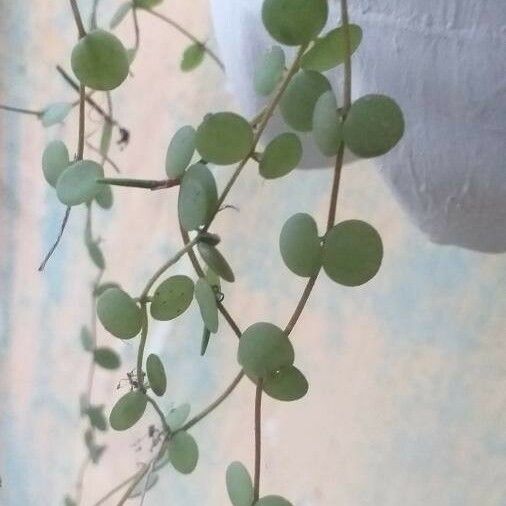
Plant Overview
Often called the Dragon’s Scale Fern or Coin Fern, this charming epiphyte looks less like a traditional fern and more like a collection of green jewels scattered across a tree branch. Native to the humid tropical forests of Southeast Asia, it is famous for its "dimorphic" leaves—meaning it grows two different leaf shapes for two different jobs. In folklore, these creeping vines are sometimes seen as symbols of persistence, slowly but surely reclaiming space in the canopy.
🔍 How to Identify
- 🐉 The "Scales": The most common leaves (sterile fronds) are small, round, and succulent-like, resembling green coins or dragon scales pressed flat against a surface.
- 🌿 The "Ribbons": Periodically, the plant sends out longer, narrower leaves (fertile fronds). These are taller and carry the spores needed for reproduction on their undersides.
- 🧶 Creeping Rhizomes: Look for a thin, wiry, dark stem that "walks" across bark or rocks, anchoring the leaves firmly to their host.
🏡 In Your Garden
- ☁️ Air Over Soil: Because this is an epiphyte, it hates having its "feet" buried in heavy potting soil. It thrives best when mounted on a piece of cork bark or driftwood with a little sphagnum moss to hold moisture.
- 💧 Humidity is Key: While its thick, fleshy leaves allow it to survive short dry spells better than most ferns, it thrives in high humidity. If the air is too dry, the "scales" may lose their plumpness and curl inward.
⚠️ Safety & Toxicity
- ✅ Non-Toxic: Pyrrosia piloselloides is generally considered safe and non-toxic for humans and common household pets like cats and dogs.
- 🧤 General Handling: While safe, it is always a good practice to wash your hands after gardening, as the fine, star-shaped hairs on the leaves can occasionally cause mild itching for those with very sensitive skin.
✨ Fun Fact
The "Dragon Scale" name isn't just for show! In the wild, the way the round leaves overlap on a tree trunk creates a protective layer that helps the plant trap moisture and organic debris, effectively creating its own little compost pile against the bark.

Detailed Care Instructions
| Humidity | Normal |
| Lighting | Part Sun |
| Difficulty | Medium |
| Temperature | 18°C - 35°C |
To grow Pyrrosia piloselloides, also known as the caterpillar fern or hairy pyrrosia, follow these steps:
- Choose the right location: Pyrrosia piloselloides thrives in a shady location with indirect sunlight. It prefers temperatures between 60-75°F (15-24°C) and high humidity.
- Prepare the planting medium: Pyrrosia piloselloides can be grown in a well-draining potting mix consisting of equal parts peat moss, perlite, and potting soil. Ensure that the pot has drainage holes.
- Watering: Keep the potting medium consistently moist but not soggy. Water the plant when the top inch of soil feels dry, and avoid overwatering to prevent root rot.
- Humidity: Pyrrosia piloselloides requires high humidity. You can increase humidity by placing the pot on a tray filled with pebbles and water. As the water evaporates, it will create a humid microenvironment around the plant.
- Fertilization: Feed the plant with a balanced houseplant fertilizer once a month during the growing season (spring and summer). Follow the package instructions for the appropriate dosage.
- Pruning: Trim off any browning or yellowing fronds using clean, sharp scissors. This will help maintain the appearance and health of the plant.
- Propagation: Pyrrosia piloselloides can be propagated through spores or division. Spores can be collected from mature fronds and sown on a suitable moist growing medium, covered with a plastic dome or bag to maintain humidity. Alternatively, the plant can be divided during repotting, ensuring each division has roots and healthy fronds.
- Pest control: Pyrrosia piloselloides is generally resistant to pests, but it can occasionally be affected by mealybugs or scale insects. Regularly inspect the plant and treat any infestations with horticultural oil or insecticidal soap as needed.
Remember to research any specific care requirements for your particular plant and adjust accordingly.

Place in a dark room with little light, like a dark bedroom or a spot far away from a window or directly in a north-facing window.

To water this type of plant, thoroughly saturate the soil and let excess water drain away. This plant prefers to stay consistently moist but can tolerate some dryness between watering. It is important not to let the soil become waterlogged as this can cause root rot. Ensure that the soil has good drainage and avoid getting water on the leaves, as this can lead to fungal problems. Watering frequency will depend on factors such as temperature, humidity, and soil type, so it is best to monitor the plant's moisture levels and adjust accordingly.
To fertilize this plant, you should first dilute a balanced liquid fertilizer in water and pour it onto the soil surrounding the plant. This should be done every two to four weeks during the growing season, which is usually spring through summer. Avoid fertilizing during the winter when growth slows down. Be sure not to apply too much fertilizer, as this can cause harm to the plant.
When planting Pyrrosia Piloselloides, it is important to use a soil that is well-draining and slightly acidic. You can use a mixture of half peat moss and half perlite or half potting soil and half sand to create the perfect soil for this plant. It is also important to ensure that the soil is not compacted and provides adequate aeration for the roots. Additionally, adding some organic matter, such as compost or well-rotted manure, can provide nutrients for the plant to thrive.
There are several ways to propagate Pyrrosia Piloselloides plants, including using stem cuttings or dividing the root system.
To propagate using stem cuttings, select a healthy stem from the plant and cut it at a 45-degree angle below a leaf node. Remove any lower leaves from the cutting and dip the cut end in rooting hormone. Plant the cutting in a container filled with a well-draining soil mixture and keep it moist but not waterlogged. Place the container in a bright, indirect sunlight location and mist the cutting daily to keep the humidity high. After a few weeks, the cutting should start to develop roots and new growth.
To propagate by division, carefully remove the plant from its current pot or location and gently separate the roots into sections. Each section should have a few leaves and a portion of the root system. Plant each section in a container filled with a well-draining soil mixture and keep the soil moist but not waterlogged. Place the containers in a bright, indirect sunlight location and mist the newly transplanted plants daily to keep the humidity high. After a few weeks, new growth should emerge from each section of the divided plant.
Propagation should be done in the spring or summer when the plant is actively growing, and it is important to use clean tools and containers to prevent the spread of diseases.








