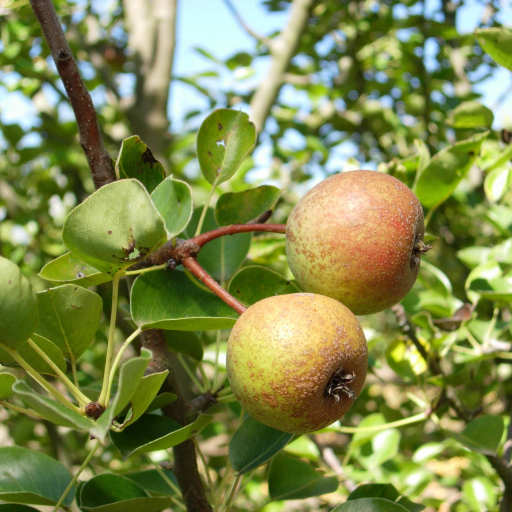
Plant Overview
Often called the Wild Himalayan Pear or "Mehal" in its native lands, Pyrus pashia is a rugged beauty that thrives where other fruit trees might falter. This small-to-medium tree is a staple of the Himalayan foothills, bridging the gap between wild forests and cultivated orchards. While its fruits aren't as sugary as a grocery-store Bartlett, this tree is legendary for its resilience and its role as a "mother" rootstock for many commercial pear varieties.
🔍 How to Identify
- 🌸 The Blooms: In early spring, the tree is smothered in dense clusters of white flowers. Each blossom has five petals and striking reddish-purple anthers that look like tiny jewels in the center.
- 🍂 The Foliage: The leaves are ovate and glossy with finely serrated edges. They emerge with a slight reddish tint before turning a deep, rich green, finally shifting to vibrant oranges and reds in the autumn.
- 🍐 The Fruit: Unlike typical pears, these are small, globose, and brownish-green. As they ripen, they become covered in "lenticels" (distinctive pale dots) and eventually turn almost black when fully soft.
🏡 In Your Garden
- 🏔️ Himalayan Hardiness: Because it originates in high-altitude rocky soils, this tree is incredibly drought-tolerant once established. It’s a "tough love" plant that actually prefers well-draining, slightly gritty soil rather than being pampered in heavy, wet clay.
- 🌳 The Grafting King: If you are a hobbyist looking to grow high-quality pears in a difficult climate, Pyrus pashia is your best friend. It is frequently used as a rootstock because its vigorous root system can survive harsh winters and nutrient-poor ground.
- 🐦 Wildlife Magnet: It is a powerhouse for local ecology. Pollinators swarm the early spring blossoms, and the small fruits provide a vital late-season food source for birds and small mammals.
⚠️ Safety & Toxicity
- 🟢 Fruit Status: The fruit is edible but can be incredibly astringent and gritty if eaten too early. It is best consumed when "bletted" (allowed to over-ripen until mushy).
- 🚫 Seed Warning: Like many members of the Rose family (apples, pears, cherries), the seeds contain trace amounts of amygdalin. While a few seeds won't hurt, they should not be consumed in large quantities by humans or pets as they can release cyanide during digestion.
- 🐾 Pet Safety: The fruit flesh is safe for dogs in moderation, but the stems, leaves, and seeds can cause digestive upset.
✨ Fun Fact
In its native regions, the Wild Himalayan Pear is a "patient" fruit. People often wait until the first frosts of winter to pick them. The freezing and thawing cycle breaks down the harsh tannins, turning the sour, hard fruit into a sweet, jam-like treat right on the branch!

Detailed Care Instructions
To grow a Pyrus Pashia plant, also known as Himalayan pear or Kainth, you can follow these steps:
- Climate and soil: Ensure that you live in a suitable climate for growing this plant, which is generally found in the temperate regions of the Himalayas. The plant prefers well-drained soil with a pH range of 6.5 to 7.5.
- Seed selection and preparation: Obtain healthy Pyrus Pashia seeds from a reputable source. Soak the seeds in water overnight to help improve germination rates.
- Germination: Sow the seeds in a seed tray or small pots filled with a well-draining potting mix. Cover the seeds lightly with soil and keep them moist. Place the tray or pots in a warm and well-lit area, such as a greenhouse or a sunny window sill.
- Seedling care: Keep the soil consistently moist but avoid waterlogging. Provide adequate sunlight, preferably 6-8 hours of direct sunlight per day. Once the seedlings have developed a few true leaves, they can be transplanted into larger pots or directly into the garden.
- Transplantation: When the seedlings are around 6-8 inches tall and after the last frost date in your area, transplant them to their permanent location in the garden. Choose a sunny spot with well-draining soil. Ensure proper spacing between the plants, typically 3-4 feet apart.
- Watering and fertilizing: Water the growing plants regularly, particularly during dry periods, to keep the soil consistently moist. However, avoid over-watering or allowing the roots to sit in waterlogged soil. Use a balanced slow-release fertilizer or organic matter to provide necessary nutrients. Follow the manufacturer's instructions for application rates.
- Pruning and maintenance: Prune the plant during the dormant season to remove any damaged or diseased branches. Pruning can also help shape the plant and promote better air circulation. Regularly check for pests and diseases and take appropriate measures to control them.
- Harvesting: Pyrus Pashia trees usually begin bearing fruits after 4-6 years. The fruits can be harvested when they turn yellowish-brown and have a slightly soft texture.
By following these steps and providing proper care, you can successfully grow a Pyrus Pashia plant in your garden.

Place in a bright room that is sun drenched almost all day. Or directly in a south-facing window.

To water this specific plant, it is important to ensure that the soil is consistently moist but not waterlogged. One way to do this is to check the top inch of soil regularly and water when it begins to feel dry. It is also important to water deeply, allowing the water to penetrate the root zone, rather than just watering the surface. Avoid letting the soil fully dry out between waterings, as this can cause stress and damage to the plant. Additionally, providing adequate drainage is crucial to prevent the roots from becoming waterlogged and potentially leading to root rot. When watering, it is best to avoid wetting the foliage to prevent fungal diseases.
To fertilize your Pyrus Pashia plant, apply a balanced, slow-release fertilizer in the early spring before new growth appears. Use a fertilizer with equal amounts of nitrogen, phosphorus, and potassium. Apply the fertilizer evenly around the base of the plant and water thoroughly afterward. Avoid over-fertilizing as this can lead to excessive growth and weak stems. Stick to a regular fertilizing schedule to maintain the health and vigor of your plant.
For Pyrus Pashia plant, it is recommended to use moist, well-draining soil that is rich in organic matter and has a slightly acidic pH level. The soil should not be too heavy or too light, as the plant prefers a medium-textured soil. A mix of loam, sand, and peat moss would provide an ideal growing medium for this plant. Additionally, adding compost and other organic fertilizers to the soil would provide essential nutrients to support the growth and health of the plant. It is important to avoid using soil that is heavily compacted, contains excessive amounts of clay, or has poor drainage, as this can lead to root rot and other issues that can harm the plant.
To propagate this plant, you will need to gather seeds from the mature fruit of the parent plant. Once you have collected the seeds, they should be cleaned and soaked in water for 24 hours to soften the outer layer of the seed. Once the seeds have been soaked, they should be planted in a well-draining soil mixture in a small pot. The pot should be kept in a humid environment, with a humidity level of at least 50%, and the soil should be kept moist. The seedlings will begin to grow in 2-4 weeks, and once they have grown a few sets of leaves, they can be transplanted into a larger pot or into the ground. It is important to keep an eye on the moisture level of the soil, as young plants require consistent moisture to grow successfully. With proper care, the Pyrus Pashia plant will grow into a healthy tree and produce fruit in a few years.








