Plant Overview
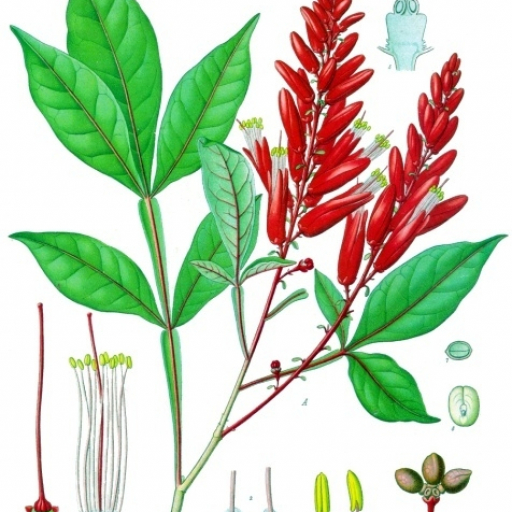
Known as the "Bitter-wood" or "Amargo," this striking tropical shrub is the source of one of the most bitter substances found in nature. For centuries, it has been a staple in traditional Amazonian medicine and was once a secret ingredient in European "bitters" and tonics. Its vibrant red flowers are as bold and unforgettable as its flavor profile.
🔍 How to Identify
- 🌿 Leaf Structure: Features distinctive pinnate (feather-like) leaves with a strikingly red central stalk (rachis) that makes the foliage look "veined" with fire.
- 🌺 Flaming Blooms: Produces terminal clusters of bright red, tubular flowers that point upwards, mimicking small torches nestled against the dark green canopy.
- 🌳 Growth Habit: A slender, multi-stemmed shrub or small tree that usually stays under 15 feet, maintaining a lush, airy appearance.
🏡 In Your Garden
- 💧 Thirst for Humidity: As a native of the Amazon basin, it craves high humidity and consistent moisture. If the air is too dry, the leaf edges will quickly brown and curl in protest.
- 🌱 Stable Environment: This plant hates "cold feet" and sudden temperature drops. It prefers "stable" environments and rich, organic soil that mimics the nutrient-dense floor of a tropical rainforest.
⚠️ Safety & Toxicity
- 💊 Medicinal Potency: While the wood is used traditionally to treat digestive issues and parasites, it contains quassinoids which are natural insecticides.
- 🐾 Pet Sensitivity: Ingestion by pets may cause stomach upset, drooling, or vomiting due to the extreme bitterness and active compounds. It is best kept out of reach of curious chewers.
✨ Fun Fact
[🍸] The Original Tonic: In the 18th century, "Quassia Cups" were popular in Europe. These were vessels carved entirely from Quassia wood; when water was poured in and left to sit, it became a bitter medicinal tonic thought to cure everything from fevers to hangovers!

Detailed Care Instructions
To grow a Quassia Amara plant, also known as the bitterwood tree, follow these steps:
- Obtain seeds or seedlings: Buy Quassia Amara seeds online or from a local nursery. Alternatively, acquire a seedling from a reputable source.
- Prepare germination trays: Fill a germination tray with a mixture of peat moss, perlite, and sand or use a well-draining potting mix.
- Sow the seeds: Place the Quassia Amara seeds on the surface of the soil mixture and lightly press them down. Avoid burying them too deep as they require light for germination.
- Provide consistent moisture: Keep the soil moist but not soaked. Use a spray bottle to moisten the soil lightly as needed. Provide a humidity dome or cover the tray with plastic wrap to retain moisture.
- Place in a warm location: Quassia Amara seeds need warmth to germinate. Keep the germination tray in a warm area with a temperature around 70-80°F (21-27°C). Ensure the seeds receive indirect sunlight.
- Monitor and wait for germination: Quassia Amara seeds typically take around 2-4 weeks to germinate. Regularly check for any signs of emerging seedlings.
- Transplant seedlings: Once the seedlings have developed a few true leaves, carefully transplant them into individual pots filled with well-draining potting soil. Handle the seedlings gently to protect the delicate roots.
- Provide proper care: Place the potted Quassia Amara plant in a location that receives bright, indirect sunlight. Water it regularly, ensuring the soil remains consistently moist but not waterlogged.
- Fertilize: Feed the plant every 2-4 weeks with a balanced water-soluble fertilizer diluted to half the recommended strength.
- Prune and shape: As the Quassia Amara plant grows, you can prune it to maintain a desired shape. Pruning also encourages bushier growth.
- Repot as needed: Repot the Quassia Amara plant into larger containers as it outgrows its current pot. Use well-draining soil.
- Protect from extreme temperatures: Quassia Amara prefers temperatures between 60-80°F (15-27°C). Protect the plant from frost or extreme cold, as it can be sensitive to low temperatures.
By following these steps and providing the appropriate care, you can successfully grow a Quassia Amara plant.

Place in a bright room that is sun drenched almost all day. Or directly in a south-facing window.

Quassia Amara plant requires moderate watering. It is important to check the soil moisture levels before watering the plant. One should wait until the top 1-2 inches of soil has dried out before watering it again. Overwatering can lead to root rot and can cause damage to the plant. It is also important to provide good drainage to prevent water from accumulating in the pot. One should avoid letting the plant sit in standing water for prolonged periods as it can lead to root rot. The watering frequency may vary depending on the climate and season. During the hot summer months, the plant requires more frequent watering. In contrast, during the winter months, the plant requires less watering. One can also mist the plant occasionally to increase the humidity levels around the plant.
To fertilize the plant, use a balanced, water-soluble fertilizer with equal parts of nitrogen, phosphorus, and potassium. Apply the fertilizer once a month during the growing season, which is typically from spring to fall. Dilute the fertilizer with water according to the manufacturer's instructions and apply it directly to the soil around the base of the plant. Avoid getting fertilizer on the leaves or stem as this can cause damage. Water the plant thoroughly after fertilizing to help distribute the nutrients throughout the soil.
When planting the Quassia Amara plant, it is recommended to use a well-draining soil mix that is rich in organic matter and has a pH level between 5.5 and 7.0. It is also important to avoid using soils that are compacted or have a high clay content, as this can lead to poor drainage and root rot. Additionally, the soil should be kept consistently moist but not waterlogged, and it is recommended to add a slow-release fertilizer to the soil at the time of planting to promote healthy growth.
To propagate this plant, you will need to take stem cuttings from a healthy adult plant. Choose a stem that is at least six inches long, and make sure it has several healthy leaves on it. Use a sharp, clean pair of scissors to make a clean cut at a 45-degree angle, just below a node.
Remove the lower leaves from the stem, leaving only two or three at the top. Dip the cut end of the stem in rooting hormone powder, then plant it in a pot filled with fresh potting soil. Water the cutting thoroughly, then cover the pot with a plastic bag to create a mini greenhouse.
Place the pot in a bright, warm spot, but out of direct sunlight. Keep the soil moist and mist the plant occasionally with a spray bottle. After a few weeks, you should start to see new growth, which is a sign that the cutting has rooted successfully.
Once the roots are well-established, you can transplant the new plant into a larger pot or directly into your garden. Be sure to keep the soil moist and protect the young plant from direct sunlight for the first few weeks until it is fully established.








