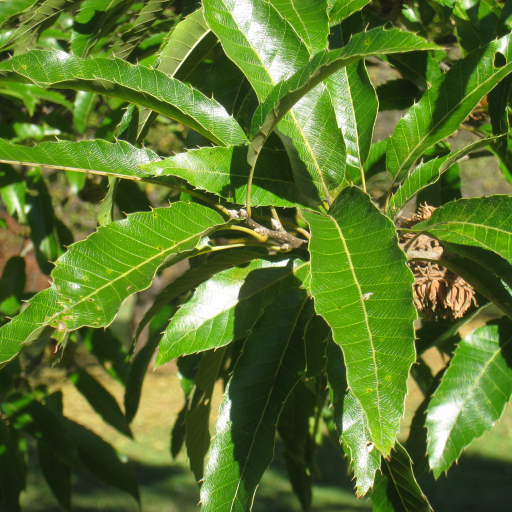
Plant Overview
Known as the Sawtooth Oak, this East Asian native is the "speedster" of the oak family. It is widely loved by gardeners and wildlife enthusiasts alike for its ability to provide a thick, spreading canopy in a fraction of the time it takes a traditional White Oak to mature. Its distinctive, bristly leaves give it a rugged, prehistoric look that adds instant character to any landscape.
🔍 How to Identify
- 🍃 Saw-Toothed Leaves: The leaves are long and slender, resembling a chestnut leaf more than a traditional rounded oak leaf, featuring prominent "teeth" with tiny bristles at the tips.
- 🧶 Shaggy Acorn Cups: The acorns are unmistakable, sitting in deep cups covered in long, recurved scales that look like a tiny, fuzzy gray wig or a sea anemone.
- 🪵 Cork-Like Bark: As the tree ages, the bark becomes deeply furrowed and ridged, often taking on a corky texture that provides excellent visual interest in winter.
🏡 In Your Garden
- 🌳 Instant Shade: Because it grows significantly faster than most other Quercus species, it is often chosen by homeowners who want a "heritage tree" look without waiting thirty years for a canopy.
- 🥜 Wildlife Buffet: This tree is a powerhouse for local ecosystems; it produces massive quantities of acorns at a much younger age (usually 5–10 years) than native oaks, making it a favorite for squirrels, turkeys, and deer.
- 🌍 Adaptability: It is remarkably tough, handling urban pollution, heat, and varying soil types well, though it prefers well-drained, acidic soil to reach its full towering potential.
⚠️ Safety & Toxicity
- 🟢 General Safety: The Sawtooth Oak is non-toxic to touch and generally safe for humans and pets to be around.
- 🐕 Pet Caution: Like all oaks, the acorns contain tannins which can cause gastrointestinal upset or even kidney issues in dogs if eaten in large quantities. The hard, round nuts also pose a potential choking hazard for smaller breeds.
✨ Fun Fact
The Sawtooth Oak doesn't just produce acorns early; it produces them regularly. While many oaks have "mast years" where they fruit heavily only once every few years, the Sawtooth is a reliable annual producer, often dropping its crop all at once in a spectacular "acorn rain" during the fall!

Detailed Care Instructions
To grow Quercus Acutissima, commonly known as Sawtooth Oak, follow these steps:
- Choose a suitable planting location: Sawtooth Oak is a large, deciduous tree that requires ample space to grow. Select a location with well-draining soil, preferably deep and fertile. The tree prefers full sun exposure but can tolerate partial shade.
- Prepare the soil: Ensure the soil is loosened and free of rocks or debris. You can add organic matter like compost or well-rotted manure to enrich the soil. This will improve water retention and provide essential nutrients.
- Planting: Dig a hole that is slightly larger and deeper than the root system of the sapling or seedling. Place the plant in the hole, ensuring the top of the root ball is level with the ground. Backfill the hole with soil, gently firming it around the roots to eliminate air pockets. Water thoroughly to settle the soil.
- Watering: Young Sawtooth Oaks require regular watering until they establish a strong root system. Water deeply once or twice a week, ensuring the soil remains consistently moist but not waterlogged. Reduce watering frequency once the tree becomes established.
- Mulching: Apply a layer of organic mulch around the base of the tree to retain moisture, suppress weeds, and regulate soil temperature. Keep the mulch a few inches away from the trunk to avoid stem rot.
- Pruning: Pruning is not usually necessary for Sawtooth Oaks, as they typically have a desirable shape. However, you can trim any dead, damaged, or crossed branches if necessary. Pruning should be done during the dormant season to avoid interfering with the tree's growth.
- Fertilization: Sawtooth Oaks generally do not require regular fertilization if planted in nutrient-rich soil. However, if you notice any signs of nutrient deficiency, you can use a balanced tree fertilizer following the recommended dosage.
- Protection against pests and diseases: Sawtooth Oaks are relatively resistant to pests and diseases. However, regular monitoring for common issues like oak wilt, aphids, or leaf rollers is advisable. Prompt action should be taken if any problems are detected.
- Patience and care: Sawtooth Oaks are slow-growing trees, especially in the early years. Provide consistent care by watering, mulching, and monitoring their health. Be patient and allow the tree to grow naturally.
Remember to check your local regulations and guidelines before planting a Sawtooth Oak, as it may not be suitable for all regions.

Place in a bright room that is sun drenched almost all day. Or directly in a south-facing window.

The watering requirements of this plant depend on various factors such as its age, soil type, weather, and location. However, in general, it is best to water this plant deeply to encourage deep roots and infrequent watering to prevent overwatering. You can check the soil moisture by inserting your finger into the soil to a depth of about 1-2 inches. If the soil feels dry at this depth, it is time to water. Watering should be carried out in the morning or early evening to avoid evaporation and heat stress. When watering, try to avoid getting water on the leaves and focus on watering the root zone. You can use a watering can or garden hose with an adjustable nozzle to water this plant. It is important to note that this plant can tolerate drought once established but may require occasional watering during prolonged dry spells.
To fertilize this plant, apply a balanced, slow-release fertilizer in early spring before new growth begins. Use a ratio of 10-10-10 or 12-12-12, following the manufacturer's application instructions. Alternatively, you can use a natural, organic fertilizer such as compost or bone meal. Apply fertilizer evenly around the drip line of the tree and water thoroughly after application. Avoid fertilizing in late summer or fall to avoid stimulating new growth that may not have time to harden off before winter.
The ideal soil for the Quercus Acutissima plant should have good drainage and a neutral pH level. It should also be rich in organic matter and have a moderate to high level of fertility. The soil should be well-aerated and able to retain moisture, without becoming waterlogged. Sandy loam soil or loam soil with a mixture of sand and clay is a suitable choice for the Quercus Acutissima plant. Additionally, the soil should not be highly acidic or alkaline, and should have a pH range of 6.0-7.5. Proper soil preparation is important for the success of the Quercus Acutissima plant, as it will help the roots establish and grow properly.
To propagate this plant, first gather fresh acorns in the fall. Choose acorns that are free from any damage or insect infestation. Remove the caps and soak the acorns in water for 24-48 hours to soften the shell and reduce the risk of fungal infections.
After soaking, plant the acorns about 1-2 inches deep in a pot or directly in the ground. Be sure to choose a location with well-draining soil and full sun to partial shade. Water the newly planted acorns thoroughly and keep them moist throughout the germination process.
The germination process can take anywhere from 2 weeks to several months. Once the acorns have sprouted and have developed a strong root system, they can be transplanted to their permanent location. Allow the young plant to grow for a couple of years before pruning or shaping, and be sure to continue providing adequate water and nutrients.
Common pests of the sawtooth oak include Larvae. Make a habit of checking your sawtooth oak frequently for pests so that any infestations can be caught and managed early.








