Plant Overview
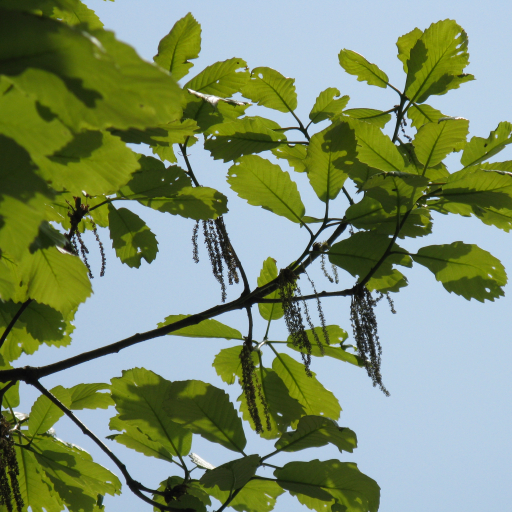
Known as the Oriental White Oak or Galun Oak, this majestic tree is a cornerstone of East Asian forests. Unlike the deeply lobed oaks common in North America, Quercus aliena boasts elegant, wavy-edged leaves that give it a distinct, almost tropical appearance. It is a symbol of strength and longevity, often found guarding ancient temple grounds in China and Korea.
🔍 How to Identify
- 🍃 Large, Wavy Leaves: The leaves are impressively big, often reaching 8 inches in length. They feature shallow, rounded teeth along the edges rather than the sharp points or deep "waists" found on other oak species.
- 🩶 Pale Undersides: If you flip a leaf over, you’ll notice a fine, grayish-white downy coating that creates a beautiful shimmering effect when the wind catches the canopy.
- 🌰 Scaled Acorns: The acorns are nestled in grayish, woody cups covered in small, triangular scales. They usually sit close to the branch in small clusters.
🏡 In Your Garden
- 🌳 The Long Game: This is a "legacy tree." It grows at a moderate pace and develops a powerful, deep taproot early on. Because of this root system, it hates being moved once planted—choose its "forever home" carefully!
- 💧 Well-Drained Soil: While it is surprisingly hardy, it thrives best in slightly acidic, well-draining soil. It doesn't like "wet feet," so avoid planting it in low spots where water pools after rain.
⚠️ Safety & Toxicity
- 🐕 Tannin Warning: Like almost all members of the Oak family, the leaves and acorns contain high concentrations of tannins.
- 🐈 Pet Safety: While generally safe to touch, the acorns can be toxic to dogs, horses, and cattle if ingested in large quantities, leading to digestive upset or kidney issues. Keep an eye on curious pups during the autumn "acorn drop."
✨ Fun Fact
In Korea, the acorns of the Quercus aliena have a long history as a food source. They are harvested, leached of their bitter tannins, and ground into a flour used to make Dotorimuk, a unique and savory acorn starch jelly that is a popular delicacy!

Detailed Care Instructions
To grow Quercus Aliena, also known as Chinese cork oak, you can follow these steps:
- Climate and location: Quercus Aliena thrives in temperate climates with mild winters and hot summers. Choose a spot that receives full sun or partial shade. Ensure the soil is well-draining and loamy.
- Seed collection and preparation: Collect mature acorns from the tree during the autumn season. Soak the acorns in water for 24 hours to remove any remaining tannins. Discard any floating or damaged acorns.
- Germination: Plant the acorns in pots or directly in the ground. Plant them about 2 inches deep and keep the soil moist but not waterlogged. You can also use a seed tray filled with potting mix. Keep the trays or pots in a protected area with partial shade.
- Seedling care: Once the seedlings emerge, provide them with enough sunlight. Make sure they receive at least six hours of direct sunlight daily. Water the seedlings regularly, but ensure the soil doesn't become waterlogged. Allow the soil to dry slightly between watering to prevent root rot.
- Transplanting: After a year or two, when the seedlings have grown to about 6-8 inches tall, they can be transplanted to larger pots or directly into the ground. Choose a permanent location that suits their growth requirements.
- Maintenance: Quercus Aliena plants are generally low-maintenance. Water them during dry spells and provide a layer of mulch to retain soil moisture. Prune any dead or diseased branches as necessary.
- Protection from pests and diseases: Monitor the plants for pests like aphids and caterpillars. Use organic pest control methods or insecticides if required. Quercus Aliena is generally resistant to most diseases.
- Patience and long-term care: Quercus Aliena is a slow-growing tree, so be patient while it establishes and matures. It may take several years for the tree to reach its full potential.
Remember to check with your local nursery or horticulture experts for specific guidelines based on your region's climate and any local regulations that may apply.

Place in a bright room that is sun drenched almost all day. Or directly in a south-facing window.

To water the plant Quercus Aliena effectively, it is important to consider its watering needs. This plant requires consistent and thorough watering during its growing season. It is best to water deeply, allowing the soil to become thoroughly saturated, but avoiding excessive watering or standing water, which can lead to root rot.
A good way to determine if the Quercus Aliena needs watering is to check the soil dryness level. The top inch of soil should be dry to the touch before watering. If the soil feels moist, it is best to wait a day or two before watering again.
When watering, it is important to water at the base of the plant to avoid wetting or damaging the leaves or trunk. Slow and steady watering will allow the water to soak into the soil and reach the roots.
During the winter months, the watering schedule can be reduced to once or twice a month, as the plant goes into dormancy and requires less water. Overall, consistent and appropriate watering is key to the health and vitality of the Quercus Aliena plant.
To fertilize this plant, begin in the spring by applying a slow-release granular fertilizer at a rate recommended on the package. Avoid getting the fertilizer too close to the trunk or branches. Water the plant immediately after applying the fertilizer to ensure it reaches the roots. Repeat this process every 6-8 weeks throughout the growing season, but stop fertilizing in late summer to early fall to allow the plant to prepare for winter.
It is recommended to use a well-draining soil with good moisture retention for this plant species. The soil should be slightly acidic with a pH range between 5.5 and 6.5. It is also important to avoid using heavy clay soils and soils that are prone to waterlogging as this can lead to root rot in the plant. A loamy soil or a soil mix that contains composted organic matter can be used to provide the necessary nutrients for the plant to grow. Additionally, a layer of mulch can be added to the top of the soil to help retain moisture and regulate soil temperature.
To propagate this plant, first obtain a healthy stem cutting from the parent plant that is approximately six inches in length. Make a clean and precise cut just below a leaf node using a sharp pair of pruning shears. Remove any leaves or buds from the lower two-thirds of the stem, leaving a few leaves at the top.
Prepare a pot with a well-draining soil mix and make a small hole in the center. Dip the cut end of the stem into rooting hormone powder to encourage rooting and then plant the stem cutting into the hole. Gently press the soil around the stem to secure it in place.
Water the cutting thoroughly and place a clear plastic bag or a propagator over the pot to create a humid environment. Keep the soil moist, but not overly wet and provide indirect light. After two to three weeks, new growth should emerge, indicating successful rooting.
Gradually expose the newly rooted cutting to more light and remove the plastic covering once it has started to develop new leaves. After a few weeks, transplant the rooted cutting into a larger pot or into the ground, providing it with appropriate care and maintenance.








