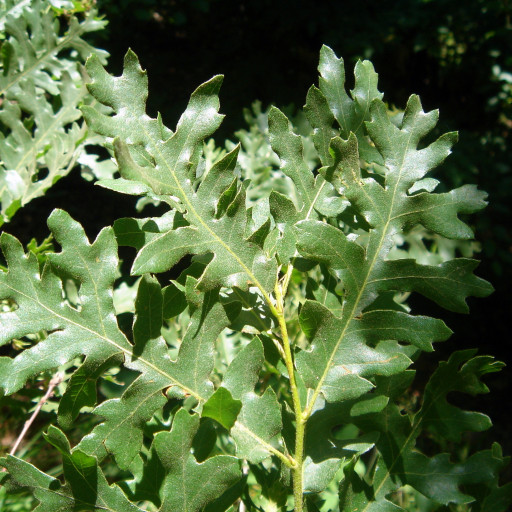
Plant Overview
Known as the Turkey Oak or the Mossy-cupped Oak, this majestic giant hails from Southeastern Europe and Asia Minor. It is the "fast-and-furious" member of the oak family, growing much quicker than its cousins to reach towering heights. While it provides a regal, sweeping silhouette for large landscapes, it is also a bit of a rebel—its wood is notoriously temperamental, often splitting and warping as it dries.
🔍 How to Identify
- 🍃 The Leaves: Unlike the soft, rounded lobes of an English Oak, these leaves are deeply cut with sharp, pointed lobes. They have a dark green, leathery topside and a paler, slightly fuzzy underside.
- 🌰 The Acorn Cup: This is the easiest giveaway! Each acorn sits in a cup covered in long, soft, moss-like bristles, giving it a distinctive "shaggy" or hairy appearance.
- 🌳 The Bark: The trunk is covered in dark grey, rugged bark that develops deep fissures over time. If you look closely at the cracks, you can often see a flash of orange-brown inner bark peeking through.
🏡 In Your Garden
- 🏰 Room to Grow: This is a legacy tree that requires significant space. It is best suited for large estates or parks where its broad, spreading canopy can expand without hitting power lines or foundations.
- 🌱 Soil Resilience: One of its greatest strengths is its tolerance for alkaline (chalky) soils and coastal salt spray, conditions that would make many other oak species struggle.
- 🐝 The Gall Wasp Connection: Be mindful that the Turkey Oak is the host for the Andricus quercuscalicis wasp. While the wasp doesn't hurt this tree, it can cause "Knopper Galls" (sticky, deformed growths) on the acorns of nearby native English Oaks.
⚠️ Safety & Toxicity
- 🐕 Pet & Livestock Risk: Like all members of the Quercus genus, the leaves and acorns contain high concentrations of tannins. If consumed in large quantities, they can be toxic to dogs, horses, and cattle, potentially causing kidney damage or severe digestive upset.
- 🧒 Human Safety: The tree is safe to touch and climb, but the acorns are extremely bitter and should not be eaten.
✨ Fun Fact
Despite its grand appearance, the wood of the Turkey Oak was historically considered "unfit for a carpenter." Because it cracks so easily, it was rarely used for furniture or ships, earning it a reputation as the "firewood oak" because it burns long and hot!

Detailed Care Instructions
To grow Quercus cerris, also known as Turkey oak, you can follow these steps:
- Choose the right location: Quercus cerris requires full sun to partial shade. Select a spot with well-draining soil, as excessive moisture can cause root rot.
- Soil preparation: Prepare the soil by removing any weeds or debris. Loosen the soil and mix in organic matter like compost or aged manure to improve drainage and fertility.
- Planting: Dig a hole that is slightly wider and deeper than the root ball of the sapling. Gently place the tree in the hole, ensuring that it is at the same depth as it was in the nursery container. Fill the hole with soil, firm it gently, and water thoroughly.
- Watering: Initially, water the young tree regularly to keep the soil moist but not waterlogged. As it grows and establishes, you can reduce watering frequency to once a week or when there is a significant lack of rainfall.
- Mulching: Apply a layer of mulch around the base of the tree to help conserve soil moisture, suppress weed growth, and insulate the roots. Keep the mulch a few inches away from the trunk to avoid rotting.
- Pruning: Prune any damaged or weak branches during the late winter or early spring while the tree is still dormant. This will help promote healthy growth and shape the tree as needed.
- Fertilizing: Quercus cerris generally does not require regular fertilization. However, you can apply a slow-release or organic fertilizer in early spring if your soil lacks essential nutrients.
- Protection: Protect the young tree from strong winds or extreme weather conditions by using stakes or windbreaks until it becomes more established.
- Pests and diseases: Regularly inspect the tree for common pests like oak leafrollers, gypsy moth caterpillars, or oak borers. If noticed, take appropriate measures to control them. Also, be aware of common diseases like oak wilt or powdery mildew and treat as necessary.
Remember to check your local gardening guidelines, as specific requirements or adaptations may be necessary based on your geographical location and climate.

Place in a bright room that is sun drenched almost all day. Or directly in a south-facing window.

Quercus Cerris is a woody perennial plant that requires a moderate amount of water to thrive. The plant should be watered deeply and infrequently, allowing the soil to dry out slightly between watering sessions. Watering too frequently or not deeply enough can cause the plant to suffer from root rot or dehydration. It is important to ensure that the soil near the roots remains moist without becoming waterlogged. In periods of prolonged drought, it may be necessary to water the plant more frequently. When watering, it is best to aim at the base of the plant rather than watering the leaves or flowers to avoid soaking them unnecessarily. Additionally, adding mulch around the base of the plant can help to retain moisture in the soil and prevent evaporation, reducing the frequency of watering necessary.
To fertilize this plant, apply a balanced slow-release fertilizer in early spring before new growth appears. Use a fertilizer with a ratio of nitrogen, phosphorus, and potassium of 10-10-10 or 20-20-20. Apply the fertilizer evenly around the drip line of the tree, avoiding contact with the trunk. Water the tree thoroughly after applying the fertilizer. Repeat the application of fertilizer every 2-3 years as needed, following the same instructions.
Quercus Cerris is a deciduous tree that prefers to grow in well-drained soil that is slightly acidic to neutral. It can tolerate a wide range of soils, including clay, loam, and sand, as long as they are not waterlogged. The soil should be rich in organic matter and have good nutrient content to support healthy growth. It is recommended to mix organic matter, such as compost, into the soil before planting. The depth of the soil should be sufficient to allow for proper root growth and development. It is important to ensure that the soil is not contaminated with chemicals or pollutants, as this can negatively affect the health of the plant. Regular watering and fertilization can help maintain soil fertility and support optimum growth and health.
There are several methods for propagating the Quercus cerris plant. One method is through seed propagation, where seeds from a mature Quercus cerris plant are harvested, cleaned, and sown in a soil mixture that is well-drained. The seeds should be covered with a thin layer of soil and kept moist.
Another method is through cuttings propagation, where pieces of young wood from a Quercus cerris plant are taken in the early summer and dipped in hormone rooting powder. The cuttings are then planted in a soil mixture that is kept moist and sheltered from direct sunlight.
A third method involves air layering, where a branch of the Quercus cerris plant is wounded and wrapped with moist sphagnum moss and plastic wrap. The moss should be kept moist and the branch left untouched until roots have formed. Once roots have formed, the branch can be planted in a soil mixture and grown as its own plant.
Regardless of the propagation method used, it is important to ensure that the plant is grown in well-drained soil and receives adequate sunlight and water. With proper care, a propagated Quercus cerris plant can continue to grow and thrive for many years.








