Plant Overview
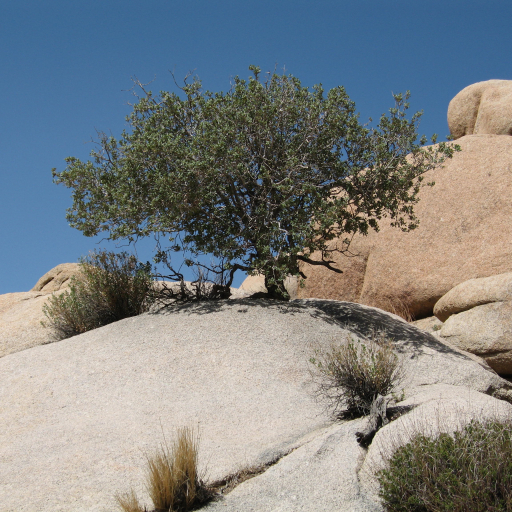
Known as Muller’s Oak or the Cornelius-muller Oak, this rugged survivor is a masterpiece of the California chaparral. Often found clinging to rocky slopes where the coastal mountains meet the desert, it is a "scrub oak" that trades towering height for a compact, resilient frame. This plant is named after the legendary botanist Cornelius H. Muller, who dedicated his life to untangling the complex family tree of North American oaks.
🔍 How to Identify
- 🍃 Leathery Leaves: The leaves are thick and bicolored—a deep olive green on top and a striking, felt-like gray or white underneath, which helps the plant reflect intense desert heat.
- 🌰 Slender Acorns: Look for long, pointed acorns that sit in shallow, woolly caps; these are vital food sources for local scrub jays and squirrels.
- 🌳 Growth Habit: Unlike the massive spreading branches of a Valley Oak, this species usually grows as a dense, multi-trunked shrub or a small, twisting tree rarely exceeding 15 feet.
🏡 In Your Garden
- 🏜️ Desert Roots: This oak is the ultimate low-maintenance choice for xeric (dry) landscaping. It has evolved to thrive on neglect and can survive on very little rainfall once established.
- 🌤️ Drainage is Key: While it is tough, it "breathes" through its roots. It hates heavy, clay-rich soil that holds water; it prefers gritty, rocky, or sandy spots where water moves away quickly from the trunk.
⚠️ Safety & Toxicity
- 🟢 Generally Safe: Like most oaks, Quercus cornelius-mulleri is not considered highly toxic to humans, though the acorns are not a snack for people without extensive traditional processing.
- 🐕 Pet Note: While not usually life-threatening, the tannins found in acorns and leaves can cause stomach upset or kidney issues in dogs and horses if consumed in large quantities.
✨ Fun Fact
Muller's Oak is a master of "hybridization." Because it lives in areas where many different oak species overlap, it frequently cross-breeds with its neighbors, creating "mystery oaks" that often baffle even professional botanists!

Detailed Care Instructions








