Plant Overview
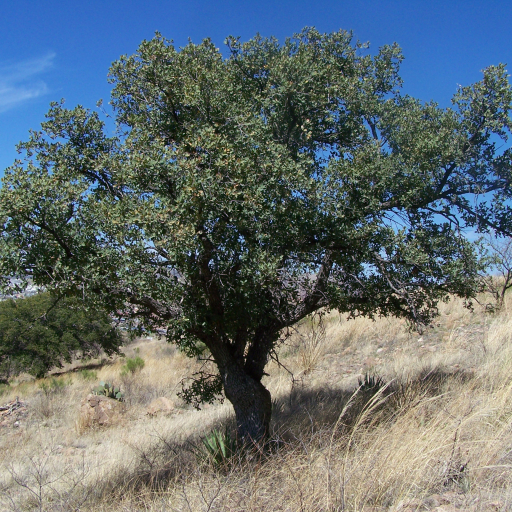
The Emory Oak is the rugged soul of the American Southwest, often found standing guard over the "Sky Islands" of Arizona and New Mexico. Often called the "Sweet Acorn Oak," it is a cornerstone of its ecosystem, providing shade and sustenance in arid landscapes. Its dark, blocky bark gives it a majestic, ancient appearance even when the tree is relatively young.
🔍 How to Identify
- 🍃 The Foliage: The leaves are small, leathery, and look a bit like holly. They are glossy dark green on top with sharp, pointed teeth along the edges, helping the tree retain moisture in dry air.
- 🧱 The Bark: As the tree matures, the bark turns a very dark gray or nearly black. It breaks into thick, square plates that look like alligator skin or charred wood.
- 🌰 The Acorns: Look for small, oblong acorns that are shiny and dark brown. Unlike many other oaks that take two years to develop fruit, the Emory Oak produces its "crop" in a single season.
🏡 In Your Garden
- 🌵 Desert Survivor: This oak is a master of water conservation. It thrives in well-draining, rocky soil and is perfectly adapted to the cycle of dry springs and summer monsoons. If you plant one, avoid heavy irrigation once it is established, as "wet feet" can lead to root rot.
- 🪵 Taproot Stability: The Emory Oak invests heavily in a deep taproot early in its life to find hidden water tables. Because of this, it is notoriously difficult to transplant once it has been in the ground for more than a year. Choose its "forever home" carefully.
⚠️ Safety & Toxicity
- 🟢 Safe for Humans: This is one of the few oaks with acorns that are naturally low in bitter tannins, making them historically significant as a food source.
- 🐕 Pet Caution: While not strictly "toxic," the leaves and raw acorns contain tannins that can cause digestive upset or kidney irritation in dogs, cats, and horses if consumed in large quantities.
✨ Fun Fact
The Emory Oak's acorns are so palatable that they were a staple food for the Apache people. Unlike most oak species, which require hours of boiling to remove bitter chemicals, Emory acorns can often be eaten raw or ground directly into a rich, nutty flour.

Detailed Care Instructions
| Humidity | Dry |
| Lighting | Part Sun |
| Difficulty | Medium |
| Hibernation | Cold Period |
| Hardiness Zones | 6 - 9 |
To grow Quercus emoryi (Emory oak) plants, here are some steps you can follow:
- Choose the right location: Emory oak thrives in full sun to partial shade. Ensure the location has well-draining soil and enough space for the tree to grow.
- Obtain seeds or seedlings: You can purchase Emory oak seeds or seedlings from a reputable nursery or collect them from existing trees in your area. Seeds need to be stratified in the refrigerator for a few months before planting.
- Prepare the soil: Emory oaks prefer well-draining soil. Amend the soil with organic matter like compost to improve its fertility and drainage.
- Planting: If starting from seeds, sow them in pots or seed trays about 1 inch deep in a well-draining potting mix. Keep the soil consistently moist until germination. Transplant the seedlings into larger containers when they have reached a suitable size. If starting with seedlings, dig a hole slightly larger than the root ball and place the seedling carefully into the hole, making sure it is at the same depth it was in its container.
- Watering: Emory oak plants need regular watering during the establishment phase. Water them deeply once or twice a week, depending on the weather conditions. Once established, they can tolerate some drought but perform best with occasional deep watering.
- Mulching: Apply a layer of organic mulch around the base of the tree to help retain moisture, prevent weed growth, and regulate soil temperature.
- Pruning: Minimal pruning is required for Emory oak trees. Remove any dead, diseased, or damaged branches or branches that are crossing and rubbing against each other. Prune during the dormant season to minimize stress on the tree.
- Fertilizer: Emory oaks generally do not require regular fertilization. However, if the soil is lacking in nutrients, you can apply a balanced slow-release fertilizer in early spring.
- Pests and diseases: Emory oaks are generally resistant to pests and diseases. However, monitor your trees for signs of any issues and take appropriate action if necessary.
- Patience: Growing a tree takes time. Emory oaks can take several years to reach maturity. Be patient and provide the necessary care for the tree to thrive.
Remember to check local regulations and guidelines regarding planting and growing trees in your area, as well as any specific care requirements for Quercus emoryi.

Place in a bright room that is sun drenched almost all day. Or directly in a south-facing window.

Quercus Emoryi plant should be watered deeply and thoroughly to promote its healthy growth. The frequency of watering may depend on various factors like soil type, temperature, humidity, and rainfall. To determine the watering need of the plant, it is important to check the soil moisture level regularly. This can be done by inserting a finger into the soil, and if it feels dry to touch, then it is time to water the plant.
When watering Quercus Emoryi plant, it is crucial to avoid overwatering, as it may lead to waterlogging, root rot, and other issues that can be harmful to the plant's health. The plant should be watered at the base, near the root zone, and not on the foliage or leaves. This helps to prevent fungal growth and other plant diseases that can occur due to wet leaves.
In summer, when the temperature is high, the plant may require more frequent watering, as the soil tends to dry out quickly. However, in winter, when the temperature is low, the plant may require less frequent watering as the soil takes longer to dry out. To help conserve water, it is recommended to add a layer of mulch around the base of the plant. This helps to retain moisture in the soil, reduces weed growth, and improves soil temperature and fertility.
Lastly, it is important to note that Quercus Emoryi plant is a drought-tolerant plant and can survive in low-water conditions. However, it is important to provide adequate water during the initial growth phase, and during periods of extended drought or heatwaves. By following these watering tips and checking the soil moisture regularly, one can ensure the healthy growth and well-being of their Quercus Emoryi plant.
To fertilize this plant, apply a balanced, slow-release fertilizer in early spring before new growth begins. Make sure to follow the manufacturer's instructions for the appropriate amount to use based on the plant's size and age. Water the plant thoroughly after fertilizing to help distribute the nutrients evenly in the soil. Avoid fertilizing during the hot summer months or in late fall when growth slows to prevent damage to the plant.
When selecting soil to use with the Quercus Emoryi plant, it is essential to choose a well-draining option that is rich in organic matter. The soil should have a pH of approximately 6-7 and be able to retain moisture without becoming waterlogged. It is beneficial to add compost, leaf litter, or other organic materials to the soil to improve its nutrients and structure. Additionally, the soil should be free of any contaminants or pollutants that could harm the Quercus Emoryi plant's growth and health. Regular fertilization with a balanced fertilizer can also help support the plant's growth and development.
Propagation of this plant can be done through various methods including collecting seeds directly from the plant or young saplings, or by taking cuttings. The seeds may need to be stratified, or exposed to a period of cold temperatures, before planting to encourage germination. Cuttings should be taken from the new growth of the plant, usually in the early spring, and rooting hormone may be necessary to encourage new root growth. The cuttings should be planted in a well-drained soil mix and kept consistently moist until new growth and roots have developed.








