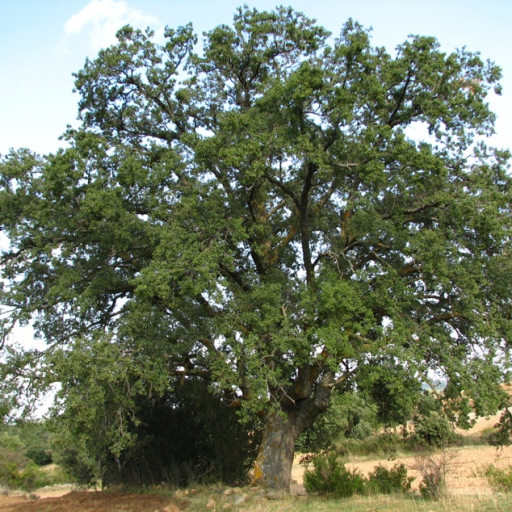
Plant Overview
Known as the Portuguese Oak or Lusitanian Oak, Quercus faginea is a resilient beauty from the sun-drenched hills of the Iberian Peninsula and North Africa. It is often called the "False Beech" because its leaves look strikingly similar to those of a Beech tree, yet it carries the sturdy, rugged soul of an oak. In its native Mediterranean home, it is a symbol of persistence, thriving in rocky landscapes where other trees might succumb to the summer heat.
🔍 How to Identify
- 🍃 The Leaves: Small, oval, and leathery with distinctive "toothed" or prickly edges. The top is a deep, glossy green, while the underside is often covered in fine, greyish hairs.
- 🪵 The Bark: As the tree matures, the bark becomes thick, deeply fissured, and a soft grey-brown color, providing a perfect home for mosses and lichens.
- 🌰 The Acorns: It produces elongated, cylindrical acorns that sit in a small, scaly cup. These appear in autumn and are a vital food source for local wildlife.
🏡 In Your Garden
- 🍂 The Winter Coat: This tree is "marcescent," meaning that while the leaves turn brown in the autumn, they often cling to the branches throughout the entire winter. This provides a unique golden texture and a lovely rustling sound in the wind when the rest of the garden is bare.
- ☀️ Drought Warrior: Because it evolved in hot, dry climates, it is exceptionally good at conserving water. Once its deep taproot is established, it requires very little supplemental watering, making it an excellent choice for xeriscaping or low-maintenance landscapes.
⚠️ Safety & Toxicity
- 🐾 Mild Toxicity: Like most oaks, the acorns and young leaves contain tannins. While generally safe to touch, they can cause digestive upset if eaten in large quantities by dogs, horses, or curious children.
- 🚫 Pet Watch: Acorns can also pose a choking hazard or cause intestinal blockages in smaller pets, so it’s best to rake them up if your furry friends like to chew on garden debris.
✨ Fun Fact
For centuries, the "oak galls" (small, round growths caused by tiny harmless wasps) found on these trees were the primary ingredient for making Iron Gall Ink. This was the standard ink used by medieval scribes, and it is the very same ink used by Leonardo da Vinci for his famous sketches!

Detailed Care Instructions
| Humidity | Normal |
| Lighting | Full Sun |
| Difficulty | Medium |
| Hibernation | Cold Period |
| Hardiness Zones | 7A - 10B |
To grow Quercus faginea, also known as Portuguese Oak, follow these steps:
- Location: Choose a suitable site that receives full sun to partial shade. Portuguese Oak prefers well-draining soil, so ensure the planting area has good drainage.
- Soil preparation: Prepare the soil by loosening it with a garden fork or tiller. Remove any weeds, rocks, or debris from the planting area. Add organic matter, such as compost or well-rotted manure, to improve soil fertility and drainage if necessary.
- Seed collection or purchase: Obtain Quercus faginea seeds either by collecting them from existing mature trees or purchasing them from a reputable nursery or seed supplier.
- Germination: Soak the seeds in lukewarm water for 24 to 48 hours to help break their dormancy. After soaking, plant the seeds in pots or seed trays filled with a well-draining potting mix. Place the pots or trays in a warm, sheltered location with indirect sunlight.
- Watering: Keep the soil consistently moist but not waterlogged. Water the seeds regularly, allowing the soil to dry out slightly between watering to prevent overwatering, which can cause rot.
- Transplanting: Once the seedlings have grown to a suitable size, usually around 6-8 inches (15-20 cm) tall, they can be transplanted into their final outdoor location. Choose a time when the seedlings are dormant, either in early spring or late autumn.
- Digging the hole: Dig a hole that is slightly wider and deeper than the root ball of the seedling.
- Planting: Carefully lift the seedling from its pot, ensuring the roots are intact. Place the seedling in the center of the hole, making sure it is at the same depth as it was in its previous container. Backfill the hole with soil, firmly pressing it down around the base of the seedling to remove any air pockets.
- Watering and maintenance: Water the newly planted seedling thoroughly and ensure it receives adequate moisture. Monitor the plant's water requirements, especially during hot, dry periods. Apply a layer of mulch around the base of the seedling to help retain moisture and suppress weed growth.
- Care and growth: Quercus faginea is a low-maintenance tree once established. Provide regular water during the first few years until it develops a strong root system. Prune any damaged or crossed branches in winter to maintain a healthy and attractive shape.
- Patience: Quercus faginea is a slow-growing tree, so be patient with its growth. It may take several years for the tree to become established and reach maturity.
Remember to check local regulations and obtain any necessary permits before planting Quercus faginea or any other tree species on public property.

Place in a bright room that is sun drenched almost all day. Or directly in a south-facing window.

Quercus Faginea is a type of tree plant that requires a moderate amount of watering. The tree should be watered thoroughly, allowing the soil to become moist, but not waterlogged. It is vital to ensure that the soil around the base of the plant is damp to a depth of at least six inches.
Watering should be done once or twice a week, depending on the climate and the local conditions. In particularly hot and dry conditions, more frequent watering may be necessary.
When watering, it is essential to avoid getting the foliage wet, as this can encourage the growth of fungal diseases. Instead, water at the base of the plant, directing the water towards the roots.
It is also important to ensure that the tree is not overwatered. Overwatering can cause root rot, which can be fatal to the plant. To prevent overwatering, it is best to let the soil dry out slightly between waterings.
In general, plants in containers may require more frequent watering than those planted in the ground. It is important to monitor the soil moisture to ensure that the plant has the optimal amount of water to thrive.
To properly fertilize this plant, use a balanced fertilizer with an N-P-K ratio of 10-10-10 or 20-20-20. Apply the fertilizer evenly around the base of the plant, avoiding direct contact with the stem or foliage. Water the plant thoroughly after fertilizing to ensure the nutrients reach the roots. Repeat the process every 4-6 weeks during the growing season, but reduce frequency during the winter months. Avoid over-fertilizing as it can lead to excessive growth and damage to the plant.
The recommended type of soil for the Quercus Faginea plant is a well-draining soil that is rich in organic matter and has a slightly acidic to neutral pH level. The soil should be light and loose, allowing for good aeration and water drainage. Additionally, it should have good water-holding capacity to ensure the roots have access to moisture during dry periods. It is important to avoid heavy and compacted soils or soils that are prone to waterlogging, as these conditions are not suitable for the Quercus Faginea plant. The plant should also be planted in a location that receives full sun to partial shade.
There are several ways to propagate this plant, including using seeds, cuttings, or layering techniques.
When propagating with seeds, it is important to collect them from the parent plant at the appropriate time. The seeds should be sown in a well-draining soil mix and kept moist until they germinate.
Another popular method is to take cuttings from the parent plant, either in the spring or fall. These cuttings can then be rooted in a soil mix or water and planted in their own pots once they have established roots.
Layering is a more complex propagation method, but can be effective for certain plants. This involves bending a branch down and burying a portion of it in the soil, allowing it to develop roots before cutting it from the parent plant and planting it on its own.
No matter which method is chosen, it is important to keep the new plant well-watered and protected from harsh environmental conditions until it has established itself in its new environment.








