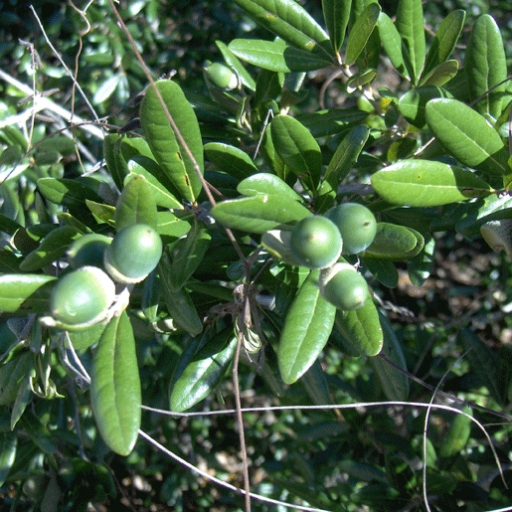
Plant Overview
Known affectionately as the Sand Live Oak, this tree is the rugged, salt-hardened sibling of the grand Southern Live Oak. Native to the sandy coastal plains of the Southeastern United States, it is a master of survival in nutrient-poor "scrub" environments. Whether standing as a windswept shrub on a coastal dune or a stout tree in a suburban backyard, it brings an air of ancient, weathered endurance to the landscape.
🔍 How to Identify
- 🍃 Curled Leaves: The most distinct feature is the "revolute" leaf margin. This means the edges of the leathery, dark green leaves curl tightly downward toward the pale, fuzzy underside.
- 🕸️ Deeply Veined: The upper surface of the leaf looks "quilted" or wrinkled because the veins are deeply impressed into the tissue, giving it a rugged, tough texture.
- 🌰 Paired Acorns: It produces small, dark brown to black acorns that typically grow in pairs on short stalks, which are often pointier than those of its relatives.
🏡 In Your Garden
- 🏖️ Sand Specialist: As the name suggests, this tree thrives in deep, infertile sand. It is a premier choice for coastal properties where salt spray and heavy winds would wither more delicate species.
- 🌳 Compact Habit: It has a slower growth rate and a much more compact, often multi-stemmed form than the standard Live Oak. This makes it a perfect structural focal point for medium-sized gardens that can't accommodate a massive 80-foot giant.
- 🛡️ Resilient Roots: Once established, its deep root system makes it incredibly drought-tolerant. It rarely needs supplemental watering after the first two years.
⚠️ Safety & Toxicity
- ✅ General Safety: The Sand Live Oak is considered non-toxic to humans and common household pets like dogs and cats.
- 🦌 Livestock Caution: Like most members of the Quercus genus, the leaves and raw acorns contain high levels of tannins. While wild animals eat them safely, they can cause digestive upset or kidney distress in horses and cattle if consumed in large quantities.
✨ Fun Fact
The specific epithet geminata comes from the Latin word for "twin" or "doubled." This refers to its signature habit of producing its acorns in perfectly matched pairs, sitting side-by-side like siblings on the branch.

Detailed Care Instructions
To grow Quercus geminata, commonly known as sand live oak, here are some steps you can follow:
- Obtain seeds or seedlings: You can collect seeds from mature sand live oak trees or purchase seedlings from a reputable nursery.
- Determine planting location: Sand live oak is native to coastal areas of the southeastern United States. Choose a location that provides full sun to partial shade and has well-draining sandy soil.
- Prepare the planting site: Remove any weeds or grass from the area where you plan to plant the sand live oak. Loosen the soil with a garden fork or tiller to ensure good root penetration.
- Planting seeds or seedlings: If growing from seeds, scarify or soak them in water for 24 hours to help with germination. Plant the seeds about 1 inch deep in the soil, or follow the instructions for seedlings provided by the nursery. Space the seedlings at least 20 feet apart to allow for their spreading canopy growth.
- Watering: Keep the soil consistently moist but not waterlogged. Young sand live oak trees require regular watering until they get established, after which they are more drought-tolerant.
- Mulching: Apply a layer of organic mulch around the base of the sand live oak to conserve moisture, suppress weeds, and insulate the roots. Make sure the mulch does not touch the trunk.
- Pruning and training: Prune any dead or damaged branches to maintain the health and shape of the tree. You may also want to selectively prune to shape the canopy as the tree matures.
- Fertilizing: Sand live oak trees generally do not require much fertilization. However, if the soil is deficient in nutrients, you can apply a slow-release balanced fertilizer during the spring.
- Protection from pests and diseases: Monitor the tree for any signs of pests or diseases, such as oak wilt or oak leaf blister. Promptly address any issues by seeking advice from a local arborist or plant expert.
- Patience and nurturing: Sand live oak trees are slow growers and may take several years to reach a substantial size. Be patient, provide regular care, and enjoy watching your Quercus geminata grow into a beautiful and resilient tree.
Remember to check local regulations and obtain any necessary permits before planting Quercus geminata or any other tree species.

Place in a bright room that is sun drenched almost all day. Or directly in a south-facing window.

To water this plant, it is recommended to dig a small hole around the base of the plant. Then, slowly pour water into the hole, being careful not to flood the area. Make sure to water the plant deeply, so that the water reaches the roots. It is important to note that this plant should not be overwatered, as this can lead to root rot. Instead, it should be watered infrequently but deeply, allowing the soil to dry out slightly between waterings. Additionally, be sure to water the plant in the early morning or late evening to avoid evaporation during the heat of the day.
To fertilize Quercus Geminata, apply a slow-release fertilizer in the early spring before new growth appears. Choose a fertilizer with a balanced NPK ratio, and follow the manufacturer's instructions for application rates. Spread the fertilizer evenly around the base of the plant, avoiding direct contact with the stem or branches. Water the plant thoroughly after fertilizing to help distribute the nutrients. Avoid fertilizing during the summer months, as this can cause excessive growth that may be susceptible to pests and disease.
Quercus Geminata thrives in well-draining soil that is rich in organic matter. The ideal pH level for this plant is slightly acidic to neutral ranging from 6.0-7.5. It is important to avoid soil that is highly alkaline. The soil should have good water retention capabilities, but not be prone to waterlogging. It is recommended that a high-quality potting mix containing a blend of peat moss, perlite, and vermiculite be used as a growing medium for this plant. When growing Quercus Geminata in the ground, it is recommended to amend the soil with organic matter such as compost or aged manure to improve its overall quality. It is also important to maintain consistent soil moisture levels, avoiding both drought and overwatering.
To propagate this plant, you can use either seeds or cuttings.
For seeds, collect them from mature fruits and remove any debris. Soak the seeds in water for 24 hours to soften them. Then, plant the seeds in a mix of sand and peat moss, ensuring they are covered with a thin layer of soil. Water the soil and keep it consistently moist. Germination may take several weeks to months, depending on the conditions.
For cuttings, select healthy stem sections that are at least six inches long. Cut the stem at a 45-degree angle just below a leaf node. Remove the leaves from the lower third of the stem. Dip the cut end into rooting hormone powder and plant the stem in a container filled with a mix of sand and peat moss. Water the soil and place the container in a shaded area with temperatures between 65-75°F. Keep the soil moist and wait for roots to appear, which can take several weeks to months. Once roots have formed, transplant the young plant to a larger container or into the ground.








