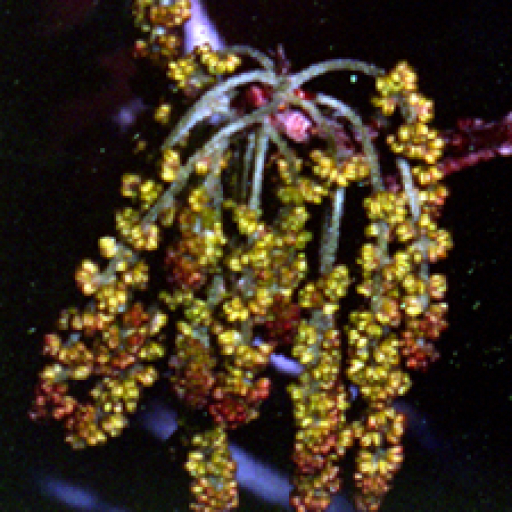
Plant Overview
Known as the "Sand Shinnery Oak" or simply "Havard Oak," this resilient shrub is a master of the American Southwest’s sandy plains. Unlike the towering oaks of the forest, the Havard Oak creates a "miniature forest" that rarely reaches taller than a person’s waist. It is a vital stabilizer for shifting sand dunes, holding the earth together with an invisible, massive underground network.
🔍 How to Identify
- 🌳 Growth Habit: It typically grows as a low, multi-stemmed shrub between 1 to 4 feet tall, often forming vast, dense colonies called "shinneries."
- 🍃 Leathery Leaves: The leaves are thick, grayish-green, and highly variable in shape—ranging from smooth edges to wavy, shallow lobes—with a fuzzy underside to conserve moisture.
- 🥜 Oversized Acorns: Despite the plant's small stature, it produces surprisingly large acorns (up to an inch long) that sit in deep, scaly cups.
🏡 In Your Garden
- 🏜️ Sand Specialist: This oak is specifically evolved for deep, sandy soils where other plants struggle. If you are trying to grow it, remember that it requires exceptional drainage; it will quickly succumb to root rot in heavy clay or soggy potting mixes.
- 🧊 Deep Roots: It is nearly impossible to transplant once established. The Shinnery Oak invests most of its energy into a taproot that can reach 15-20 feet deep to find water, making it incredibly drought-tolerant but very stubborn about being moved.
⚠️ Safety & Toxicity
- 🐂 Livestock Warning: While beautiful in its natural habitat, the young buds and acorns are toxic to cattle and sheep if consumed in large quantities.
- 🐕 Pet Safety: Like most oaks, the tannins in the acorns and leaves can cause gastrointestinal upset or even kidney damage in dogs and cats if chewed or swallowed. It’s best to keep curious pets away from the fallen acorns.
✨ Fun Fact
The Sand Shinnery Oak is often described as an "iceberg" plant. While the shrub above ground might only be 3 feet tall, the vast system of underground stems (rhizomes) and roots can account for over 90% of the plant's total mass! Typical "shinneries" are actually clones of a single genetic individual that can be hundreds of years old.

Detailed Care Instructions
To grow Quercus havardii, also known as Havard oak or shin oak, follow these steps:
- Select a suitable location: Havard oak prefers full sun but can tolerate some shade. Choose a spot with well-draining soil.
- Collect seeds: Acorns are the best way to propagate Havard oak. Collect ripe acorns from the ground in the fall. Look for ones that are plump, brown, and without any signs of damage or disease.
- Prepare the soil: Dig a hole about twice the size of the root ball of the seedling or acorn. Remove any weeds or grass from the area.
- Planting acorns: If planting acorns, soak them in water for 24 hours to initiate germination. Then, plant them about an inch deep into the prepared hole. Space the acorns about 6-10 feet apart to allow for the oak's spreading canopy.
- Watering: Keep the soil consistently moist but not waterlogged until the acorns germinate or seedlings establish. After that, water deeply, but less frequently (about once every two weeks) to encourage deep root growth.
- Mulch: Apply a layer of organic mulch around the seedlings or acorns to help retain moisture and suppress weeds. Keep the mulch a few inches away from the base of the tree to prevent rot.
- Pruning: Minimal pruning is usually required for Havard oak, but any dead, diseased, or crossing branches can be removed in the dormant season (winter).
- Maintenance: Regularly check for pests or diseases and take appropriate action if necessary. Havard oak is generally hardy and does not require frequent fertilization, but you can consider applying a slow-release balanced fertilizer in early spring if the soil lacks nutrients.
- Patience: Growing Quercus havardii from acorns or seedlings takes time. It can take several years for the tree to establish and reach maturity.
Remember to check and comply with any local regulations regarding collecting or planting native plant species.

Place in a bright room that is sun drenched almost all day. Or directly in a south-facing window.

Quercus Havardii is a type of plant that requires a specific amount of water to thrive. Before watering the plant, it is important to check the soil moisture level by inserting your finger about 2 inches into the soil. If the soil feels dry, it is time to water the plant.
When watering Quercus Havardii, use a watering can or hose with a gentle stream to wet the soil around the plant. Water the soil deeply to help the plant's roots grow strong and healthy. It is essential to avoid overwatering the plant as doing so can lead to root rot or other diseases.
The amount of water Quercus Havardii needs depends on the plant's size, age, and environmental conditions. However, in general, it is recommended to water Quercus Havardii once a week during the growing season, and reduce watering during the dormant season.
If you live in a hot and dry climate, you may need to water Quercus Havardii more frequently to keep the soil moist. However, if you live in a cooler climate, you may need to water Quercus Havardii less frequently.
It is best to water Quercus Havardii early in the morning or in the late afternoon to avoid evaporation. Also, avoid getting water on the plant's leaves as this can cause fungal infections.
Overall, by providing Quercus Havardii with the right amount of water, you can ensure that it grows beautifully and vigorously.
- First, make sure the soil around the plant is moist.
- Choose a slow-release fertilizer that is specifically formulated for trees.
- Follow the instructions on the fertilizer package for the correct amount to use based on the size and age of the tree.
- Apply the fertilizer evenly around the base of the tree, avoiding getting any on the leaves or trunk.
- Water the area around the tree thoroughly to help the fertilizer absorb into the soil.
- Repeat fertilizing once per year in the spring or fall, depending on the growing season in your area.
The most suitable type of soil for this plant is a well-drained sandy loam soil that is rich in nutrients and organic matter. The soil should have a pH level between 6.0 and 7.5. It is recommended to avoid heavy clay soils as they can retain too much moisture, which can lead to root rot. Additionally, the plant prefers soils that are slightly acidic. It is important to ensure that the soil is well-draining to prevent waterlogging, which can cause root damage. The plant is adapted to dry environments, so soil moisture should be carefully monitored and maintained at moderate levels. Mulching with organic matter can help to conserve moisture and improve soil health. Overall, the ideal soil for this plant should be nutrient-rich, well-draining, slightly acidic, and moisture-conserving.
The Quercus Havardii plant can be propagated through different methods such as rooting cuttings, planting acorns, or air layering. Here are general steps for each method:
- Propagation from cuttings:
- Take a cutting from a healthy branch that is at least 6 inches long and has several leaves attached.
- Remove the leaves from the bottom half of the cutting.
- Dip the bottom end of the cutting in rooting hormone powder and shake off excess.
- Plant the cutting in a pot of well-draining soil mix and water it thoroughly.
- Place the pot in a bright but indirect light and keep the soil moist.
- After several weeks, gently tug on the cutting to see if it has rooted. Once roots have formed, you can transplant the new plant into a larger container or outdoors.
- Propagation from acorns:
- Collect ripe acorns from a mature Quercus Havardii tree.
- Soak the acorns in water for 24 hours to remove any toxins and improve germination.
- Fill a pot or small container with well-draining soil mix and plant the acorn with the pointed end facing down, around 1-2 inches deep.
- Water the soil until it is moist but not waterlogged.
- Keep the pot in a warm location with bright but indirect light.
- Once the seedling has emerged, you can gradually acclimate it to more sunlight and outdoor conditions.
- Propagation from air layering:
- Select a healthy, non-flowering branch and peel off a narrow strip of bark around one-third to one-half of the stem, exposing the inner cambium layer.
- Wrap the cut section with moist sphagnum moss and cover it with plastic wrap, securing the ends tightly.
- Check the moisture level of the moss regularly and mist it if needed to keep it damp.
- After several weeks, roots should have formed at the cut section. Cut the branch below the rooted section and pot it in well-draining soil mix.
- Keep the new plant in a warm, bright location with moderate humidity, watering it regularly.








