Plant Overview
Known as the "Shingle Oak," Quercus imbricaria is a beautiful anomaly in the oak family. Unlike its cousins with deeply lobed, "toothy" leaves, this tree boasts smooth, elegant foliage that more closely resembles a laurel or bay tree. Historically cherished by American pioneers for its sturdy timber, it stands as a dense-crowned, symmetrical guardian of the landscape that provides exceptional shade.
🔍 How to Identify
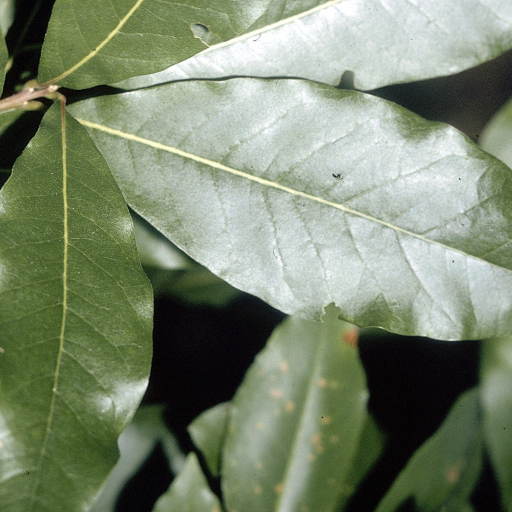
- 🍃 The Leaves: Unlike typical oaks, these leaves are "entire" (smooth-edged) and oblong. they are a lustrous, dark green on top with a pale, downy underside that feels slightly fuzzy to the touch.
- 🌳 Growth Habit: In its youth, the tree maintains a pyramidal shape, but as it matures, it spreads out into a broad, rounded canopy that can reach up to 60 feet wide.
- 🥜 The Acorns: It produces small, dark brown acorns about half an inch long. They sit in a thin, bowl-shaped cup covered in reddish-brown scales, often appearing in pairs.
🏡 In Your Garden
- 🛡️ Privacy & Screening: Because this oak holds onto its dried, brown leaves throughout the winter (a trait called marcescence), it is one of the best deciduous trees to use as a year-round privacy screen or windbreak.
- 🌱 Urban Resilience: The Shingle Oak is remarkably tough. It is more tolerant of urban pollution and varied soil pH levels than many other oak species, making it a reliable choice for city parks or large suburban yards.
- 🦋 Wildlife Value: While it provides shade for you, it provides a feast for others. It is a critical host plant for various hairstreak butterflies and provides essential winter food for squirrels, wild turkeys, and blue jays.
⚠️ Safety & Toxicity
- 🐾 Low Toxicity: Like all members of the Quercus genus, the leaves and acorns contain tannins, which can be toxic if consumed in very large quantities.
- 🐕 Pet Safety: While usually ignored by pets, horses and dogs should be kept from eating large amounts of acorns, as the tannins can cause digestive upset or, in rare cases, kidney issues.
✨ Fun Fact
The name imbricaria comes from the Latin word imbrex, meaning "hollow roof tile." Early American settlers found the wood so easy to split and so durable that it became the primary source for making hand-split shingles for their cabins.

Detailed Care Instructions
| Color | Yellowish-Green |
| Soil Ph | Neutral To Slightly Alkaline |
| Toxicity | Non-Toxic |
| Soil Type | Hummus Loams With Good Drainage |
| Bloom Time | April |
| Plant Type | Deciduous Tree |
| Mature Size | 40 To 60 Ft. Wide, 40 To 60 Ft. Tall |
| Native Area | Central United States |
| Sun Exposure | Full Sun |
| Hardiness Zones | 4-8 |
Growing Quercus imbricaria, also known as the shingle oak, requires the following steps:
- Climate suitability: Ensure that you live in a region with a suitable climate for this tree. Quercus imbricaria is native to eastern North America and grows well in USDA hardiness zones 4-8.
- Choose the right location: Select a spot in your garden with full sun to partial shade. The soil should be well-draining and slightly acidic.
- Planting: Plant your Quercus imbricaria in spring or fall when the soil is workable. Dig a hole twice as wide and as deep as the tree's root ball. Place the tree in the hole and backfill with soil, making sure not to bury the crown. Gently tamp down the soil to eliminate air pockets.
- Watering: Water the tree immediately after planting and regularly thereafter, keeping the soil consistently moist but not waterlogged. Deep watering is preferable to shallow watering, as it promotes deeper root growth.
- Mulching: Apply a layer of organic mulch around the tree, leaving a gap around the trunk to prevent moisture buildup and potential rot. Mulch helps retain soil moisture and suppresses weed growth.
- Pruning: Prune your Quercus imbricaria only if necessary, such as removing dead, damaged, or crossing branches. Avoid excessive pruning, as it can weaken the tree.
- Fertilizing: Shingle oaks generally don't require fertilization, especially if planted in nutrient-rich soil. However, if the tree appears weak or lacks proper growth, you can apply a slow-release fertilizer in spring.
- Pest and disease management: Monitor your tree for common pests like aphids, scale insects, and oak wilt disease. If any issues arise, consult with a local arborist or extension service for appropriate control measures.
- Patience: Quercus imbricaria is a slow-growing tree, and it may take several years for it to reach maturity and develop a full canopy. Be patient and provide ongoing care to ensure its healthy growth.
Remember, it's always essential to research and adapt the specific requirements based on your location and the tree's overall health.

Place in a bright room that is sun drenched almost all day. Or directly in a south-facing window.

The Quercus Imbricaria plant requires regular watering, especially during the initial stages of growth. It is essential to keep the soil consistently moist, but not overly saturated. It is best to water the plant deeply at least once a week, allowing the water to soak in slowly rather than flooding the soil quickly.
When watering, it is crucial to avoid getting water on the leaves and branches, as this can promote the growth of molds and diseases. It is best to water the plant at the base, using a watering can or a garden hose with a soft hose attachment to control the flow.
To determine if the plant needs watering, stick your finger about an inch into the soil. If the soil feels dry, it is time to water. In dry weather conditions, the plant may require additional watering, while during rainy periods, less watering may be necessary.
Overall, the key is to be consistent with watering, providing enough moisture without overwatering or underwatering the plant. Adequate water intake is essential for the Quercus Imbricaria plant's healthy growth and development.
To fertilize this plant, apply a slow-release granular fertilizer in early spring before new growth begins. Use two pounds of fertilizer for every 100 square feet of soil around the plant. Water the area well after applying the fertilizer to help it soak into the soil. Avoid fertilizing in late summer or early fall when the plant is preparing for dormancy.
The ideal soil for this plant would be well-draining, slightly acidic, and rich in organic matter. It should have a pH between 5.5 and 6.5. A mixture of peat moss, vermiculite, perlite, and compost would work well as a planting medium. It is important to ensure that the soil is not too compacted since this can inhibit root growth. It is also recommended to mulch around the base of the plant to help retain moisture and suppress weeds.
Quercus Imbricaria can be propagated through seeds or vegetative cuttings. To propagate through seeds, collect ripe acorns from the tree in the fall. Remove the caps and place the acorns in a container of water. Those that float should be discarded as they are not viable. Next, place the viable acorns in a plastic bag filled with damp peat moss and keep them in a cool, dry place until spring. In the spring, plant the acorns in pots filled with a well-draining potting mix. Water regularly and keep the pots in a warm, sunny location.
To propagate through cuttings, choose a healthy, mature stem from the tree. Make a clean cut on the stem, just below a leaf node or bud. Treat the cut end with rooting hormone and place it in a pot filled with a well-draining potting mix. Cover the pot with a plastic bag or dome to maintain humidity and keep the cutting in a warm, bright location. After several weeks, check for signs of roots. Once roots have formed, the cutting can be transplanted into a larger pot or the ground.








