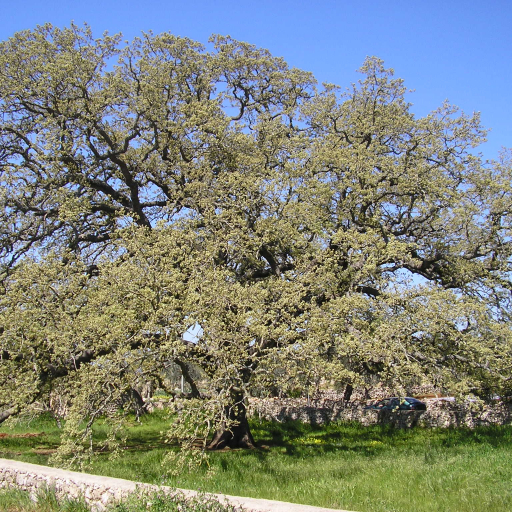
Plant Overview
Known as the Mount Tabor Oak, this majestic tree is a true symbol of the Mediterranean landscape. It is often celebrated in folklore and history as a "sacred" tree, providing expansive shade for weary travelers for thousands of years. With its rugged, gnarled trunk and sprawling canopy, it creates a miniature ecosystem wherever it stands.
🔍 How to Identify
- 🍃 The Leaves: Look for leathery, oval-shaped leaves with distinct, bristly teeth along the edges. They are dark green and slightly glossy on top, but paler underneath.
- 🪵 The Bark: The trunk is a standout feature, covered in thick, corky bark with deep, dark fissures that give it an ancient, weathered appearance even when young.
- 🌰 The Acorns: These are among the largest in the oak family! They sit in distinctive "shaggy" or prickly cups that look like they are wearing a tiny, fuzzy hat.
🏡 In Your Garden
- 🌳 Space & Patience: This is a slow-growing giant that can live for centuries. It develops a massive taproot early on, which makes it incredibly drought-tolerant but also means it hates being moved once planted.
- ☀️ Sun & Soil: It thrives in full sun and is surprisingly unpicky about soil, though it has a historical preference for the limestone-rich hills of the Levant. It’s an excellent choice for a "legacy tree" in larger landscapes.
⚠️ Safety & Toxicity
- 🐾 Mild Toxicity: Like most oaks, the leaves and raw acorns contain high levels of tannins.
- 🤢 The Risk: While not usually fatal, ingestion of large amounts of raw acorns can cause digestive upset or kidney issues in dogs, horses, and small children. Always keep an eye on curious pets during the autumn drop.
✨ Fun Fact
In ancient times, the massive acorn cups of the Mount Tabor Oak weren't just for squirrels—they were highly valued by craftsmen for their high tannin content, which was used to tan high-quality leather and create deep black dyes.

Detailed Care Instructions
Here are some steps to help you grow Quercus ithaburensis (Palestinian Oak) plant:
- Select the right planting location: Quercus ithaburensis prefers a sunny location with well-drained soil. The soil should be slightly acidic to slightly alkaline.
- Obtain healthy seedlings or acorns: You can purchase Quercus ithaburensis seedlings or collect acorns from mature trees. Acorns can be collected in the fall when they naturally fall from the trees.
- Prepare the soil: Before planting, ensure the soil is loosened and free of weeds. Add organic matter like compost or well-rotted manure to enrich the soil's fertility.
- Planting: Dig a hole that is slightly wider and deeper than the seedling's root ball or acorn. Plant the seedling and backfill the hole with soil, gently firming it around the roots. If planting an acorn, first germinate it in a pot, then transplant the seedling when it becomes sturdy enough.
- Watering: Proper watering is crucial during the establishment phase. Keep the soil consistently moist but not waterlogged. Once the tree is established, reduce the frequency of watering to mimic natural rainfall patterns.
- Mulching: Apply a layer of organic mulch, such as wood chips or straw, around the base of the plant. This helps to conserve moisture, inhibit weed growth, and regulate soil temperature.
- Pruning: Quercus ithaburensis generally doesn't require much pruning. Remove any dead or damaged branches to maintain the plant's health and appearance. Pruning should be done in late winter or early spring when the tree is dormant.
- Fertilizing: Quercus ithaburensis generally doesn't require much fertilizer. However, if the tree seems to be lacking nutrients, you can apply a balanced slow-release fertilizer in early spring.
- Pests and diseases: Monitor the plant for common pests like aphids, caterpillars, or oak gall wasps. Inspect for signs of diseases such as powdery mildew or oak wilt. Treat any issues promptly using appropriate organic or chemical remedies.
- Patience and care: Growing Quercus ithaburensis may take several years before it reaches maturity. Be patient and provide consistent care by regular watering, weeding, monitoring, and protecting it from extreme weather conditions.
Remember, it's beneficial to do additional research to understand your specific climate, soil conditions, and any specific requirements of Quercus ithaburensis for optimal growth.

Place in a bright room that is sun drenched almost all day. Or directly in a south-facing window.

Quercus Ithaburensis is a plant that requires moderate watering. To water this plant, it is important to ensure that the soil is dry before watering again, as it does not tolerate sitting in standing water. It is recommended to water the plant deeply, ensuring that the water reaches the roots. Water should be applied slowly and evenly around the plant, so that the water is absorbed well by the soil. It is important to avoid watering the leaves, as this can lead to the growth of fungus or other problems. In addition, it is also recommended to use a well-draining pot or container for this plant, to help prevent water from accumulating in the soil. Finally, it is important to monitor the plant regularly and adjust watering frequency as needed, depending on the conditions in which the plant is growing.
To fertilize this plant, use a slow-release granular fertilizer with a balanced NPK ratio, such as 10-10-10 or 14-14-14. Apply the fertilizer in early spring, just before new growth appears, or in early fall, after the plant has gone dormant. Use a rate of 1 tablespoon of fertilizer per square foot of soil surface, or follow the manufacturer's instructions. Water the plant after applying the fertilizer to help activate it and prevent root burn. Avoid over-fertilizing, which can damage the plant and increase the risk of pest and disease problems.
When selecting soil for this plant species, it is important to consider its natural habitat and preferred growing conditions. Quercus Ithaburensis tends to grow in areas with well-draining soils that are slightly acidic to neutral in pH. The soil should be rich in organic matter, such as compost or leaf mold, and should have good water retention properties without becoming waterlogged. A mixture of loam and sandy soil with a pH between 5.5 and 7.5 is ideal for this plant. It is important to avoid using soils that are heavy in clay or have a high salt content, as these can negatively affect the growth and health of the plant. Additionally, providing regular fertilization, preferably with an organic fertilizer, can help to promote healthy growth and development.
In order to propagate this plant, you will need to collect ripe acorns from healthy trees in the fall. Remove the caps and soak the acorns overnight in water to encourage germination. Plant the acorns in a well-draining soil mix, making sure to plant them at a depth of about 1 inch (2.5 cm) below the soil surface. Keep the soil moist but not waterlogged, and provide the seedlings with bright, indirect light. As the seedlings grow, you can gradually introduce them to more sun.
Once the seedlings have become established and have grown to a size of around 6 inches (15 cm), you can transplant them into larger containers or directly into the ground. Be sure to select a site with well-draining soil and plenty of sunlight. Water the plants regularly during the first year to help them get established, and mulch around the base to help retain soil moisture. With proper care, your Quercus Ithaburensis plants should grow into large, beautiful trees over time.








