Plant Overview
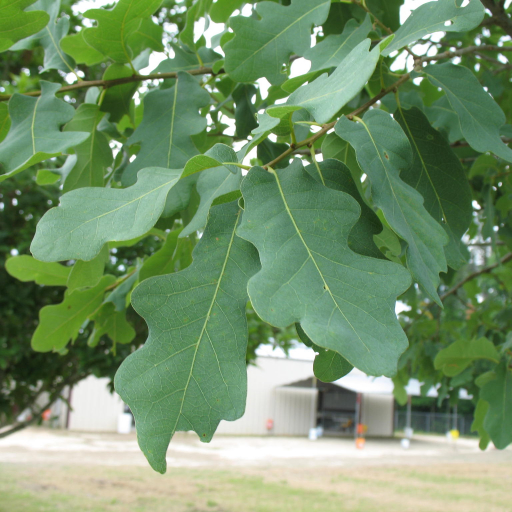
Known as the "Smoky Oak" for its distinctive blue-grey foliage, the Lacey Oak is a rugged beauty native to the limestone hills of Texas and Mexico. It is a smaller, stouter oak that often looks like a miniature version of a majestic white oak, making it perfect for residential landscapes. If you are looking for a "tough-as-nails" tree that brings a unique, cool color palette to a sunny yard, this is your champion.
🔍 How to Identify
- 🍃 Blue-Grey Leaves: The foliage is the star—oblong, leathery leaves with a unique glaucous (powdery) blue-green hue that stands out against typical garden greens.
- 🍑 Smoky New Growth: In the spring, the emerging leaves have a striking peach or soft pink tint, giving the tree a "smoky" appearance before they mature.
- 🪵 Rough Bark: The bark is deeply furrowed and grey, providing a rugged, textured look that adds winter interest even after the leaves have fallen.
🏡 In Your Garden
- 🪨 Alkaline Specialist: This tree is a specialist in rocky, limestone-rich soils. Unlike many other oaks, it rarely suffers from iron chlorosis (yellowing leaves) in high-pH dirt.
- 💧 Drought Warrior: Once established, the Lacey Oak is incredibly water-efficient. It has evolved to survive scorching summers and rocky slopes, making it ideal for xeriscaping.
- 🏗️ Pavement Friendly: Because it grows slowly and possesses a deep taproot rather than aggressive surface roots, it is much safer to plant near patios or sidewalks than its larger cousins.
⚠️ Safety & Toxicity
- 🐾 Mildly Toxic: Like all members of the Quercus family, the acorns and young leaves contain tannins. If ingested in large quantities by dogs, cats, or horses, they can cause digestive upset or kidney issues.
- 🧤 General Handling: The tree is safe to touch and climb. However, the leaves are stiff and the wood is very hard, so wearing gloves during pruning is recommended to prevent scratches.
✨ Fun Fact
The Lacey Oak was officially designated a "Texas Superstar" by horticulturalists because of its incredible ability to thrive in extreme heat and resist common oak diseases like oak wilt better than many other species.

Detailed Care Instructions

Place in a bright room that is sun drenched almost all day. Or directly in a south-facing window.

In order to properly water this particular plant, it is important to first consider its specific water requirements. This can depend on a variety of factors, including the soil type, the average temperature and humidity in the growing location, and the time of year.
Ideally, the plant should be watered deeply but infrequently, allowing the soil to dry out slightly between watering sessions. This will encourage the development of a deep root system, which is important for promoting healthy growth and resilience to drought conditions.
When watering, it is important to avoid getting the leaves or foliage wet, as this can increase the risk of fungal infections and other diseases. Instead, focus on watering the soil directly around the base of the plant, using a slow and steady stream of water to ensure that the soil is evenly saturated.
To help conserve moisture and reduce the need for frequent watering, consider using a layer of mulch around the base of the plant. This can also provide additional nutrients as the mulch breaks down over time.
In general, it is important to monitor the plant closely and adjust watering practices as needed to ensure optimal growth and health.
For optimal growth, it is recommended to use a well-draining soil mix that is rich in organic matter and has a slightly acidic pH level. It should be a mixture of peat moss, perlite, and coarse sand or gravel. The soil should be moist but not waterlogged, and it should provide adequate aeration for the roots. Adding some fertilizer can also be helpful, but it should be applied in moderation to avoid burning the plant's roots. Avoid using heavy clay soils that can lead to poor drainage and cause root rot.








