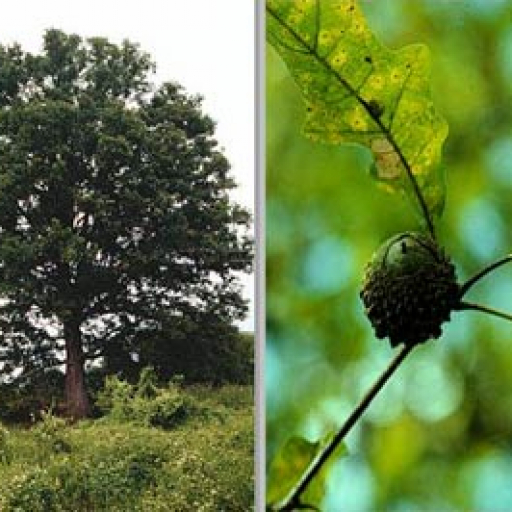
Plant Overview
The Overcup Oak is a resilient sentinel of the American South, often found standing tall in swampy bottomlands where other trees might drown. Its name comes from its most peculiar feature: an acorn cap that hugs the nut so tightly it looks like a little wooden cocoon. Known for its "tough-as-nails" attitude, it is a favorite for gardeners looking for a majestic shade tree that can survive both heavy floods and urban stress.
🔍 How to Identify
- 🍃 The Lyre Leaf: The leaves are uniquely "lyrate"—narrow at the base and widening toward the tip, with deep, rounded lobes that resemble the shape of an ancient Greek lyre.
- 🥜 The Overcup Acorn: This is the giveaway; the woody, warty cap (cupule) almost entirely encloses the acorn, leaving only the very tip visible.
- Bark Grayish Scaly Bark: As the tree matures, the bark turns a soft brownish-gray and develops thick, irregular plates or scales that give it a rugged, textured look.
🏡 In Your Garden
- 💧 Wetland Warrior: Unlike many oaks that demand well-drained soil, the Overcup Oak thrives in "wet feet." It is the perfect choice for low-lying spots in your yard where water tends to collect after a storm.
- 🌳 Urban Resilience: This tree is surprisingly tolerant of compacted city soils and pollution. While it grows slowly, it eventually forms a wide, rounded canopy that provides deep, cooling shade for generations.
⚠️ Safety & Toxicity
- 🐾 Pet Safety: Like all members of the Quercus genus, the acorns and young leaves contain gallotannins. If ingested in large quantities by dogs or horses, they can cause gastrointestinal distress or, in rare cases, kidney damage.
- 👶 Child Safety: The acorns are not considered toxic to humans in small amounts, but they are very bitter and represent a choking hazard for small children.
✨ Fun Fact
The Overcup Oak is a master of maritime travel. The spongy, oversized cap of the acorn is filled with air pockets, allowing the seeds to float like tiny boats on floodwaters to find new soil downstream!

Detailed Care Instructions
To grow Quercus lyrata, also known as the Overcup Oak, follow these steps:
- Choose the right location: Overcup Oak prefers full sun or partial shade. Ensure that the chosen spot has well-draining soil.
- Prepare the soil: Overcup Oak can tolerate a range of soil types, including clay and sandy soils. However, it thrives in moist, fertile soil. Incorporate organic matter like compost or leaf mulch into the soil to improve fertility and drainage.
- Select healthy saplings: Purchase healthy Quercus lyrata saplings from a reputable nursery or garden center. Look for plants with a straight, sturdy trunk, and well-developed root system.
- Planting: Dig a hole that is twice as wide and deep as the root ball. Place the sapling in the hole, ensuring the soil level around the base of the stem matches the surrounding ground. Backfill the hole with soil, gently firming it around the roots. Water thoroughly after planting.
- Watering: Overcup Oak is drought-tolerant but benefits from regular watering, especially during the first year after planting. Water deeply once or twice a week, ensuring the soil stays moist but not waterlogged. Reduce watering once the plant is established.
- Mulching: Apply a layer of organic mulch around the base of the tree, leaving a gap around the stem to prevent moisture buildup. This helps retain moisture, suppresses weeds, and protects the roots from temperature fluctuations.
- Pruning: Prune Quercus lyrata minimally, typically only to remove dead, damaged, or crossing branches. Pruning is best done during the tree's dormant season in late winter or early spring.
- Fertilizing: Overcup Oak usually doesn't require regular fertilization, especially if you've incorporated organic matter into the soil during planting. However, if growth appears weak or pale, a slow-release, balanced fertilizer can be applied in early spring.
- Pests and diseases: Overcup Oak is generally resistant to pests and diseases. However, monitor for common issues like oak wilt or caterpillar infestations. Promptly address any signs of decline or damage.
- Patience: Quercus lyrata is a slow-growing tree, so be patient with its growth. It may take several years for it to reach its full potential.
Remember to check with your local gardening or forestry authorities for any specific region-based recommendations or regulations regarding the growth of Quercus lyrata.

Place in a bright room that is sun drenched almost all day. Or directly in a south-facing window.

The watering schedule for this plant should be determined based on the soil moisture level rather than a set schedule. In general, the plant prefers consistently moist, but not overly wet, soil. To determine if the plant needs water, feel the soil around the roots about two inches deep. If the soil feels dry to the touch, it is time to water. When watering, apply enough water to thoroughly saturate the soil, but avoid overwatering. Allow the soil to dry out slightly before watering again. Additionally, it is important to water the plant at the base rather than overhead to avoid wetting the leaves and causing leaf spot diseases. Watering should be reduced during the dormant season.
First, determine the age and size of the plant to properly calculate the amount of fertilizer needed. Then, apply a balanced lawn fertilizer, such as a 10-10-10 or 16-4-8, at a rate of approximately one pound per inch of trunk diameter. Spread the fertilizer evenly around the base of the plant, avoiding direct contact with the trunk. Water the plant thoroughly after fertilizing. Fertilize once in early spring before new growth appears and again in late summer to promote healthy growth and development.
Quercus Lyrata prefers a well-drained soil that is slightly acidic. The soil should be rich in nutrients and organic matter to promote healthy growth and development. A soil mix containing a blend of sandy loam, perlite, and Canadian peat moss is ideal for this plant. It is important to avoid using heavy or dense soils that can lead to waterlogging, as this can be harmful to the plant. Additionally, it is recommended to choose a soil that has a pH level between 5.5 and 6.5, as this will provide the optimal growing conditions for Quercus Lyrata.
Propagation of the plant Quercus Lyrata can be accomplished through several methods including seed germination, hardwood cuttings, and grafting. However, for this response, we will only discuss one method - softwood cuttings.
Softwood cuttings are taken from new growth, usually in the early summer. Here are the steps to successfully propagate Quercus Lyrata using softwood cuttings:
- Choose healthy parent plant(s) with vigorous new growth.
- Select a healthy stem with no signs of disease or damage, and cut it at a 45-degree angle with a sharp knife or pruning shears.
- Remove all but the top few leaves from the cutting.
- Dip the cut end of the stem in a rooting hormone powder or gel.
- Plant the cutting in a pot containing a well-draining rooting medium, such as a combination of peat moss, perlite, and sand.
- Place the pot in a bright but indirect light location, and keep the soil moist but not waterlogged.
- Cover the pot with a plastic bag or dome to create a humid environment, which will encourage rooting.
- Once roots have formed, which can take several weeks to several months, the new plant can be transplanted into a larger container or into the ground.
By following these steps, you should be able to successfully propagate Quercus Lyrata using softwood cuttings.
Common pests of the overcup oak include Larvae. Make a habit of checking your overcup oak frequently for pests so that any infestations can be caught and managed early.








