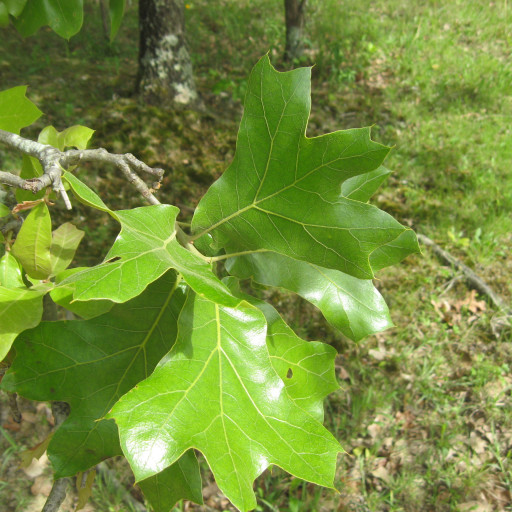
Plant Overview
Known widely as the Blackjack Oak, the Quercus marilandica is the rugged survivor of the oak family. Thriving in harsh, sandy, or clay-heavy soils where other trees struggle to take root, it is often found in the "Barrens" of the eastern and central United States. While it may not reach the towering heights of its cousins, its gnarled branches and dark, blocky bark give it a distinctive, stoic personality.
🔍 How to Identify
- 🍃 The Leaf Shape: Unlike the deeply lobed leaves of many oaks, the Blackjack has broad, "club-shaped" leaves that are wider at the tip than at the base. They often look like three-lobed bells.
- 🌑 The Bark: The bark is exceptionally dark—nearly black—and is divided into rough, square plates or "blocks" that look like cracked pavement.
- 🍂 Texture and Color: The leaves are thick, leathery, and a deep, glossy green on top, while the undersides are covered in fine, rust-colored hairs.
- 🌰 The Acorn: It produces small, striped acorns housed in a scaly, bowl-shaped cup that covers nearly half of the nut.
🏡 In Your Garden
- 🧱 Tough as Nails: This tree is the ultimate choice for "problem spots" in a landscape. It thrives in poor, dry, or rocky soil and is incredibly drought-tolerant once established.
- 🦋 Wildlife Sanctuary: Despite its slow growth, it is a powerhouse for local ecology. It serves as a larval host for various Hairstreak butterflies and provides essential winter food for squirrels and wild turkeys.
- 🌳 Growth Habit: Because it has a deep taproot, it hates being moved. Plant it exactly where you want it to stay for the next century, as transplanting an established Blackjack Oak is rarely successful.
⚠️ Safety & Toxicity
- 🟢 General Status: Non-toxic to humans upon touch, but like all oaks, the acorns and young leaves contain tannins.
- 🐶 Pet Caution: While not "poisonous" in small amounts, if dogs or horses consume large quantities of raw acorns, the tannins can cause digestive upset or, in extreme cases, kidney issues.
- 🧤 Garden Safety: The wood is incredibly hard and dense; when pruning, ensure you use sharp, high-quality tools to avoid "snap-back" or jagged cuts.
✨ Fun Fact
The wood of the Blackjack Oak is so dense and heavy that it was historically the preferred fuel for charcoal production and wood-burning stoves, as it burns incredibly hot and long—earning it the nickname "Iron Oak" in some regions.

Detailed Care Instructions
These extremely slow-growing oaks can live a very long time, up to 200 years.
Does a blackjack oak tree make good firewood?
Blackjack oak wood is excellent firewood. It is incredibly dense and will burn long and hot.
How often does the blackjack oak produce acorns?
The tree doesn't produce acorns yearly but every two, with mast years, happening every four or so.
To grow Quercus Marilandica, also known as the blackjack oak or baron oak, you can follow these steps:
- Climate and Location: Determine whether the blackjack oak is suitable for your climate and region. It is native to eastern and central North America and typically grows in dry, sandy, or rocky soils. It thrives in USDA hardiness zones 3 to 9.
- Soil Preparation: Prepare the soil by ensuring it is well-draining and slightly acidic to neutral in pH. Remove any weeds or grass from the planting area.
- Planting: Obtain Quercus Marilandica seeds or seedlings. Plant the seeds in the desired location either in the fall or early spring. If using seedlings, follow the instructions provided with the plants. Make sure to space plants at least 20 to 30 feet apart to allow them to reach their full size.
- Watering: Provide sufficient water to the newly planted seeds or seedlings to keep the soil moist but not waterlogged. After the establishment period, blackjack oaks are adapted to dry conditions and generally do not require additional watering. However, water during extended drought periods.
- Sunlight: Blackjack oaks prefer full sun exposure, so plant them in an area that receives direct sunlight for at least six to eight hours a day.
- Mulching: Mulching around the base of the plant can help retain moisture, control weeds, and regulate soil temperature. Apply a layer of organic mulch, such as wood chips or shredded bark, around the plant but avoid piling it against the trunk.
- Pruning and Maintenance: Prune Quercus Marilandica sparingly, mainly to remove dead or damaged branches. Avoid heavy pruning, which can affect the overall shape and growth of the tree. Regularly monitor the plant for signs of disease or pests and address any issues promptly.
- Fertilization: Blackjack oaks generally do not require heavy fertilization. However, if the soil lacks essential nutrients, you can apply a balanced slow-release fertilizer in early spring according to the manufacturer's instructions.
- Patience: Growing trees takes time, and the growth rate of Quercus Marilandica can be relatively slow. Be patient and provide consistent care while allowing the tree to establish and develop over time.
Remember to consult local gardening experts or nurseries for specific advice tailored to your region and climate.

Place in a bright room that is sun drenched almost all day. Or directly in a south-facing window.

When watering this particular plant species, it is important to consider the soil moisture levels and the surrounding environment. Make sure that the soil is not too dry or too waterlogged, as this can affect the plant's growth and overall health.
To water Quercus Marilandica, begin by checking the soil moisture levels by sticking your finger about an inch into the soil. If it feels dry, it is time to water. Use a watering can or hose to slowly and evenly water the soil around the plant. Avoid watering the leaves or trunk directly, as this can cause damage or disease.
It is best to water this plant deeply and infrequently, rather than giving it frequent small amounts of water. This encourages the roots to grow deeper and makes the plant better equipped to withstand drought.
During hot and dry periods, the plant may require more frequent watering, but be sure to monitor the soil moisture levels and avoid over-watering. It is also important to provide adequate drainage to prevent waterlogging and root rot.
In general, aim to water Quercus Marilandica about once a week or as needed, depending on the weather and soil conditions.
To properly fertilize the Quercus Marilandica plant, you will need to apply a slow-release fertilizer in the early spring. Ensure that the fertilizer is rich in nitrogen and potassium, as these are the primary nutrients needed by the plant to thrive. Additionally, be sure to apply the fertilizer evenly across the soil surface, as this will help to promote even growth and prevent nutrient deficiencies. It is also important to water the plant thoroughly after fertilization, as this will help to activate the nutrients in the soil and ensure that they are absorbed by the plant. Finally, be sure to monitor the plant closely for signs of nutrient deficiencies or other nutrient-related issues, as these can indicate that the plant is not receiving the proper fertilization it needs to grow and thrive.
The ideal soil for the Quercus Marilandica plant is well-draining and slightly acidic. It should contain a mixture of sand, clay, and organic matter such as compost or peat moss. The soil should also be rich in nutrients, particularly nitrogen, phosphorus, and potassium. To ensure proper drainage, it is recommended to add perlite or coarse sand to the soil mixture. It is important to avoid using heavy, compacted soil as it can inhibit root growth and lead to root rot. Additionally, the soil should be kept moist, but not waterlogged, as excessive moisture can also cause root rot.
To propagate this plant, you will need to collect acorns from mature trees in the fall. Choose healthy acorns that are free of pests and damage. Clean the acorns by removing any debris or foreign objects and soak them in water overnight.
Next, prepare a potting mix made of equal parts sand and peat moss. Fill pots with the mixture and plant the acorns about 1 inch deep. Keep the pots in a warm and well-lit area, and keep the soil moist.
After 6-8 weeks, the acorns should begin to sprout. Once the seedlings have grown to 2-3 inches in height, they can be carefully transplanted into larger containers or planted in the ground.
The newly propagated plants will need to be watered regularly and protected from harsh weather conditions during their early growth stages. With proper care, they will grow into healthy trees over time.








