Plant Overview
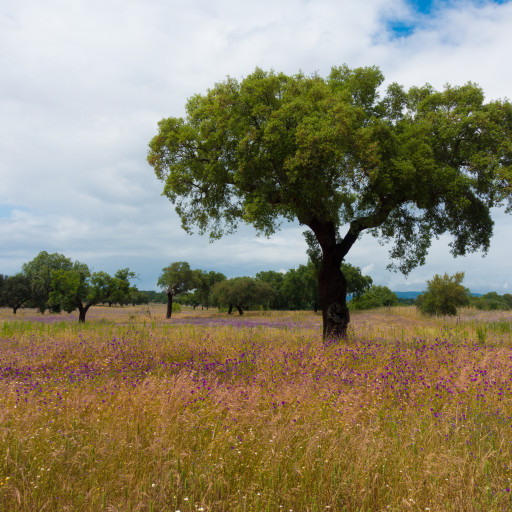
Known as the Cork Oak, this ancient Mediterranean sentinel is the source of every wine cork you’ve ever popped. It is a symbol of endurance and survival, often standing as the lone survivor of forest fires thanks to its massive, fire-resistant armor. In its native Portugal and Spain, these trees create a unique ecosystem called the Montado, supporting everything from black iberian pigs to rare eagles.
🔍 How to Identify
- 🌳 The Bark: The most iconic feature—an incredibly thick, craggy, and light-gray layer that feels slightly "spongy" to the touch and grows deeper fissures as it ages.
- 🍃 The Foliage: Unlike many oaks, this is an evergreen. The leaves are small, oval, and leathery with tiny teeth along the edges, sporting a glossy dark green top and a fuzzy, silvery-grey underside.
- 🥜 The Acorns: It produces elongated acorns that sit in deep, "shaggy" cups covered in soft, spreading scales.
🏡 In Your Garden
- 🏜️ The Taproot: This tree develops a deep, aggressive taproot early in its life. Because of this, it is notoriously difficult to transplant; choose its "forever home" carefully, as it hates being moved once the root is set.
- ☀️ Climate Resilience: It is a master of drought resistance but requires very well-drained, slightly acidic soil. It will struggle in heavy clay or areas where water pools, as it is prone to root rot in soggy conditions.
⚠️ Safety & Toxicity
- 🐶 Moderate Risk: Like most members of the Quercus family, the acorns and young leaves contain high concentrations of tannins.
- 🤢 Details: While generally safe to touch, ingestion of acorns by dogs, cats, or horses can lead to severe abdominal pain, vomiting, or in rare cases, kidney damage. Keep an eye on curious pets during the autumn drop.
✨ Fun Fact
A Cork Oak isn't cut down to harvest its wood; instead, the bark is "stripped" off by hand every 9 to 12 years. This process doesn't hurt the tree—in fact, a harvested Cork Oak absorbs 3 to 5 times more CO2 than an unharvested one as it works to regrow its bark!

Detailed Care Instructions
| Lighting | Full Sun |
| Hardiness Zones | 8A - 10A |
To grow Quercus suber, also known as cork oak, follow these steps:
- Choose a planting location: Select a sunny spot in your garden with well-draining soil. Cork oaks prefer full sun but can tolerate slight shade.
- Prepare the soil: Make sure the soil is well-draining by adding organic matter like compost or peat moss. This helps retain moisture without becoming waterlogged.
- Collect acorns: Cork oaks propagate by planting acorns. Collect acorns from a mature cork oak tree, ensuring they are fully developed and without any damage or disease. It is best to collect them in autumn when they naturally fall from the tree.
- Pre-treat the acorns: Cork oak acorns have a hard outer shell that needs to be softened before germination. There are a few ways to do this:
- Soaking: Place the acorns in a container of water and let them soak for 24 to 48 hours.
- Scarification: Using sandpaper or a file, carefully create a small nick or scratch on the outer shell, being careful not to damage the embryo inside.
- Cold stratification: Place the acorns in a plastic bag with a moist paper towel, and store them in the refrigerator for 2 to 3 months. This mimics the natural winter conditions and encourages germination.
- Soaking: Place the acorns in a container of water and let them soak for 24 to 48 hours.
- Plant the acorns: Fill pots or containers with well-draining soil mixed with compost. Plant the acorns about an inch deep, placing them on their sides. Water thoroughly and ensure the soil remains moist but not waterlogged.
- Germination and care: Place the pots in a warm and sunny location. The acorns will germinate in several weeks to a few months. Once sprouted, maintain adequate moisture levels in the soil but avoid over-watering. Allow the soil to slightly dry out between waterings.
- Transplanting: Once the seedlings have grown to a couple of inches tall (6-8 cm) and have developed a few sets of leaves, they can be transplanted into larger pots or directly into the ground. Choose a location where they have room to grow.
- Maintenance: Cork oaks are drought-tolerant once established but require regular watering when young. Prune any damaged or crossing branches to maintain a strong central structure. Protect young saplings from extreme cold temperatures during winter until they are mature enough to withstand it.
By following these steps, you can successfully grow Quercus suber plants.

Place in a bright room that is sun drenched almost all day. Or directly in a south-facing window.

The best way to water this plant is to slowly and thoroughly saturate the soil around the base of the tree. Take care not to disturb the roots or to allow standing water to accumulate around the trunk, which can lead to root rot. Water deeply and allow the soil to dry out slightly between waterings, as this plant prefers well-draining soil. During periods of drought, it may be necessary to water more frequently, but always wait until the top few inches of soil have dried out before watering again. Watering in the early morning or late evening can help to reduce evaporation and maximize absorption. Using a drip irrigation system or soaker hoses can help to deliver water directly to the roots while minimizing runoff.
To fertilize this plant, use a balanced fertilizer with equal amounts of nitrogen, phosphorus, and potassium. Apply the fertilizer in the early spring before new growth appears. Spread the fertilizer evenly around the base of the plant, avoiding direct contact with the trunk. Water the plant thoroughly after fertilizing. Repeat this process annually for optimal growth and health.
Quercus Suber is a tree species that belongs to the family of Fagaceae. In order to grow Quercus Suber, it requires a specific type of soil that is well-draining and moist. The soil should be slightly acidic with pH levels between 5.5 and 7.5. It should also have a good amount of organic matter to help with nutrient absorption. Sandy loam or loamy soils are ideal for planting Quercus Suber as they provide good drainage and aeration, and also hold moisture for long enough periods to sustain the tree. Since the tree prefers moist soil conditions, it is important to ensure that the soil is not allowed to dry out completely. To promote healthy growth and development, it is recommended to fertilize the Quercus Suber on an annual basis with a balanced fertilizer.
To propagate this plant, you should gather seeds or take stem cuttings from a mature specimen. Seeds can be collected from the plant and sown in a well-draining soil mix. The seeds should be covered lightly with soil and kept moist until germination occurs. Stem cuttings can be taken from mature wood and rooted in soil or water until roots have formed. The cuttings should be kept in a humid environment and be provided with indirect light until they can be transplanted to their permanent location. The best time for propagation is during the growing season when the plant is actively producing new growth. With proper care and patience, new plants can be grown from these propagation methods.








