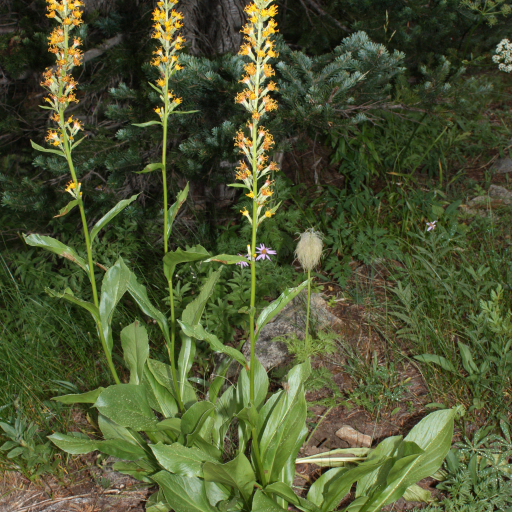
Plant Overview
Often called the False Silverback or Tongueleaf Luina, Rainiera stricta is a striking wildflower native to the misty, high-elevation meadows of the Pacific Northwest. Named after the iconic Mount Rainier, this plant stands like a botanical totem pole, crowned with a dense spike of yellow flowers that signal the peak of the mountain summer. It is a prized sight for hikers trekking through the volcanic slopes of the Cascades.
🔍 How to Identify
- 🍃 The Tongue-Like Leaves: Its large, oblong basal leaves can reach a foot in length. They are "tongue-shaped" with a smooth, almost leathery texture and a subtle grayish-green hue.
- 🗼 The Flower Spire: This plant grows in a singular, unbranched vertical stalk (stricta means "upright") that can reach three feet tall, densely packed with small, yellow, rayless flower heads.
- 🌫️ Silvery Sheen: While not as fuzzy as a true Silverback, the undersides of the leaves and the stem often have a fine, waxy bloom that gives the plant a cool, architectural appearance.
🏔️ Habitat & Ecology
- 🌋 Volcanic Roots: In the wild, it thrives in the cool, moist, and rocky soils of subalpine meadows. It is specifically adapted to the nutrient-rich but well-draining volcanic scree found near mountain peaks.
- ❄️ Heat Sensitivity: Because it is an alpine specialist, it is highly sensitive to heatwaves. It relies on the slow melt of winter snowpacks to keep its roots cool and hydrated well into the mid-summer months.
⚠️ Safety & Toxicity
- ✅ Status: Generally non-toxic to touch.
- 🐾 Pet & Human Safety: While there are no major reports of severe toxicity, Rainiera stricta belongs to the Aster family, which can sometimes cause mild allergic skin reactions in sensitive individuals. It is not considered edible, and ingestion should be avoided as it may cause digestive upset in pets or children.
✨ Fun Fact
- 🎓 A Lonely Genus: Rainiera stricta is what botanists call a "monotypic" genus. This means it is the only species within the Rainiera group—it is a true botanical original with no close siblings to share its name!

Detailed Care Instructions
To grow Rainiera stricta, also known as the Bushy Bluebell, you can follow these steps:
- Climate and soil: Rainiera stricta prefers a warm climate, with temperatures between 60-85°F (15-30°C). It thrives in well-draining soil that is slightly acidic and rich in organic matter.
- Seed collection: Locate mature seed pods on the plant and collect the seeds. Wait until the pods turn brown and start to split open before harvesting the seeds.
- Seed preparation: Soak the seeds in warm water for 24 hours before planting to help break their dormancy.
- Planting: Fill small pots or seed trays with a moist, well-draining seed starting mix. Place the soaked seeds on the soil surface and gently press them in, ensuring good seed-to-soil contact.
- Germination: Ideally, keep the pots in a warm location with indirect sunlight. Mist the soil regularly to keep it moist but not soaked. Germination usually takes place within 2-4 weeks.
- Transplanting: Once seedlings develop their first set of true leaves, they can be transplanted into individual pots or into a prepared garden bed. Make sure to maintain a spacing of at least 6-12 inches (15-30 cm) between plants.
- Growing conditions: Provide the Rainiera stricta plant with partial sun or dappled shade. Water regularly and deeply, allowing the soil to dry out slightly between waterings. Avoid overwatering or allowing the plant to sit in soggy soil.
- Fertilization: Apply a balanced, slow-release fertilizer or a liquid fertilizer every few months during the growing season to promote healthy growth.
- Pruning: Prune the plant periodically to maintain its shape and encourage bushiness. Trim back any dead or damaged branches to promote new growth.
- Disease and pest control: Rainiera stricta is generally a low-maintenance plant. However, keep an eye out for common garden pests like aphids, slugs, or snails. Treat any infestations promptly with appropriate natural or organic pest control methods.
Remember to research and adapt these steps as per your specific location and climate, as well as any additional care requirements for the Rainiera stricta plant in your region.

Water the plant thoroughly, making sure the soil is evenly moist. Allow the top inch of soil to dry before watering again. Avoid overwatering as this can lead to root rot. It is best to water from the base of the plant rather than from above to prevent water from accumulating on the foliage and causing mildew or other fungal issues. Consider using a well-draining soil mix and a pot with drainage holes to ensure proper moisture management. Monitor the plant's moisture levels regularly and adjust watering frequency as needed based on environmental conditions such as temperature and humidity.
To fertilize the Rainiera Stricta plant, use a well-balanced fertilizer that is high in nitrogen, phosphorus, and potassium. The fertilizer should be applied once a month during the plant's growing season, which is typically from spring to summer. Be sure to dilute the fertilizer with water according to the manufacturer's instructions and apply it directly to the soil around the base of the plant. Avoid getting the fertilizer on the leaves or stems of the plant, as this can cause burn damage.
For optimal growth and health of this plant, it is recommended to use well-draining soil that is rich in organic matter. The soil should be slightly acidic, with a pH level between 5.5 and 6.5. The plant prefers soil that is moist but not waterlogged, so it is important to ensure proper drainage to prevent water from pooling around the roots. A good potting mix that contains peat moss, perlite, and vermiculite can provide adequate drainage and nutrient content for the plant. It is also important to avoid using heavy or clay soils, as these can become compacted and restrict root growth. Additionally, adding organic fertilizers to the soil periodically can help supply the plant with essential nutrients for healthy growth.
Rainiera Stricta plant can be propagated through stem cuttings. To do this, first select a healthy stem and cut it at an angle using a sharp, clean pair of scissors or gardening shears. The cutting should be about 4-6 inches long and should include at least one node.
Remove the leaves from the bottom half of the stem and dip the cut end of the stem into a rooting hormone powder or liquid. This can help to encourage root growth. Plant the cutting in a pot filled with moist, well-draining soil and keep it in a warm, bright location.
Water the cutting regularly to keep the soil moist but not waterlogged. After a few weeks, the cutting should begin to form roots. You can gently tug on the stem to check if it has rooted. Once rooted, gradually acclimate the plant to brighter light and regular watering.
You can also propagate Rainiera Stricta plant through division. Simply carefully divide the plant into smaller sections, making sure that each section has a healthy root system and some foliage. Replant these sections in pots filled with fresh soil and water them regularly.








