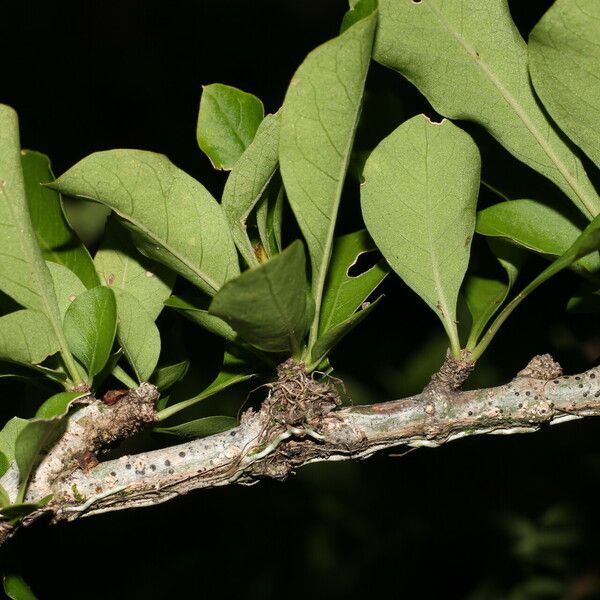
Plant Overview
Often called Papache or the Crucifixion Thorn, Randia thurberi is a ruggedly beautiful shrub that hails from the arid landscapes of Mexico and the Southwestern United States. A member of the Madder family (Rubiaceae), it is a wild cousin to the fragrant Gardenia, though it traded soft petals for formidable spines to survive the desert heat. In its native habitat, it’s celebrated both for its architectural silhouette and its historical use in traditional medicine.
🔍 How to Identify
- ⚔️ Spiny Armor: The most striking feature is the way its stiff branches end in sharp, cross-like thorns. These spines often emerge in groups of four, giving the plant an intricate, geometric appearance.
- 🌼 Gardenia-like Blooms: In late spring or after a heavy rain, it produces small, creamy-white flowers. They are intensely fragrant, echoing the sweet, heavy scent of their more famous tropical relatives.
- 🟢 Inky Fruit: It bears round, woody fruits that turn from green to a dull yellow. If you were to crack one open, you’d find a dense, black, ink-like pulp packed with seeds.
- 🍃 Tear-drop Leaves: The leaves are small, dark green, and oval-shaped, often appearing in clusters along the woody stems to help the plant conserve water.
🏡 In Your Garden
- 🌵 The Xeriscape King: This plant is the ultimate "set it and forget it" addition for dry climates. Because it evolved in rocky canyons and desert washes, it actively hates "wet feet" and requires soil that drains almost instantly.
- ⏳ A Lesson in Patience: Randia thurberi is a notoriously slow grower. While it can eventually reach the size of a small tree, it spends its early years focusing on its root system. It’s perfect for a permanent structural spot where you won’t need to move it, as its taproot is sensitive to disturbance.
⚠️ Safety & Toxicity
- 🩹 Physical Hazard: While the plant isn't known to be chemically toxic to humans or pets, the thorns are incredibly sharp and rigid. They can easily puncture skin or paws, so it should be planted away from walkways or play areas.
- 🐾 Pet Safety: There are no documented cases of severe poisoning for dogs or cats, but the bitter, black pulp of the fruit is generally unpalatable and may cause mild stomach upset if ingested.
✨ Fun Fact
The black pulp of the Papache fruit was historically used as a natural dye and even as a primitive ink! In some Mexican folk traditions, the fruit is also prepared as a tea, believed to help with everything from respiratory issues to kidney health.

Detailed Care Instructions

Place in a bright room that is sun drenched almost all day. Or directly in a south-facing window.

Some plants require more regular watering than others, which should be done every few days. It's critical to maintain the soil moist all of the time. The water requirements of the same plant placed in pots with varying sizes will differ. Because the water in the smaller pot evaporates faster than the water in the larger pot, it will require more watering. Regardless of pot size, the surface should constantly be maintained moist.








