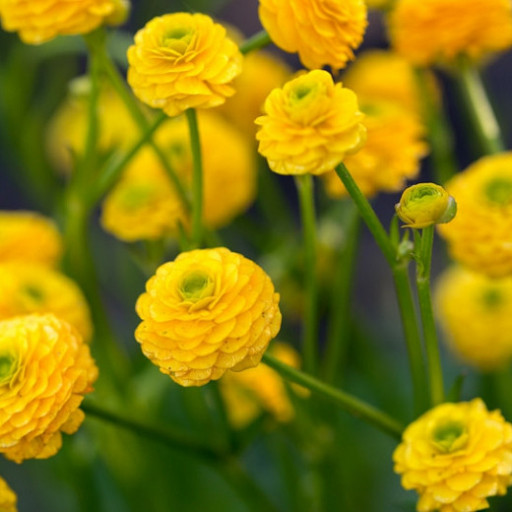
Plant Overview
Commonly known as the Meadow Buttercup or Tall Buttercup, Ranunculus acris is the quintessential wildflower of golden summer fields. Its name, "acris," refers to its sharp, acrid sap, which served as a natural defense long before it became a staple of childhood games. You might remember holding its waxy petals under a friend's chin to see if they "liked butter"—a charming myth for a plant that is actually quite feisty in the wild.
🔍 How to Identify
- 🌼 The Flowers: Look for five glossy, bright yellow petals with a waxy sheen that reflects sunlight like a mirror. They usually measure about an inch across.
- 🌿 The Foliage: The leaves are deeply divided into three to five jagged lobes, giving them a "bird’s foot" appearance. Unlike other buttercups, the leaves are not spotted with white.
- 📏 Growth Habit: True to its name "Tall Buttercup," this plant grows upright and can reach up to three feet in height, lacking the creeping runners found in its cousins.
🏡 In Your Garden
- 🌱 Soil & Sunlight: It thrives in moist, well-draining soil and loves basking in full sun. In a garden setting, it can be a bit of a "space hog" because it spreads easily via seed.
- 🚜 Meadow Role: It is a tough survivor. Because its sap is bitter, grazing animals like cows and horses usually leave it alone, allowing it to dominate overgrazed pastures.
- 🦋 Pollinator Magnet: While it might be a weed to some, it is a vital source of nectar for bees, hoverflies, and small beetles during the mid-summer months.
⚠️ Safety & Toxicity
- 🚫 Toxic Status: All parts of the plant are toxic if ingested fresh.
- 🧴 Skin Irritant: The plant contains protoanemonin, a chemical that can cause skin redness or even blistering if the stems are crushed against the skin. Always wear gloves if you are weeding a large patch.
- 🐾 Pets & Livestock: It is particularly dangerous to grazing animals, though it loses its toxicity once dried into hay. Keep curious dogs and cats away from the fresh leaves.
✨ Fun Fact
The "shiny" look of the buttercup isn't just for show! The petals have a unique layer of starch cells just below the surface that reflects light so intensely it helps the plant attract pollinators from a great distance and even helps warm the center of the flower to keep its reproductive organs toasty.

Detailed Care Instructions
To grow Ranunculus acris, also known as meadow buttercup, follow these steps:
- Location: Choose a sunny or partially shaded spot in your garden with well-draining soil.
- Time: Plant the seeds or seedlings in early spring or fall.
- Soil preparation: Prepare the soil by removing any weeds or debris. Loosen the soil with a garden fork or tiller and add organic matter, such as compost, to improve fertility.
- Planting seeds: If starting from seeds, sow them directly in the garden. Lightly cover the seeds with soil, keeping them about 1/4 to 1/2 inch deep. Water gently.
- Transplanting seedlings: If using seedlings, dig small holes, spacing them about 6 inches apart. Place the seedlings into the holes, firm the soil around them, and water well.
- Watering: Keep the soil consistently moist, but avoid overwatering, as excessive moisture can lead to root rot. Water deeply when the top inch of soil feels dry, providing around 1 inch of water per week.
- Mulching: Apply a layer of organic mulch, such as straw or shredded bark, around the plants to help retain moisture and suppress weed growth.
- Feeding: Fertilize the plants in early spring with a balanced slow-release fertilizer or apply a liquid fertilizer monthly during the growing season according to package instructions.
- Pruning: After the plant has finished blooming, you can cut back the spent flower stalks to tidy up the appearance. However, leave the foliage intact to allow the plant to store energy for the next year's growth.
- Maintenance: Monitor for any pests or diseases, such as aphids or powdery mildew, and take appropriate measures to control them if necessary. Regularly check for weeds and remove them to prevent competition with the Ranunculus acris plants.
Remember to consult local gardening resources or experts for any region-specific advice or considerations.

Place in a window with dappled sun or a spot in the middle of a room. Or directly in a window facing west or east.

To properly water this plant, ensure that the soil is moist but not waterlogged. It is important to water deeply, allowing the water to reach the roots of the plant. This can be achieved by using a watering can or hose with a gentle flow. Avoid overwatering as this can cause the roots to rot. Allow the top layer of soil to become slightly dry before watering again. It is also important to avoid getting water on the leaves and flowers of the plant as this can cause them to rot or develop fungal diseases.
Fertilize the plant with a balanced fertilizer in early spring before new growth appears. Use a slow-release fertilizer and apply it according to package directions. Water the plant thoroughly after fertilizing. Avoid fertilizing during the summer months as excessive nutrients can lead to disease or pest problems. In the fall, you can add organic matter such as compost or aged manure to the soil around the plant to provide additional nutrients for the upcoming growing season.
The ideal soil for Ranunculus Acris should be well-draining and fertile. This plant prefers a pH range of 6.0-7.5 which is slightly acidic to neutral. It can tolerate a variety of soil types, ranging from sandy to loamy, as long as they are well-draining. It is also important to ensure that the soil is moist but not waterlogged, as the plant may suffer from root rot if it is too wet for extended periods of time. Adding organic matter, such as compost or manure, to the soil can improve its fertility and texture. It is recommended to plant in full sun to partial shade in order to optimize growth and flowering.
Propagation of this particular plant species can be done through division of the root crown. This can be achieved by digging up the plant and separating the root crown into smaller sections, ensuring that each section has at least one healthy root and shoot. These smaller sections can then be replanted in prepared soil, watered well and provided with appropriate growing conditions to encourage successful establishment. Another method of propagation is through seed, which can be sown in a well-draining soil mix in early spring or late autumn. The seeds should be lightly covered with soil and kept moist until they germinate, which can take up to several weeks. Once the seedlings have grown to a reasonable size, they can be transplanted to their permanent location.
Common pests of the meadow buttercup include Spider mites, aphids, thrips, whiteflies. Make a habit of checking your meadow buttercup frequently for pests so that any infestations can be caught and managed early.








