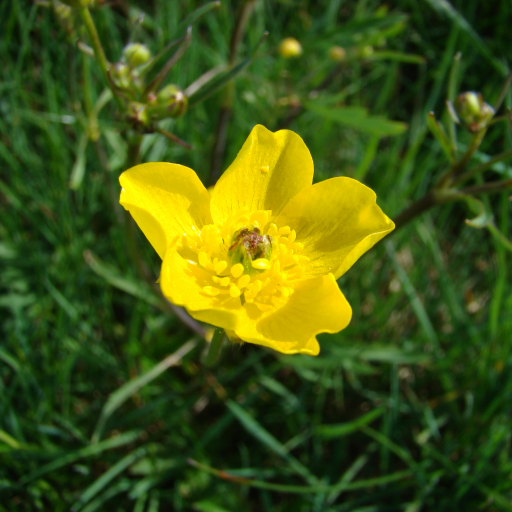
Plant Overview
Known by the ominous nickname "Devil-on-all-sides," the Corn Buttercup is a delicate-looking wildflower with a surprising secret hidden in its seeds. While most buttercups are celebrated for their glossy yellow petals, this specific variety was once the bane of traditional farmers across Europe. It serves as a living relic of ancient agricultural landscapes, though it is becoming increasingly rare in the wild today.
🔍 How to Identify
- 🌼 The Flowers: Small, pale lemon-yellow blooms that lack the intense "waxiness" seen in other buttercup species. They usually measure about 1 to 2 cm across.
- 🌿 The Foliage: The leaves are deeply divided into narrow, finger-like segments, giving the plant a more "skeletal" and airy appearance compared to its bushier relatives.
- 🦔 The Fruit: Its most distinctive feature is the seed head. Each flat seed is covered in prominent, hooked spines or prickles, which is how it earned its "devilish" nicknames.
🏡 In Your Garden
- 🌱 Soil & Setting: This plant is an "arable specialist," meaning it loves disturbed, heavy clay soils. It rarely survives in thick grass and prefers the edges of vegetable plots or freshly tilled garden beds.
- 🍂 Annual Cycle: Unlike the perennial buttercups that plague lawns, this is a strict annual. It relies entirely on its spiny seeds falling into the soil to reappear the following spring. If you wish to preserve it, avoid heavy mulching which can prevent seeds from germinating.
⚠️ Safety & Toxicity
- 🚫 Status: Toxic to humans, pets, and livestock.
- 🧪 Details: Like all members of the Ranunculaceae family, it contains protoanemonin. If crushed or chewed, the plant releases this acrid toxin which can cause blistering of the mouth and skin, as well as severe digestive distress if swallowed.
✨ Fun Fact
The name "Devil-on-all-sides" wasn't just a metaphor for its prickles; in the days before modern machinery, these hooked seeds would get tangled in the wool of sheep and the clothing of harvesters, making them nearly impossible to remove without a fight!

Detailed Care Instructions
To grow Ranunculus Arvensis, follow these steps:
- Choose a suitable planting location: Ranunculus Arvensis prefers full sun to partial shade and well-draining soil. Prepare the soil by removing any weeds or grass and loosening the top few inches of soil.
- Planting the bulbs: Ranunculus Arvensis grow from bulbs, so plant them in fall or early spring. The bulbs should be planted about 2-3 inches deep, with the pointy side facing up. Space them about 4 inches apart.
- Watering: After planting, water the bulbs thoroughly to settle the soil. Keep the soil consistently moist but not waterlogged throughout the growing season, especially during dry periods.
- Fertilizing: Apply a balanced, all-purpose fertilizer once or twice during the growing season, following the package instructions. This will promote healthy growth and blooming.
- Mulching: Apply a layer of organic mulch, such as straw or wood chips, around the plants to help retain moisture, suppress weed growth, and regulate soil temperature.
- Pruning and deadheading: Remove any yellow or dead leaves and spent flowers regularly. This will keep the plant tidy and encourage new growth and blooming.
- Winter care: In regions with harsh winters, provide some protection by covering the bulbs with a layer of straw or leaves. This will help insulate them from extreme temperature fluctuations.
- Propagation: Ranunculus Arvensis can be propagated by dividing the bulbs during the dormant season (late fall or early spring). Dig up the bulbs, separate the offsets, and replant them.
With proper care, Ranunculus Arvensis should grow well and produce beautiful flowers.

Place in a bright room that is sun drenched almost all day. Or directly in a south-facing window.

Ranunculus arvensis is a perennial plant that belongs to the Ranunculaceae family. In order to effectively water this plant, there are a few important considerations to keep in mind.
1. Soil type: Ranunculus arvensis prefers well-draining soil that retains moisture without becoming waterlogged. Ensure that the soil is moist but not overly wet.
2. Watering frequency: During the growing season, it is crucial to water the plant regularly. Aim to keep the soil consistently moist, especially during periods of prolonged dryness. However, it is essential to avoid excessive watering as it may cause root rot.
3. Watering technique: Instead of using a heavy stream of water, it is preferred to use a gentle watering method, such as a watering can or a soaker hose. Irrigate directly at the base of the plant, aiming to wet the soil rather than the foliage, as wet leaves can contribute to disease development.
4. Mulching: Applying a layer of organic mulch around the Ranunculus arvensis plant can help retain soil moisture and reduce evaporation. This can be done by spreading a thin layer of organic matter, such as wood chips or dried leaves, around the base of the plant.
5. Weather conditions: Adjusting the watering schedule according to weather conditions is crucial. During hot and dry periods, the plant may require more frequent watering. Conversely, during cooler and rainy periods, reduce the frequency to prevent overwatering.
6. Monitor the plant: Regularly check the moisture level of the soil by sticking your finger about an inch into the soil. If it feels dry at that depth, it indicates that the plant requires watering. However, if the soil feels moist, it is best to postpone watering for a few more days.
It is important to note that the watering needs of Ranunculus arvensis may vary based on factors such as climate, soil type, and local conditions. Thus, it is beneficial to observe the plant closely and adjust the watering routine accordingly to ensure its optimal growth and health.
Sure, here are the fertilizing instructions for the plant:
- Start fertilizing when the plant is actively growing, typically in early spring.
- Use a balanced, slow-release fertilizer with an NPK ratio of 10-10-10 or similar.
- Water the plant thoroughly before applying the fertilizer to prevent root burn.
- Follow the manufacturer's instructions for the application rate and method.
- Apply the fertilizer evenly around the base of the plant, making sure not to get it on the foliage.
- Gently work the fertilizer into the top few inches of soil using a garden fork or cultivator.
- Water the plant again to help the nutrients penetrate the soil.
- Repeat the fertilization process once every four to six weeks during the growing season.
- Avoid over-fertilizing, as it can lead to excessive vegetative growth and weaker overall plant health.
- Monitor the plant's response to the fertilizer and adjust the application rate or frequency if needed.
When selecting soil for the Ranunculus arvensis plant, it is important to consider its specific requirements. This plant thrives best in well-draining soil that is slightly acidic to neutral in pH. A soil mixture with a pH level between 6.0 and 7.0 is ideal.
The soil should have a loose texture, allowing for proper aeration and drainage. Incorporating organic matter, such as compost or peat moss, into the soil can improve its structure, moisture retention, and nutrient content. This will ensure that the roots have access to sufficient oxygen and moisture while also receiving necessary nutrients.
Additionally, it is beneficial to include perlite or coarse sand in the soil mix to further enhance drainage. This prevents water logging and reduces the risk of root rot.
It is worth noting that Ranunculus arvensis is a hardy plant that can tolerate a range of soil conditions. However, providing an optimal soil environment will promote healthier growth, stronger root development, and overall plant resilience.
Ranunculus arvensis is a perennial plant that belongs to the Ranunculaceae family. It is commonly found in various regions across the world and is known for its delicate and vibrant flowers. Propagating this plant can be done through several methods, including division, seeds, or rhizome cuttings. Here is a detailed explanation on how to propagate Ranunculus arvensis:
- Division: This method is best carried out in early spring when the plant is emerging from dormancy. Start by carefully removing the plant from the ground or pot, ensuring that the roots remain intact. Gently separate the plant into two or more sections, each containing roots and shoots. Plant these sections in well-draining soil at the same depth they were previously growing. Water thoroughly and keep the newly divided plants well-maintained until they establish themselves.
- Seeds: Collecting seeds from a mature Ranunculus arvensis plant can be a great way to propagate new ones. Wait for the seed heads to dry out completely on the plant. Then, carefully remove the seeds by gently rubbing or shaking the seed heads. Sow the seeds in seed trays or pots filled with a well-draining seed starting mix. Barely cover the seeds with a light layer of soil and water gently. Keep the soil consistently moist and provide a warm and sunny environment. The seeds should germinate within a few weeks, after which you can transplant them to their permanent location.
- Rhizome cuttings: Ranunculus arvensis also reproduces through rhizomes, which are horizontal underground stems. To propagate through rhizome cuttings, start by digging up an established plant during its dormant period. Carefully remove the rhizomes from the plant, ensuring that each cutting contains healthy buds. Cut the rhizomes into smaller sections, leaving at least one bud per cutting. Plant these cuttings in pots or directly in the ground, burying them at a depth where only the buds are exposed. Provide adequate moisture and sunlight, and the cuttings should develop into new plants.
Remember to provide Ranunculus arvensis with the appropriate growing conditions, including well-draining soil, regular watering, and a sunny or partially shaded location. With proper care and propagation techniques, you can enjoy the beauty of this plant in your garden or indoor space.








