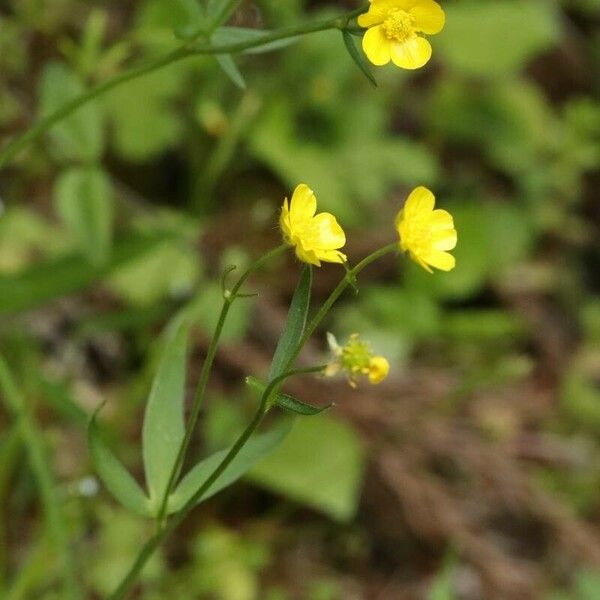
Plant Overview
Often called the Japanese Buttercup, this sunny perennial is a cheerful staple of East Asian meadows and woodland edges. Its most striking feature is the brilliant, "lacquered" sheen of its yellow petals, which look as though they’ve been hand-polished to catch the morning light. While it brings a wild, cottage-core aesthetic to any space, it is a hardy survivor that thrives where other plants might struggle with damp feet.
🔍 How to Identify
- 🌼 Glossy Petals: Features five bright yellow petals with a distinct waxy, reflective texture that makes them shine even on overcast days.
- 🌿 Deeply Lobed Leaves: The foliage is dark green and "palmately" divided, meaning the leaves fan out like the fingers of a hand, often covered in fine, soft hairs.
- 📏 Upright Stems: Unlike some creeping buttercups, the Japanese variety grows on sturdy, branching stems that can reach up to 2 feet in height.
🏡 In Your Garden
- 💧 The Moisture Master: This plant is an excellent choice for "rain gardens" or naturally boggy areas. It prefers soil that stays consistently moist and will wilt quickly if left in parched, sandy earth.
- 🌱 Assertive Spreader: Because it spreads via both seeds and underground rhizomes, it can become quite dominant. It’s best used as a tall groundcover in wilder areas rather than in a strictly manicured small border.
⚠️ Safety & Toxicity
- 🚫 Toxicity Status: Highly toxic to both humans and animals if ingested.
- 🐾 Pet Warning: Contains protoanemonin, an acrid oil that causes mouth sores, drooling, and digestive upset in dogs, cats, and horses.
- 🧤 Skin Sensitivity: Handling the plant with bare hands can cause "buttercup dermatitis"—a mild skin rash or blistering—so it is best to wear gloves when weeding or pruning.
✨ Fun Fact
The genus name Ranunculus literally translates from Latin as "little frog." It was named this centuries ago because buttercups, including this Japanese variety, are frequently found growing near ponds and streams, sharing their home with amphibians!

Detailed Care Instructions

Place in a bright room that is sun drenched almost all day. Or directly in a south-facing window.

Some plants require more regular watering than others, which should be done every few days. It's critical to maintain the soil moist all of the time. The water requirements of the same plant placed in pots with varying sizes will differ. Because the water in the smaller pot evaporates faster than the water in the larger pot, it will require more watering. Regardless of pot size, the surface should constantly be maintained moist.








