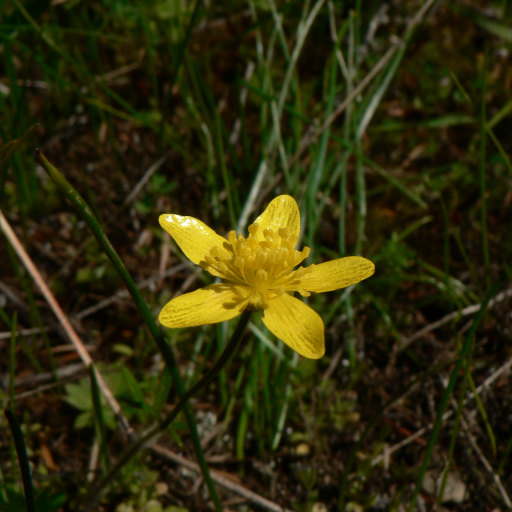
Plant Overview
Commonly known as the Western Buttercup, this cheerful wildflower is a signature sight in the meadows and open woodlands of Western North America. It is often one of the first splashes of color to appear as winter fades, signaling the arrival of spring with its brilliant, sun-soaked yellow blooms. While it looks delicate, it is a hardy survivor that has played various roles in Indigenous cultures, from medicinal applications to traditional dyes.
🔍 How to Identify
- 🌼 The "Lacquered" Petals: The most striking feature is the glossy, waxy sheen on the 5 to 16 yellow petals. This "butter-yellow" reflection is caused by a unique layer of starch cells just beneath the surface.
- 🍃 Deeply Lobed Leaves: The leaves are primarily clustered at the base and are deeply divided into three distinct lobes, which are further toothed or "jagged" along the edges.
- 📏 Slender Hairy Stems: The plant grows in loose clumps with upright, branching stems that are often covered in fine, soft hairs, reaching heights of up to 20 inches.
🏡 In Your Garden
- 🐝 Early Pollinator Support: Because it blooms so early in the season, it provides a vital nectar source for native bees and butterflies when few other food options are available.
- 💧 Moisture Flexibility: While it loves the moist soil of springtime, it is remarkably drought-tolerant once established. It will often go "summer dormant," meaning it turns brown and rests during the hottest months to conserve energy.
- 🌾 Meadow Master: It is best used in naturalized areas or rock gardens. It doesn't like to be moved once its roots are set, so choose its "forever home" carefully to avoid disturbing its sensitive root system.
⚠️ Safety & Toxicity
- 🚫 Toxic Status: High. All parts of the Western Buttercup are toxic if ingested and can be irritating to the touch.
- 🐕 Pet & Livestock Warning: It contains a bitter oil called protoanemonin. If brushed against or crushed, the sap can cause skin blistering or "buttercup itch." If eaten by pets or livestock, it can cause severe mouth irritation, drooling, and digestive distress.
✨ Fun Fact
The genus name Ranunculus is Latin for "little frog." This name was chosen by ancient botanists because buttercups are frequently found growing in damp areas near ponds and streams, sharing their habitat with tiny amphibians.

Detailed Care Instructions
To grow Ranunculus Occidentalis plants, you can follow the steps below:
- Purchase the seeds: You can buy Ranunculus Occidentalis seeds from a local nursery or online. Make sure the seeds are fresh and of good quality.
- Choose a planting location: Ranunculus Occidentalis prefers full sun to partial shade. Select a location in your garden that receives at least 4-6 hours of direct sunlight per day.
- Prepare the soil: The soil should be well-draining and rich in organic matter. Remove any weeds or rocks from the planting area. You can also mix some compost or aged manure into the soil to improve its fertility.
- Sow the seeds: Plant the seeds in early spring or fall. Lightly sprinkle the seeds on the soil surface and gently press them into the soil. Keep the seeds about 1-2 inches apart to allow enough space for growth.
- Watering: Water the seeds immediately after planting and keep the soil consistently moist throughout the growing season. Avoid overwatering, as excessive moisture can cause rot.
- Mulch and weed control: Apply a layer of organic mulch, such as straw or wood chips, around the plants to help retain moisture and suppress weed growth. Regularly remove weeds that compete for nutrients and light.
- Fertilization: Use a balanced slow-release fertilizer according to the manufacturer's instructions. Apply the fertilizer around the base of the plants once or twice during the growing season.
- Pruning: Trim off any dead or damaged foliage to maintain the plant's health and appearance. This can be done as needed throughout the growing season.
- Pests and diseases: Keep an eye out for common pests like aphids or snails, and treat them accordingly. Ranunculus Occidentalis is generally resistant to diseases, but good sanitation practices and proper watering can help prevent any issues.
- Harvesting: Ranunculus Occidentalis produces attractive flowers. Once the flowers have bloomed, you can cut them for arrangements or decoration. Make sure to leave some flowers for the plant to self-seed and propagate.
With proper care and attention, your Ranunculus Occidentalis plant should grow beautifully and produce vibrant blooms.

Place in a bright room that is sun drenched almost all day. Or directly in a south-facing window.

Ranunculus Occidentalis plant requires regular watering to thrive and maintain its healthy growth. The watering schedule will depend on various factors like the weather condition, humidity level, soil type, and drainage system. Generally, the soil must be kept consistently moist but not soaked or waterlogged. Overwatering can lead to root rot, which can be fatal to the plant.
To water the Ranunculus Occidentalis plant, it is best to use a watering can or a hose with a gentle nozzle. Avoid splashing water on the foliage, as it can promote the growth of fungal diseases. Instead, water the soil directly around the base of the plant, allowing the water to seep down into the roots.
Watering should be done early in the morning or late in the evening when the temperature is cooler, and the sun is not too strong. This will help prevent the water from evaporating quickly and ensure that the plant receives enough moisture.
During the dry season, or if the weather is particularly hot and dry, the plant may require more frequent watering. On the other hand, during the rainy season, the frequency of watering may need to be reduced.
In conclusion, to water Ranunculus Occidentalis plant successfully, one must ensure that the soil is consistently moist, avoid overwatering, water at the right time, and water directly into the soil around the base of the plant.
- Begin fertilizing Ranunculus Occidentalis during its active growth season, which typically occurs in early spring to late summer.
- Use a balanced fertilizer with equal amounts of nitrogen, phosphorus, and potassium.
- Dilute the fertilizer to half-strength before application.
- Apply the fertilizer directly to the soil around the base of the plant, avoiding the foliage.
- Water thoroughly after fertilizing to help distribute the nutrients throughout the soil.
- Fertilize the plant every 2-3 weeks during its growing season, but stop fertilizing once the plant enters its dormant phase.
The recommended soil for the plant in question should be well-draining with a sandy or loamy texture. It should also be rich in organic matter, such as compost or aged manure, which will provide nutrients for the plant as it grows. The soil pH should be slightly acidic to neutral, with a range of 6.5 to 7.5 being ideal. It is important to avoid heavy, clay soils as they retain excess moisture, which can cause root rot and other issues. Additionally, it is recommended to amend the soil with a balanced fertilizer before planting to further enrich the soil and promote healthy growth.
To propagate this plant, you will need to gather mature seeds from the parent plant. Wait until the flower heads have dried out and turned brown. Then, carefully remove the seeds from the seed heads and store them in a cool, dry place until you are ready to plant them.
When you are ready to plant the seeds, choose a sunny location with well-draining soil. Sow the seeds thinly and cover lightly with soil. Keep the soil moist but not waterlogged, and germination should occur within a few weeks.
Once the seedlings have sprouted and grown to a few inches tall, you can transplant them into their permanent location. Make sure to space them at least a foot apart to allow for optimal growth.
Over time, the newly propagated plants will mature and bloom, producing their own seeds for further propagation.








