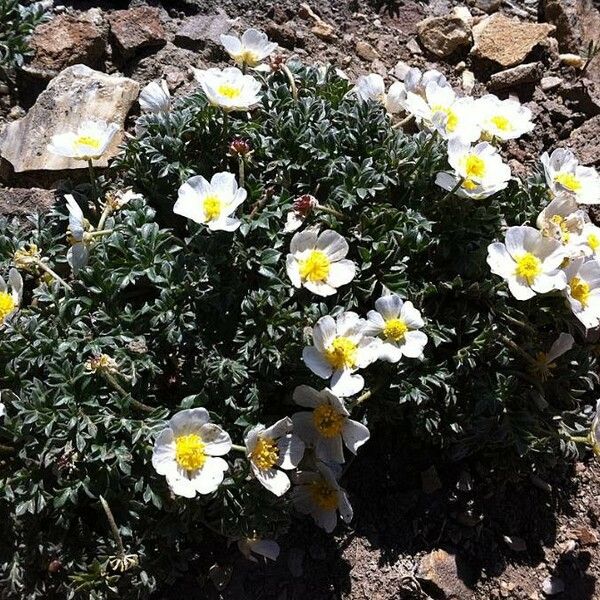
Plant Overview
Often referred to as the Seguier's Buttercup, this delicate perennial is a rare alpine treasure found tucked away in the limestone crevices of the Alps and Apennines. Unlike the common yellow buttercups found in backyard lawns, this species is a refined mountain dweller with snowy-white petals that shimmer against the rugged grey of high-altitude rocks. It is named after Jean-François Séguier, an 18th-century botanist who first fell under its spell while exploring the mountains of Italy.
🔍 How to Identify
- ❄️ The Blooms: Pure white, cup-shaped flowers with five rounded petals and a dense cluster of golden-yellow stamens at the center.
- 🌿 The Foliage: Deeply divided, palm-like leaves that often have a soft, silvery-green or glaucous tint, helping the plant retain moisture in harsh winds.
- 🏔️ Growth Habit: A low-growing, clumping plant that rarely exceeds 10–20 cm in height, hugging the ground to avoid the mountain chill.
🏡 In Your Garden
- 🪨 The Limestone Love: This plant is a "calcicole," meaning it strictly demands alkaline soil rich in calcium. If you want to grow it at home, a specialized rock garden or alpine trough with plenty of limestone grit is essential.
- 💧 Cool Roots, Sun-Kissed Leaves: While it enjoys the bright sun of the peaks, it requires "cool feet." In garden settings, placing a layer of stone mulch around the base helps keep the root system from overheating during summer days.
⚠️ Safety & Toxicity
- 🚫 Toxic if Ingested: Like all members of the Ranunculus family, it contains protoanemonin, a chemical that can cause severe gastrointestinal distress if eaten.
- 🧤 Skin Irritant: The sap can be irritating to the skin, potentially causing redness or small blisters (contact dermatitis). It is best to wear gloves when dividing or pruning the plant, and keep it away from curious pets and children.
✨ Fun Fact
Jean-François Séguier, the plant's namesake, was so dedicated to botany that he built one of the largest private libraries and herbariums of his time, using this specific white buttercup to prove that mountain plants were distinct species rather than just "stunted versions" of lowland flowers.

Detailed Care Instructions








