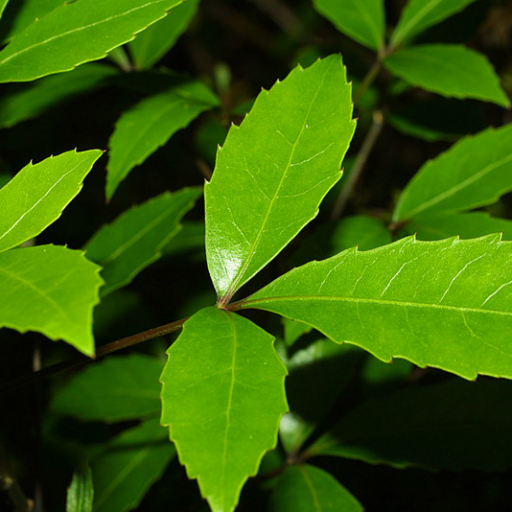
Plant Overview
Known in its native New Zealand as Haumakō, Raukaua simplex is a master of disguise. This forest-dwelling evergreen is famous for its dramatic "shape-shifting" habit, where it completely changes its leaf structure as it matures. It is a member of the Ivy family (Araliaceae), bringing a touch of prehistoric elegance to cool, temperate landscapes.
🔍 How to Identify
- 🍃 The Great Switch: This plant exhibits "heteroblasty." Juvenile leaves are deeply lobed and jagged, looking almost like small saws. Adult leaves are "simple" (hence the name simplex), appearing as smooth, leathery ovals.
- 🌸 Greenish Blooms: In late spring and summer, it produces clusters of very small, inconspicuous greenish-yellow flowers that blend into the foliage.
- 🪵 Slender Trunk: It typically grows as a slender, upright shrub or small tree with smooth, grayish-brown bark that becomes slightly textured over many years.
🏡 In Your Garden
- 🌦️ Forest Vibes: Haumakō thrives in conditions that mimic a New Zealand rainforest. It loves dappled light, high humidity, and soil that stays consistently moist but never waterlogged.
- 🌬️ Shelter is Key: Because it is a forest understory plant, it dislikes harsh, drying winds and intense afternoon sun, which can scorch its delicate juvenile foliage.
⚠️ Safety & Toxicity
- ✅ Low Risk: Raukaua simplex is generally considered non-toxic to humans and common household pets.
- 🌿 Sap Sensitivity: As with many members of the Araliaceae family, some individuals with very sensitive skin may experience mild irritation if they come into contact with the sap during heavy pruning.
✨ Fun Fact
The dramatic change from jagged juvenile leaves to smooth adult leaves is believed to be an ancient survival tactic. Scientists think the jagged, "ugly" young leaves evolved to be less appetizing and harder to see for the Moa—giant, extinct flightless birds that used to roam New Zealand!

Detailed Care Instructions
To grow Raukaua simplex plant, follow these steps:
- Starting with selecting a suitable location: Raukaua simplex prefers a partially shaded spot with indirect sunlight. It can tolerate full sun but may benefit from some protection during intense heat or dry periods.
- Prepare the soil: Raukaua simplex thrives in moist, well-draining soil. Amend the soil with organic matter, such as compost or well-rotted manure, to improve drainage and enhance its nutrient content.
- Propagation method: Raukaua simplex can be grown from seeds or stem cuttings. If using seeds, sow them in a seed tray or small pots filled with seed-raising mix. Keep the soil evenly moist but not wet until the seeds germinate. Transplant the seedlings into individual pots once they develop a few true leaves. If using stem cuttings, take a 3-4 inch cutting from a mature plant and dip the bottom end in a rooting hormone. Place the cutting in a pot filled with a well-draining mix and keep it consistently moist until roots develop.
- Planting: Whether starting from seeds or cuttings, wait until the roots or seedlings are well-established before transplanting them into the garden or larger pots. Dig a hole slightly larger than the root ball, place the plant in the hole, and backfill with soil. Gently firm the soil around the plant to eliminate air pockets.
- Watering: Raukaua simplex prefers consistently moist soil. Water the plant regularly, especially during dry spells, to maintain a consistently moist but not waterlogged environment. Avoid allowing the soil to dry out completely or overwatering, as either extreme can harm the plant.
- Mulching: Apply a layer of organic mulch, such as wood chips or straw, around the base of the plant to retain moisture, suppress weeds, and provide some insulation.
- Pruning: Trim any dead or damaged branches from the plant to encourage healthy growth and maintain an attractive shape. Pruning can be done anytime during the growing season.
- Fertilization: Raukaua simplex usually doesn't require much fertilization. However, if you notice the plant's growth or color is lackluster, you can apply a slow-release balanced fertilizer in spring or early summer.
- Pests and diseases: Monitor the plant regularly for common pests like aphids, mealybugs, or scale insects. If any infestation occurs, treat with an appropriate organic insecticide or insecticidal soap. Raukaua simplex is generally disease-resistant but can occasionally suffer from root rot if overwatered or planted in poorly draining soil.
By following these steps, you can successfully grow Raukaua simplex and enjoy its attractive foliage in your garden or containers.

Place in a window with dappled sun or a spot in the middle of a room. Or directly in a window facing west or east.

To water this plant, one should ensure that the soil is moist but not overly saturated. It is important to water deeply at the base of the plant rather than simply spraying the leaves or surface of the soil. Additionally, it is important to be mindful of the temperature and humidity of the surrounding environment, as this can impact the plant's hydration needs. When in doubt, it is better to err on the side of slightly under-watering rather than over-watering, as this plant is sensitive to excessive moisture.
To fertilize this plant, you should use a balanced water-soluble fertilizer every two weeks during the growing season, which is typically from spring to early fall. Dilute the fertilizer according to the package instructions, and apply it to the soil around the plant. Avoid getting the fertilizer on the leaves or stems, as this can cause burning. During the winter months, you can reduce the frequency of fertilization to once a month or stop completely.
When it comes to growing Raukaua Simplex, it is important to choose the right soil combination in order to ensure that the plant thrives. Generally speaking, this plant prefers a well-draining soil that is rich in nutrients. It is recommended to use a mixture of equal parts high-quality potting soil and sand or perlite to achieve this. This will help to ensure that the soil stays moist without becoming waterlogged, which can lead to root rot. Additionally, it may be beneficial to add a layer of mulch to the surface of the soil in order to help retain moisture and provide additional nutrients. Overall, with the right soil and care, Raukaua Simplex can be a stunning addition to any garden or indoor space.
To propagate this plant, take a stem cutting that is approximately four to six inches long. Remove the lower leaves of the cutting and dip the cut end in rooting hormone. Plant the cutting in a moist soil mixture, such as one with peat moss and perlite in equal parts. Water the cutting regularly, keeping the soil moist but not waterlogged. Place the cutting in a location with indirect sunlight and a temperature of around 70°F. After several weeks, the cutting should begin to show new growth, indicating that it has formed a root system. At this point, the cutting can be transplanted into a larger pot or directly into the garden.








