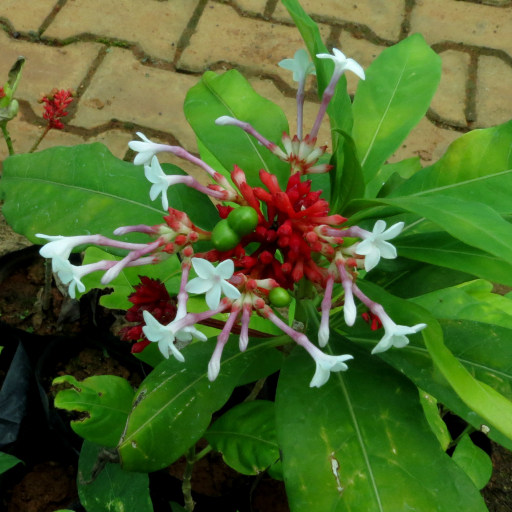
Plant Overview
Often called the Sarpagandha or "Insanity Herb," Rauvolfia serpentina has a long, mystical history in traditional medicine. Its name stems from its twisting, snake-like roots, which ancient healers believed could cure both venomous snakebites and "moon madness" (agitation and insomnia). While it is a powerhouse of botanical chemistry, it is a plant that demands respect and careful handling.
🔍 How to Identify
- 🍃 The Leaves: The glossy, lance-shaped leaves grow in "whorls," meaning three or four leaves radiate from the same point on the stem like the blades of a fan.
- 🌸 The Flowers: Look for clusters of tiny, tubular blossoms that are white or pale pink, often sitting atop bright red or pinkish stalks.
- 🍒 The Berries: As the plant matures, it produces small, fleshy fruits that transition from a bright green to a dramatic, polished purplish-black.
- 🐍 The Roots: If you were to see below the surface, the taproot is thick, yellowish, and often twists and turns in a serpentine fashion.
🏡 In Your Garden
- 🌦️ Tropical Understory: This plant naturally grows on the forest floor in South Asia. In a home or garden setting, it thrives in dappled light or partial shade; direct, scorching sun will quickly wither its delicate foliage.
- 🏺 Deep Roots: Because it develops a significant taproot, it prefers deep, loamy soil that is rich in organic matter. If planting in a container, choose a deep pot to allow the roots to stretch without becoming cramped.
- 💧 Humidity Lover: It is not a "set it and forget it" desert plant. It requires consistent moisture and high humidity to mimic its jungle origins.
⚠️ Safety & Toxicity
- 🚫 Dangerous If Ingested: This plant contains reserpine and other potent alkaloids used in prescription blood pressure medications. Ingesting any part of the raw plant can cause a dangerous drop in heart rate and blood pressure.
- 🐾 Pets & Children: Keep Rauvolfia far out of reach. Symptoms of poisoning include extreme lethargy, stomach upset, and respiratory issues.
- 🧤 Sap Sensitivity: Some gardeners report skin irritation from the milky sap. It is always best to wear gloves when pruning or repotting.
✨ Fun Fact
- 🧘 The Mahatma’s Tea: Mahatma Gandhi reportedly used the root of the Rauvolfia serpentina to make a calming tea, which he drank regularly to help maintain his legendary composure and lower his blood pressure during times of high-stress political activism.

Detailed Care Instructions
To grow Rauvolfia Serpentina plants, also known as Indian snakeroot, follow these steps:
- Obtain seeds or seedlings: You can purchase Rauvolfia Serpentina seeds or seedlings from a reputable nursery or online store. Ensure that you are getting the correct plant species.
- Choose a suitable location: Rauvolfia Serpentina plants thrive in partial shade or filtered sunlight. Select a spot in your garden or indoor space that receives indirect sunlight for a few hours each day.
- Prepare the soil: The soil should be well-draining and on the acidic side. Amend the soil by adding organic matter like compost or peat moss to improve its fertility and drainage.
- Sow the seeds or plant the seedlings: If you are using seeds, sow them in a seed tray or small pots filled with moist, well-draining soil. Plant the seeds at a depth of 1/4 inch and lightly cover them with soil. If using seedlings, dig a hole in the prepared soil, place the seedling into it, and gently cover the roots with soil.
- Watering schedule: Keep the soil evenly moist but not waterlogged. Avoid overwatering or letting the soil dry out completely. Water the plants whenever the top inch of soil feels dry.
- Fertilization: Apply a balanced fertilizer such as a slow-release granular fertilizer during the growing season to provide essential nutrients for healthy plant growth. Follow the instructions provided on the fertilizer packaging for optimal usage.
- Mulching: Mulching around the base of the plants with organic matter like straw or wood chips helps retain soil moisture and suppresses weed growth. Maintain a mulch layer of about 2-3 inches.
- Pruning: Prune Rauvolfia Serpentina plants to maintain their shape and size. Pruning also encourages branching and healthier growth. Remove any dead, diseased, or overcrowded branches regularly.
- Pests and diseases: Monitor the plants regularly for any signs of pests or diseases. Common pests that can affect Rauvolfia Serpentina include spider mites and aphids. Treat any infestations promptly using organic or chemical sprays.
- Harvesting: Rauvolfia Serpentina is typically grown for its medicinal properties. The roots are the main part used, so harvest them after 2-3 years when they have matured. Carefully dig up the roots, clean them, and dry them in a well-ventilated area before storing.
Remember to check if it is legal to grow Rauvolfia Serpentina in your area, as it may be restricted or regulated due to its potent medicinal properties.

Place in a bright room that is sun drenched almost all day. Or directly in a south-facing window.

To water this plant, ensure that the soil is completely dry before watering it. Stick a finger into the soil to check the moisture level. If it feels dry, water the plant until water runs out of the drainage holes. Avoid overwatering, as this can lead to root rot. Watering once a week should be enough, but adjust as necessary based on the humidity and temperature of the environment. Additionally, make sure that the pot has adequate drainage to allow excess water to flow out.
To promote healthy growth of this plant, it is important to provide a balanced fertilizer that contains nitrogen, phosphorus, and potassium. During the plant's active growing season, fertilize every two weeks with a water-soluble fertilizer according to the manufacturer's instructions. Be careful not to over-fertilize, as this can damage the plant and lead to excessive growth that is difficult to maintain. Additionally, it is recommended to use natural, organic fertilizers to avoid chemical buildup in the soil over time.
For optimal growth of this plant, it is recommended to use a well-draining soil mix that is slightly acidic in nature. The soil should be rich in organic matter and should have a pH range of 6 to 7. It is important to avoid using soil that is too heavy or compacted, as this can lead to poor drainage and root rot. Additionally, it is recommended to add a layer of gravel or sand at the bottom of the pot to improve drainage. The plant also requires regular fertilization with a balanced fertilizer to ensure healthy growth and development.
There are several methods to propagate this plant, such as stem cuttings and division.
- Stem cuttings: Choose a healthy stem that is free from any disease or damage. Cut at least 4 inches of the stem from the top of the plant using a sharp, clean knife. Remove the lower leaves and dip the cut end into rooting hormone powder. Plant the stem in a well-draining potting mix and keep it in a warm, humid environment. Water regularly and wait for roots to form before transplanting the plant into a larger container.
- Division: Dig up the plant and carefully pull apart the roots into smaller sections. Each section should have a stem and several healthy roots. Plant each section in a well-draining potting mix and water regularly. Keep the newly transplanted plant in a warm, bright area and monitor for signs of stress.
It's important to note that Rauvolfia Serpentina is a medicinal plant and should be grown and propagated responsibly. It's always best to consult with a professional before attempting to propagate this plant.








