Plant Overview
Known commonly as the Four-leaf Devil-pepper or Wild Snake Root, this tropical shrub is a striking but deceptive beauty. Native to the Caribbean and parts of Central America, it is often found in dry forests and coastal thickets. While its orderly foliage and colorful berries make it visually appealing, it carries a potent chemical punch that has made it a subject of both medical fascination and folk legend.
🔍 How to Identify
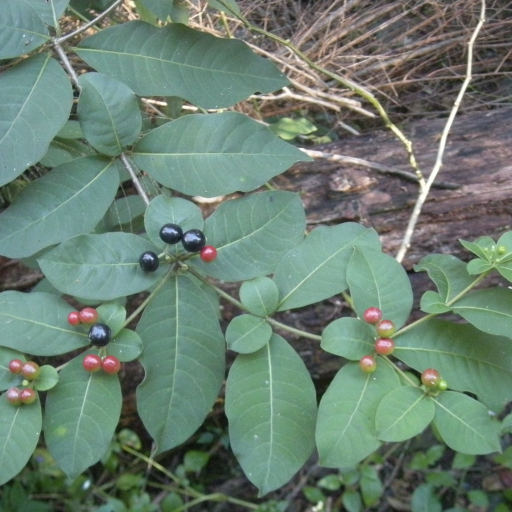
- 🌿 The Whorled Leaves: True to its name (tetraphylla), the leaves almost always grow in groups of four around the stem. They have a soft, velvety texture and a deep emerald hue.
- 🌸 Tiny Blooms: It produces clusters of very small, bell-shaped flowers that are typically creamy white or tinged with a delicate pink.
- 🍒 The "Peppers": The small, round fruits are the most distinct feature; they transition from a bright green to a vivid "devilish" red, finally ripening into a deep, glossy black.
🏡 In Your Garden
- 🌱 Tough and Resilient: This plant is incredibly hardy in tropical climates and can thrive in poor, rocky, or sandy soils. It is often used as a hedging plant because it can handle heavy pruning and still maintain its dense form.
- 🕊️ Bird Magnet: While toxic to humans, the berries are a favorite for various bird species. If you are looking to attract wildlife, this shrub acts as a natural bird feeder, though you must be prepared for the "volunteer" seedlings that will inevitably pop up elsewhere.
⚠️ Safety & Toxicity
- 🚫 High Toxicity: Warning: Every part of this plant is poisonous if ingested. It contains powerful alkaloids, including reserpine, which can drastically affect the nervous system and blood pressure.
- 🐾 Risk Factor: The bright red berries are particularly dangerous because they look tempting to curious children and pets. Ingestion can lead to severe stomach pain, slowed heart rate, and sedation. It is best kept out of reach or in low-traffic areas of the garden.
✨ Fun Fact
📜 The Snake Connection: Its common name, "Wild Snake Root," stems from an old folk belief that the plant could cure snakebites. While modern medicine does extract compounds from this genus to treat high blood pressure, grabbing this plant after a cobra bite is definitely not recommended!

Detailed Care Instructions
| Humidity | High |
| Lighting | Part Sun |
| Difficulty | Medium |
| Hibernation | Cold Period |
To grow Rauvolfia tetraphylla plant, also known as snake root or devil pepper, you can follow these steps:
- Climate and Soil Requirements: Rauvolfia tetraphylla is native to tropical regions, so it grows best in warm and humid environments. It prefers well-drained soil with a pH of around 6-7. If you don't have naturally acidic soil, you can add organic matter or peat moss to improve the pH levels.
- Planting: Obtain the seeds or seedlings of Rauvolfia tetraphylla from a reputable nursery or source. If you have seeds, it's recommended to soak them overnight to enhance germination. Choose a sunny location in your garden where the plant can receive at least six hours of direct sunlight.
- Seed Starting: Fill seedling trays or pots with a well-draining potting mix. Sow the seeds about 1/4 inch deep and lightly cover them. Mist the soil with water to keep it moist but not soaked. Place the trays/pots in a warm area with indirect sunlight. Germination may take 2-4 weeks.
- Transplanting: When the seedlings develop their first set of true leaves and are about 3-4 inches tall, they can be transplanted into larger pots or directly into the garden. Gradually acclimate them to more sunlight by placing them outside for a few hours each day for a week before planting.
- Planting in Garden: Dig a hole slightly larger and deeper than the root ball of the seedling. Place the seedling in the hole and backfill with soil, gently firming it around the base. Water thoroughly after planting to settle the soil and eliminate any air pockets.
- Care and Maintenance: Water the plant regularly to keep the soil moist but avoid overwatering, as excessive moisture can cause root rot. Apply a balanced, slow-release fertilizer every few months to provide essential nutrients. Mulching around the base of the plant helps to retain moisture and suppress weeds. Prune any dead or damaged portions of the plant.
- Pests and Diseases: Rauvolfia tetraphylla is generally disease and pest-resistant, but it can occasionally be susceptible to aphids or mealybugs. Inspect the plant regularly and manually remove any pests or use an insecticidal soap to control infestations if necessary.
Remember that Rauvolfia tetraphylla can grow quite large, reaching up to 20 feet in height, so make sure to provide enough space for growth. Additionally, check the specific local regulations regarding cultivation, as certain areas may classify it as an invasive species.

Place in a bright room that is sun drenched almost all day. Or directly in a south-facing window.

When watering this particular plant, it is important to ensure that the soil is not allowed to become too dry or too wet. This can be achieved by watering the plant regularly, but allowing the soil to partially dry out between watering sessions.
When watering the plant, be sure to thoroughly saturate the soil around the base of the plant. This will help ensure that the water penetrates the root zone and provides enough moisture for the plant to thrive.
It is also important to avoid getting water on the leaves or stems of the plant, as this can increase the risk of fungal infections and other problems. Instead, focus on watering the soil directly and using a drip irrigation system or watering can with a long spout to direct the water precisely where it is needed.
Overall, watering Rauvolfia tetraphylla requires regular attention and care, but with proper attention to soil moisture and careful watering techniques, it can be a relatively easy and rewarding plant to care for.
To fertilize this plant, prepare a solution of balanced fertilizer, preferably organic. Use half the recommended dosage, dissolved in water. Apply the fertilizer to the soil around the base of the plant, taking care not to spill on the foliage. Repeat this process every 30 days during the growing season. It's important not to over-fertilize, as this can damage the roots and cause stunted growth. Always water the plant thoroughly after fertilizing to help distribute the nutrients evenly.
The soil that is best suited for this plant should be a loamy and well-draining soil. It should be rich in organic matter and have good water retention properties. The pH range of the soil should be between 6.0 to 7.5. It is important that the soil is not too compacted and has good aeration. To ensure the soil is ideal for the plant, it is recommended to add compost or other organic matter to the soil before planting. Additionally, it is important to avoid using soil that has a high clay content as this can lead to poor drainage and adversely affect the plant's growth.
There are different ways to propagate Rauvolfia Tetraphylla plants, but one common method is by taking stem cuttings. To do this, choose a healthy stem that is at least 6 inches long and has several leaves. Cut the stem cleanly with a sharp pair of scissors or pruning shears, making sure to include a node (a small bump where the leaf meets the stem).
Remove the lower leaves from the cutting, leaving only the top two or three leaves. Dip the bottom end of the cutting in rooting hormone powder to promote root growth. Then, insert the cutting into moist, well-drained soil, making sure that at least one node is buried in the soil. Water the cutting deeply and place it in a warm, humid location with indirect light.
Keep the soil moist but not waterlogged, and mist the leaves occasionally to maintain high humidity. After a few weeks, new growth should appear from the top of the cutting, indicating that it has rooted. At this point, you can slowly acclimate the cutting to brighter light and lower humidity, and eventually transplant it into a larger pot or into the ground.








