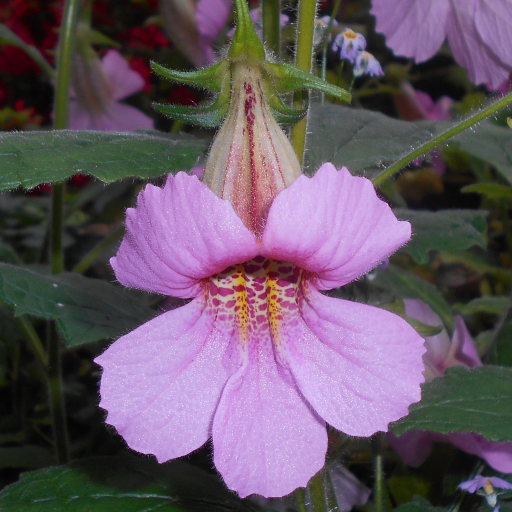
Plant Overview
Known as the Chinese Foxglove, this stunning perennial is a hidden gem of the summer garden. While it shares the regal, bell-shaped spires and spotted throats of the common foxglove (Digitalis), it is actually a distinct species native to the grassy hillsides of China. It offers a romantic, "cottage core" aesthetic but is far more resilient in warmer climates than its European look-alikes.
🔍 How to Identify
- 🌸 Trumpet Blooms: Large, pendulous flowers in shades of rose-pink or magenta, featuring creamy yellow throats heavily speckled with maroon dots.
- 🍃 Fuzzy Foliage: The leaves are deep green, lobed, and covered in soft, fine hairs, forming a lush "basal rosette" close to the ground.
- 📏 Stately Stalks: It produces elegant, slightly arching flowering stems that can reach 2 to 3 feet in height, standing tall without usually needing stakes.
🏡 In Your Garden
- 🏃 The "Wandering" Habit: Unlike many perennials that stay in a tight clump, Chinese Foxglove spreads via underground runners (stolons). It will gently "walk" through your garden bed, popping up in new spots to fill in gaps.
- 💧 Drainage is Vital: While it loves consistent moisture during the blooming season, it is prone to crown rot if the soil stays soggy during the winter. It prefers "rich but gritty" soil that allows water to move away from the roots quickly.
⚠️ Safety & Toxicity
- ✅ Pet & Child Friendly: This is the "safe" foxglove! While the common foxglove (Digitalis) is dangerously cardiotoxic, Rehmannia elata is generally considered non-toxic to humans, cats, and dogs.
- 🧤 Mild Irritation: The fine, sticky hairs on the stems and leaves can occasionally cause mild skin irritation for those with very sensitive skin. Wearing gloves while deadheading is a simple precaution.
✨ Fun Fact
Despite its name and appearance, Rehmannia is more closely related to the Plantain family than the true Foxglove. In its native China, its roots (known as Sheng Di Huang) have been a cornerstone of traditional herbal medicine for over 2,000 years, often used to treat "internal heat."

Detailed Care Instructions
| Color | Pink, Purple |
| Soil Ph | 6.5-7 |
| Humidity | Normal |
| Lighting | Full Sun |
| Toxicity | Poisonous |
| Soil Type | Well-Draining, Rich Soil |
| Bloom Time | Summer, Fall |
| Difficulty | Medium |
| Plant Type | Herbaceous Perennial |
| Hibernation | Cold Period |
| Mature Size | 2-3 Ft. Wide |
| Native Area | China |
| Sun Exposure | Full Sun, Partial Shade |
| Hardiness Zones | 7-10 |

Place in a bright room that is sun drenched almost all day. Or directly in a south-facing window.

Some plants require more regular watering than others, which should be done every few days. It's critical to maintain the soil moist all of the time. The water requirements of the same plant placed in pots with varying sizes will differ. Because the water in the smaller pot evaporates faster than the water in the larger pot, it will require more watering. Regardless of pot size, the surface should constantly be maintained moist.








