Plant Overview
Known as the Chinese Foxglove or "Di Huang," this perennial herb is a jewel of East Asian traditional gardens. While it shares a striking resemblance to the common Foxglove, it belongs to its own unique lineage. Its name, glutinosa, refers to the sticky, resinous nature of its thick, tuberous roots, which have been harvested for centuries as a cornerstone of traditional herbalism.
🔍 How to Identify
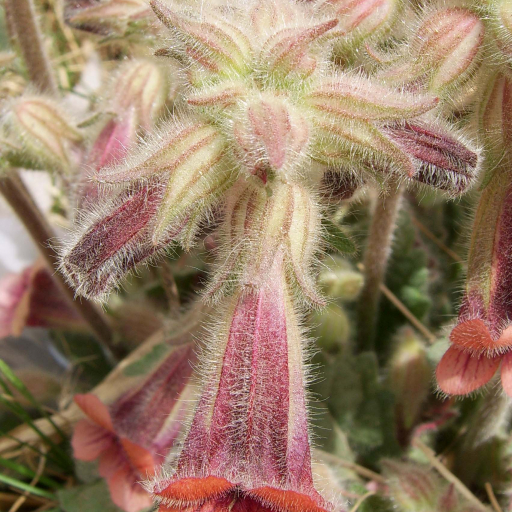
- 🔔 The Flowers: Large, drooping, bell-shaped blossoms that are typically a dusky purplish-red or yellowish-brown, often featuring intricate spotting or stripes inside the throat.
- ☁️ Fuzzy Foliage: The leaves are oblong, heavily textured (rugose), and covered in fine, soft hairs that give the plant a silvery-green, velvety appearance.
- 🌱 Growth Habit: It starts as a low-growing rosette of leaves close to the ground before sending up a sturdy, hairy flower spike that can reach up to a foot or more in height.
🏡 In Your Garden
- 🧪 The Taproot Secret: This plant develops a thick, fleshy taproot that stores water and nutrients. Because of this, it is notoriously difficult to transplant; once you pick a spot, it’s best to let it stay there permanently.
- 💧 Drainage is Key: While it enjoys consistent moisture, the "glutinous" roots are highly susceptible to rot if the soil is heavy or waterlogged. It thrives best in sandy, well-draining soil mixed with organic compost.
- ☀️ Light Preferences: It loves the morning sun but appreciates a bit of "dappled" shade during the scorching afternoon hours to prevent its soft leaves from wilting or scorching.
⚠️ Safety & Toxicity
- ✅ Low Risk: Unlike the common Foxglove (Digitalis), which is highly cardiotoxic, Rehmannia glutinosa is generally considered non-toxic to touch and is not known for the same level of danger to pets or children.
- 💊 Medicinal Caution: Although used in traditional medicine, the raw plant should never be ingested at home. It contains various iridoid glycosides that can cause digestive upset if consumed without proper professional processing.
✨ Fun Fact
In Chinese culture, the root is known as "Earth Yellow" (Di Huang). Depending on how it is prepared—whether raw, dried, or steamed in wine—it is believed to change its medicinal properties entirely, moving from a "cooling" herb to a "warming" one!

Detailed Care Instructions
To grow Rehmannia Glutinosa, also known as Chinese foxglove, follow these steps:
- Start with healthy root cuttings or seeds: Rehmannia Glutinosa can be grown from root cuttings or seeds. Root cuttings are the most common method. Obtain fresh root cuttings from a reputable nursery or garden center, or purchase seeds from a reliable supplier.
- Prepare the planting area: Choose a sunny spot in your garden with well-draining soil. Rehmannia Glutinosa prefers loamy soil with a pH level of 6.0 to 7.5. Loosen the soil with a garden fork to improve its texture and create a bed where the plant can establish its roots.
- Plant the root cuttings/seeds: If using root cuttings, plant them horizontally, about 2 to 3 inches deep in the soil, with the bud side facing up. Space the cuttings about 12 inches apart. If using seeds, sow them directly into the soil and cover with a thin layer of compost or soil. Water lightly after planting.
- Provide adequate water: Rehmannia Glutinosa requires consistent moisture, so water the plant regularly. However, ensure the soil is well-drained to prevent waterlogging, as excessive moisture can result in root rot. Aim to keep the soil consistently damp but not waterlogged.
- Fertilize as needed: Rehmannia Glutinosa benefits from occasional feeding. Use a balanced fertilizer, such as a 10-10-10 or 14-14-14 formulation, once a month during the growing season. Follow the instructions on the fertilizer packaging and avoid over-fertilization, as it can lead to excessive foliage growth.
- Provide support: As the plant grows, it may require support as the stems can become weak and flop over. Insert stakes or use a trellis to guide and support the plant as it grows taller.
- Control pests and diseases: Monitor the plant for pests like aphids, spider mites, and slugs. Use organic insecticides or insecticidal soap to control pests if necessary. Keep an eye out for diseases such as powdery mildew and treat accordingly. Good air circulation and maintaining proper hygiene in the garden can help prevent diseases.
- Harvesting: Harvest the roots of Rehmannia Glutinosa in the fall, after the foliage has died back completely. Dig up the roots carefully using a garden fork, being cautious not to damage them. Wash off any dirt and store the roots in a cool, dry place for later use.
By following these steps, you should be able to successfully grow Rehmannia Glutinosa in your garden.

Place in a bright room that is sun drenched almost all day. Or directly in a south-facing window.

1. Rehmannia Glutinosa is a perennial plant that requires proper watering for healthy growth and development.
2. When watering this plant, it is important to provide a sufficient amount of water without causing waterlogging or drying out of the soil.
3. Determine the watering needs of the plant by checking the moisture level in the soil before watering.
4. Stick your finger approximately 2-3 inches into the soil around the plant to gauge the moisture content. If it feels dry at this depth, it's time to water.
5. Use a watering can or a garden hose with a nozzle attachment with a gentle flow to avoid disturbing the plant's delicate roots.
6. Water the soil around the plant evenly, making sure not to concentrate the water too close to the stem or on the plant's foliage.
7. Allow the water to penetrate the soil deeply, ensuring that the entire root zone is moistened. This encourages the plant's roots to grow deeper for better drought tolerance.
8. Avoid overwatering, as Rehmannia Glutinosa prefers slightly moist but well-drained soil. Too much water can lead to root rot and other problems.
9. Adjust the watering frequency depending on the environmental conditions. During hot and dry periods, the plant may require more frequent watering, while cooler and rainy periods may reduce the watering frequency.
10. It is also recommended to water early in the morning or late in the afternoon, minimizing water loss through evaporation and allowing the plant to dry off before cooler evening temperatures.
Remember to always observe the specific water needs of your Rehmannia Glutinosa plant, as individual requirements may vary based on factors such as climate, soil type, and plant size.
- Find a well-draining container or garden bed for the Rehmannia Glutinosa plant.
- Choose a high-quality, balanced fertilizer with equal amounts of nitrogen, phosphorus, and potassium (NPK).
- Dilute the fertilizer according to the manufacturer's instructions. Typically, a ratio of 1 tablespoon of fertilizer per gallon of water is suitable.
- Apply the diluted fertilizer around the base of the Rehmannia Glutinosa plant, taking care to avoid direct contact with the leaves and stems.
- Water the plant thoroughly after fertilizing to help distribute the nutrients throughout the soil.
- Fertilize the Rehmannia Glutinosa plant during its active growing season, typically in spring or early summer. Avoid fertilizing during winter or times of dormancy.
- Repeat the fertilization process every 4-6 weeks throughout the growing season to provide the plant with a consistent supply of nutrients.
- Monitor the plant's response to the fertilizer. If it shows signs of over-fertilization, such as yellowing leaves or stunted growth, reduce the fertilizer amount or frequency of application.
- Consider supplementing the fertilizer regimen with organic matter, such as compost or well-rotted manure, to improve soil fertility and provide additional nutrients.
- Lastly, always follow the instructions provided with the specific fertilizer product you choose, as different brands may have varying recommendations for application rates and frequency.
When selecting soil for the Rehmannia Glutinosa plant, it is important to consider the plant's requirements for optimal growth and health. Rehmannia Glutinosa thrives best in a well-draining soil mix that is rich in organic matter. The ideal soil pH for this plant ranges from slightly acidic to slightly alkaline, between 6.0 and 7.5.
A suitable soil mixture for the Rehmannia Glutinosa plant might consist of a combination of garden soil and compost or well-rotted manure. This will provide the plant with essential nutrients and help retain moisture while allowing excess water to drain freely. It is essential to ensure that the soil is loose and friable to allow for root development and easy penetration of water and air.
Additionally, incorporating perlite or sand into the soil mixture can enhance drainage and prevent waterlogging, which can be detrimental to the plant's health. This is particularly important during the rainy season or if the pot lacks adequate drainage holes.
Regularly amending the soil with organic matter such as compost tea or well-decomposed compost will help replenish nutrients and promote healthy plant growth. It is advisable to avoid using heavy clay soils or poorly draining soils, as they can lead to root rot and other moisture-related issues.
Overall, providing a well-draining and nutrient-rich soil mix is crucial for the Rehmannia Glutinosa plant's overall health and vigor, ensuring its ability to thrive and produce vibrant blooms.
To propagate Rehmannia Glutinosa plants, follow these steps:
- Select a healthy and mature plant: Choose a Rehmannia Glutinosa plant that is at least two years old and free from any diseases or pests. This ensures successful propagation.
- Choose the propagation method: Rehmannia Glutinosa plants can be propagated through various methods, including division, seed sowing, and stem cuttings. Each method has its own requirements and techniques.
- Division: This method involves separating the plant into multiple sections, each with its own roots and stems. To do this, carefully dig up the plant, ensuring that the roots remain intact. Gently tease apart the root ball into smaller sections, with each division containing both a portion of the root and an established stem.
- Seed sowing: Collect mature seeds from the plant's seed pods during the flowering season. Remove the seeds from the pods and clean off any debris. Fill a seed tray with a well-draining soil mixture. Sow the seeds on the surface and cover them lightly with soil. Keep the soil moist and warm until germination occurs, usually within 2-3 weeks.
- Stem cuttings: Select healthy stems from the parent plant, preferably ones with nodes or leaf joints. Cut the stem sections about 4-6 inches long, making sure to use a sharp and clean cutting tool to prevent any infection. Remove the lower leaves from the stem, leaving a few at the top. Dip the cut end into rooting hormone powder to encourage root development. Place the cuttings in a well-draining potting mix, ensuring that at least one node is submerged in the soil. Keep the soil moist and provide indirect light until the cuttings develop roots.
- Provide optimal growing conditions: Regardless of the propagation method used, it is essential to provide the new plants with the right growing conditions. Rehmannia Glutinosa prefers moist, well-draining soil that is rich in organic matter. Choose a location with partial shade or filtered sunlight. Water the plants regularly, keeping the soil consistently moist but not waterlogged.
- Transplanting: Once the new plants have developed a strong root system, they can be transplanted into their permanent location. This can be in containers or directly into a garden bed. Ensure each plant has enough space to grow and receives adequate sunlight, water, and nutrients.
Remember, Rehmannia Glutinosa is a tropical perennial plant that requires proper care and regular maintenance to thrive. Follow these propagation steps carefully to increase your chances of successfully propagating new Rehmannia Glutinosa plants.








