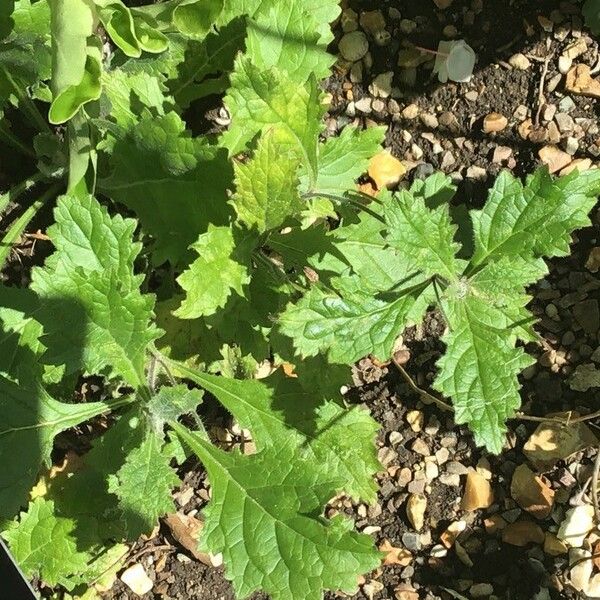
Plant Overview
Often called the "Chinese Foxglove," Rehmannia piasezkii is a captivating perennial that brings the mystery of ancient mountain forests to your backyard. Native to the rocky slopes of China, it is a heat-tolerant and more delicate relative of the common European Foxglove. While it looks like something out of a woodland fairy tale, it is a hardy survivor that spreads through clever underground runners to form lush, flowering carpets.
🔍 How to Identify
- 🌸 Tubular Blooms: It features large, bell-shaped flowers that range from dusky rose to violet, usually boasting a pale or yellow throat decorated with intricate crimson "landing strips" for bees.
- 🌿 Fuzzy Foliage: The leaves are deeply veined, serrated, and covered in fine, soft hairs (pubescence), giving the plant a velvety, silvery-green texture.
- 📏 Growth Habit: Unlike the towering spikes of a typical foxglove, this species stays relatively low to the ground, forming thick mounds of foliage that hug the earth.
🏡 In Your Garden
- ⛰️ The Mountain Connection: Because it originates from rocky crevices, this plant craves excellent drainage. It is highly susceptible to "wet feet" during the winter, which can lead to root rot; planting it on a slight slope or in gritty soil is ideal.
- ⛅ Light Nuance: While it enjoys the sun, its leaves can scorch in intense, direct afternoon heat. It performs best in "dappled light," mimicking the protective canopy of its native forest-edge habitat.
⚠️ Safety & Toxicity
- 🟢 Low Risk: Unlike true Foxgloves (Digitalis), which are famously cardiotoxic, Rehmannia piasezkii is generally considered much safer and has a long history of use in traditional Eastern medicine.
- 🐾 Pet Caution: While not listed as a major toxin for dogs or cats, the fuzzy texture of the leaves can cause mild stomach upset or mouth irritation if chewed. It is always best to keep ornamental plants out of reach of curious nibblers.
✨ Fun Fact
- 🧬 A "Vampire" Relative: Despite being perfectly capable of making its own food through photosynthesis, Rehmannia belongs to the Orobanchaceae family—a group otherwise famous for being "vampire plants" that steal nutrients from the roots of neighboring trees!

Detailed Care Instructions

Place in a bright room that is sun drenched almost all day. Or directly in a south-facing window.

Some plants require more regular watering than others, which should be done every few days. It's critical to maintain the soil moist all of the time. The water requirements of the same plant placed in pots with varying sizes will differ. Because the water in the smaller pot evaporates faster than the water in the larger pot, it will require more watering. Regardless of pot size, the surface should constantly be maintained moist.








