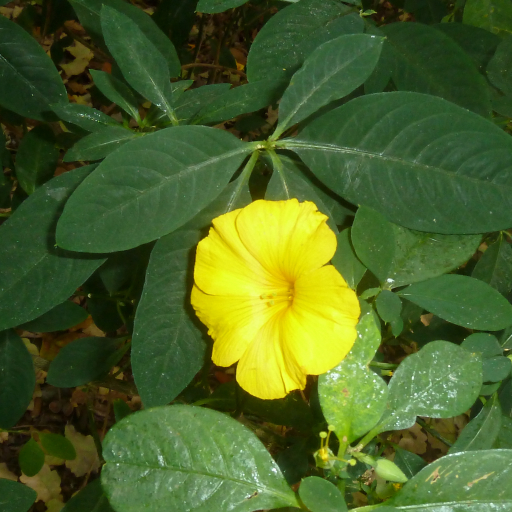
Plant Overview
Often called the Yellow Flax or affectionately known as Pyoli in its native Himalayan home, Reinwardtia indica is like a burst of captured sunshine. This cheerful shrub is a herald of spring in the mountains, often draped over rocky hillsides like a golden carpet. In many cultures, its vibrant bloom represents renewal and the end of the cold winter months.
🔍 How to Identify
- 🌼 The Flowers: Large, five-petaled, funnel-shaped blossoms in a striking, buttery yellow. They appear delicate but are surprisingly resilient against light breezes.
- 🍃 The Foliage: Leaves are simple, oval-to-oblong, and a deep, glossy green. They provide a lush, dense backdrop that makes the yellow flowers "pop" visually.
- 🌿 Growth Habit: A small, spreading evergreen shrub that usually stays under 3 feet tall, often taking on a rounded or fountain-like shape as it matures.
🏡 In Your Garden
- ☀️ Winter's Gold: Unlike many garden stars, this plant chooses to bloom in late winter and early spring. It is a "short-day" bloomer, meaning it relies on the long nights of winter to trigger its spectacular floral display.
- ✂️ Post-Bloom Maintenance: To keep it from becoming "leggy" or sparse, give it a firm pruning right after the flowering season ends. It thrives in well-draining soil and appreciates consistent moisture but will suffer if its roots sit in stagnant water.
⚠️ Safety & Toxicity
- 🟢 General Safety: Reinwardtia indica is generally considered non-toxic to humans and common household pets. It does not possess the stinging hairs or caustic sap found in some of its botanical cousins.
- 🚫 Precaution: While safe to touch, it is purely an ornamental plant. Keep an eye on curious toddlers or pets to ensure they don't ingest the foliage, as any non-food plant can cause minor stomach upset if eaten in large quantities.
✨ Fun Fact
In the folklore of Northern India, the "Pyoli" flower is the subject of many bittersweet songs. Legend tells of a beautiful forest maiden named Pyoli who withered away when taken from her mountain home, and this bright yellow flower is said to have sprouted from the spot where she was buried to forever remind locals of her beauty.

Detailed Care Instructions
To grow Reinwardtia Indica, also known as the yellow joyweed or Indian joyweed, follow these steps:
- Purchase or obtain seeds or young seedlings of Reinwardtia Indica from a reliable source.
- Choose a suitable location that receives full or partial sunlight. Reinwardtia Indica prefers warm and tropical climates.
- Prepare the soil by making it well-draining and rich in organic matter. Use a mixture of garden soil, compost, and sand to ensure good drainage.
- Sow the seeds or plant the young seedlings in the prepared soil. Space the plants about 12-18 inches apart to give them room to grow.
- Water the plants regularly, keeping the soil evenly moist but not waterlogged. Yellow joyweed prefers slightly moist conditions.
- Apply a balanced organic fertilizer every 4-6 weeks to provide the plants with essential nutrients. Follow the instructions on the fertilizer packaging for proper application.
- Mulch around the plants to retain moisture, suppress weed growth, and provide insulation to the roots.
- Prune the plant occasionally to maintain its shape and promote branching. This will help it stay bushier and produce more flowers.
- Monitor the plant for pests and diseases. Common issues include aphids and powdery mildew. Apply appropriate organic pest control measures as needed.
- Enjoy the beautiful yellow flowers of Reinwardtia Indica, which typically bloom from spring to fall.
Remember to tailor the care and maintenance to your specific local conditions and climate. Regularly observe the plant's health and adjust watering or other care routines as necessary.

Place in a bright room that is sun drenched almost all day. Or directly in a south-facing window.

When watering this plant, it is important to ensure that the soil is evenly moist but not waterlogged. The best way to achieve this is to water deeply and allow any excess water to drain away from the pot or soil. This can be done by placing the container in a sink or tray and watering until the water begins to run out of the drainage holes. It is advisable to allow the soil to dry out slightly between watering, rather than keeping it constantly damp. This will help to prevent root rot and maintain good drainage. In addition, it may be necessary to adjust the frequency of watering according to the season and temperature, as the plant's water needs will vary depending on these factors.
To fertilize this plant, use a balanced fertilizer with equal parts nitrogen, phosphorus, and potassium. Apply the fertilizer once a month during the growing season, which is typically from spring to fall. Dilute the fertilizer according to the package instructions and water the plant thoroughly after application. Avoid applying fertilizer to dry soil or on the leaves of the plant, as this can cause damage.
Reinwardtia Indica prefers well-draining soil that is rich in organic matter. It thrives in slightly acidic to neutral soil with a pH range of 6.0 to 7.0. A mixture of equal parts of sand, loam, and peat moss or compost is an ideal soil blend for this plant. The soil should be slightly moist but not overly saturated, as excessive moisture can cause root rot. Additionally, it is recommended to add a slow-release fertilizer to the soil when planting and to fertilize every two to three months during the growing season for optimal growth and health.
To propagate this plant, you can take stem cuttings that measure around 4-6 inches in length and remove any leaves from the bottom two-thirds of the cutting. The remaining leaves can be cut in half to reduce moisture loss. Dip the bottom end of the cutting in rooting hormone, then plant it in well-draining soil. Water the cutting and cover it with a plastic bag to increase humidity. Place the cutting in an area with bright, indirect light, but avoid direct sunlight. Keep the soil moist and mist the leaves occasionally. Roots should form in 2-4 weeks, indicating that the cutting has successfully rooted and can be gradually acclimated to its new environment.








