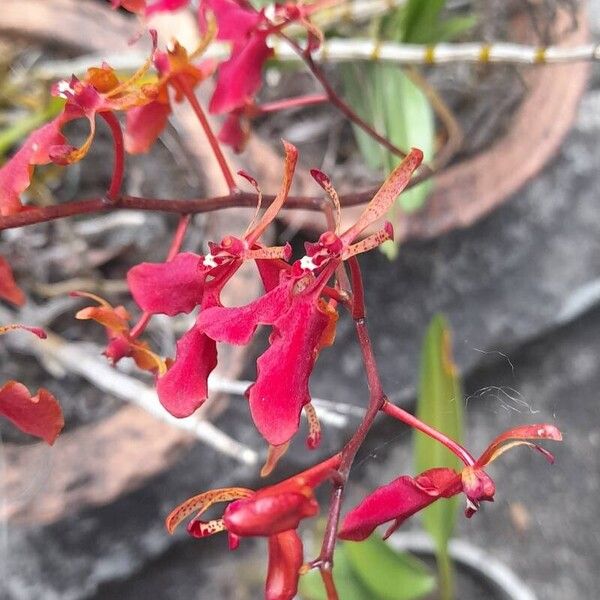
Plant Overview
Known as the "Red Renanthera" or sometimes the "Fire Orchid," this stunning species is like a living flame captured in botanical form. Native to the misty mountain forests of Vietnam, Myanmar, and Southern China, it is famous for its dramatic, branching sprays of crimson flowers that look like a shower of sparks against the green canopy.
🔍 How to Identify
- 🌸 Fiery Blooms: The flowers are a brilliant scarlet or vermillion. They have a distinct "spider-like" shape with long, slender petals that give the inflorescence an airy, delicate appearance.
- 🍃 Strap-Shaped Leaves: The plant grows vertically (monopodial) with stiff, leathery leaves arranged in two neat rows along the stem, similar to a Vanda orchid.
- 🕸️ Airy Root System: It produces thick, silvery-grey aerial roots that wander out of the pot, designed to "grab" moisture and nutrients directly from the humid air.
🏡 In Your Garden
- ☀️ Light Hunter: This orchid is a sun-lover compared to its cousins. To get those iconic red flowers, it needs very bright, filtered light. If the leaves are a dark, dull green, it’s likely not getting enough light to bloom.
- 💨 Breathable Roots: Never "drown" this plant in heavy potting soil. It thrives best when mounted on a piece of cork bark or nestled in a wooden slat basket with very coarse fir bark. The roots must dry out quickly after watering.
- 🌡️ Temperature Fluctuations: It appreciates a slight drop in temperature at night, which mimics its natural highland habitat and encourages the plant to spike.
⚠️ Safety & Toxicity
- 🐾 Pet Safe: Good news for animal lovers! This orchid is considered non-toxic to cats, dogs, and horses.
- 🛡️ Handle with Care: While not poisonous, the plant is physically delicate. Snapping the "lead" (the growing tip) can stop the plant's vertical growth for a long period, as it has to struggle to produce a new side-shoot.
✨ Fun Fact
Renanthera imschootiana is one of the very few orchids listed under CITES Appendix I. This means it is so rare and threatened by habitat loss in the wild that international trade of wild-collected specimens is strictly prohibited. If you own one, you are a guardian of a highly protected botanical treasure!

Detailed Care Instructions







