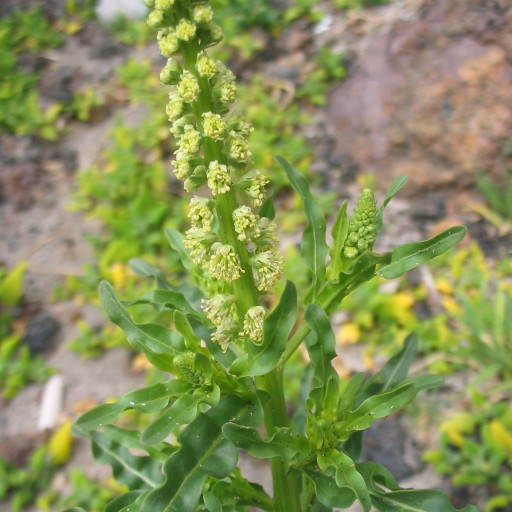
Plant Overview
Known historically as "Weld" or "Dyer's Rocket," this tall, slender spike of yellow-green blooms has a history stretching back to the Bronze Age. Long before synthetic pigments existed, this plant was the gold standard for creating vibrant, lightfast yellows in textiles. Often seen swaying along roadsides or in limestone-rich meadows, it possesses a quiet, architectural elegance that reflects its ancient, industrial past.
🔍 How to Identify
- 🌿 The Form: In its first year, it sits low as a wavy-edged leaf rosette; in its second year, it rockets upward into a tall, unbranched flower spike that can reach five feet in height.
- 🌼 The Flowers: Tiny, yellowish-green blossoms are packed densely along the top of the stalk, looking more like textured "beads" than traditional petals.
- 🍃 The Foliage: The leaves are long, narrow, and strap-like with distinctive undulating or "crinkled" margins that help distinguish it from common weeds.
🏡 In Your Garden
- 🏗️ The Taproot: Weld develops a deep, sturdy taproot designed to find water in harsh conditions. Because of this, it hates being moved; it is best to sow seeds directly into the spot where you want them to grow.
- 💎 Soil Preference: This plant is a "calcicole," meaning it thrives in lime-rich, alkaline soils. If your garden is naturally acidic, adding a bit of garden lime will help it reach its full, towering potential.
- 🐝 Pollinator Magnet: While humans originally valued it for its pigment, bees and butterflies are drawn to its abundant nectar, making it a fantastic structural plant for a wildlife-friendly garden.
⚠️ Safety & Toxicity
- ✅ Status: Generally considered non-toxic to humans, cats, and dogs.
- 🚫 Details: While it isn't poisonous, it is not a culinary herb and should not be consumed. The plant is purely ornamental and functional (for dye). As with many wild plants, some individuals with very sensitive skin may experience mild irritation from the sap.
✨ Fun Fact
🎨 Robin Hood’s Secret: Reseda luteola was a key ingredient in creating "Lincoln Green," the legendary color of Robin Hood’s clothes. The fabric was first dyed bright yellow with Weld and then dipped in blue dye from the Woad plant to achieve that famous forest hue!

Detailed Care Instructions
To grow Reseda Luteola, also known as Weld or Dyer's Rocket, you can follow these steps:
- Planting: Reseda Luteola can be either grown from seeds or by transplanting seedlings. If starting from seeds, sow them directly into the desired location in your garden during the early spring or autumn. Make sure the soil is fertile, well-draining, and slightly alkaline. Space the seeds about 12 inches apart to allow the plants to grow properly.
- Sunlight: Reseda Luteola requires full sun exposure to thrive. Choose a location that receives at least 6-8 hours of direct sunlight each day.
- Soil: The plant prefers well-draining soil with a pH level of 6 to 7. If your soil is heavy or clay-based, consider adding organic matter, such as compost, to improve its drainage.
- Watering: Reseda Luteola has moderate water requirements. Water the plant regularly, aiming to keep the soil evenly moist but not waterlogged. Once the plant is established, it can tolerate some drought.
- Fertilization: Apply a balanced fertilizer, such as a slow-release granular fertilizer, during the growing season to encourage healthy growth. Follow the package instructions for proper application rates.
- Pruning: Reseda Luteola does not require much pruning, but you can remove any dead, damaged, or overgrown parts to promote a more attractive appearance. Pruning can be done in late winter or early spring.
- Mulching: Applying a layer of organic mulch around the base of the plant can help retain moisture, suppress weed growth, and protect the roots during extreme temperatures.
- Pests and Diseases: Reseda Luteola is generally resistant to most pests and diseases. However, keep an eye out for aphids or caterpillars, which may occasionally be a problem. Treat any infestations promptly by manually removing the pests or using an appropriate insecticide.
- Harvesting: If you are growing Reseda Luteola for its dye-producing properties, harvest the flower stalks after they have bloomed but before the seeds have formed. Cut the stalks close to the base of the plant and hang them upside down in a well-ventilated, dry area to dry out completely.
As with any plant, it's important to research specific care requirements and adapt them to your particular climate and growing conditions.

Place in a bright room that is sun drenched almost all day. Or directly in a south-facing window.

Reseda Luteola is a plant that requires regular watering. When watering, it is important to avoid over-watering, as this can lead to root rot. The soil should be kept moist but not waterlogged. A general rule of thumb is to water the plant when the top inch of soil feels dry to the touch. It is best to water in the morning or evening when the temperature is cooler, as this will prevent the water from evaporating too quickly. If the plant is grown in a container, be sure to drain the excess water from the bottom to prevent waterlogging. In general, it is important to be attentive to the plant's water needs and adjust the watering schedule accordingly, depending on factors such as the plant's size, location, and weather conditions.
To fertilize this plant, use a balanced fertilizer with an N-P-K ratio of 10-10-10 or 12-12-12. Apply the fertilizer once every month during the growing season (spring to summer) and mix it into the top layer of soil. Avoid getting fertilizer on the leaves or stems of the plant. Water the plant thoroughly after fertilizing.
Reseda Luteola plants require a well-draining soil that is rich in nutrients. The soil should be slightly acidic to neutral with a pH level between 5.5 and 7.0. It is important to avoid soil that is too alkaline, as this may result in nutrient deficiencies and poor growth. The soil should also be fertile and high in organic matter, with a good balance of nitrogen, phosphorus, and potassium.
To prepare the soil for Reseda Luteola planting, mix in compost or well-rotted manure to improve soil structure and water-holding capacity. If the soil is heavy clay or sandy, adding organic matter will also improve drainage and nutrient retention. It is important to avoid soils that are excessively wet or prone to waterlogging, as this can lead to root rot and other problems.
In summary, Reseda Luteola plants require a well-draining, fertile soil that is rich in organic matter and has a slightly acidic to neutral pH level. With the right soil conditions, these plants can thrive and produce beautiful flowers throughout the growing season.
To propagate this plant, collect mature seeds from the parent plant and sow them in a well-draining potting mix. Ensure that the soil is kept consistently moist but not waterlogged. Provide bright, indirect light and keep the temperature between 60-70°F (15-21°C). Seeds should germinate in 7-10 days. Once seedlings have several true leaves, they can be transplanted into larger pots or directly into the garden. It is also possible to take cuttings from the plant to propagate it. Select a healthy stem and remove the lower leaves. Dip the end of the cutting in rooting hormone and place it in a well-draining potting mix, keeping it moist and in bright, indirect light. Roots should begin to form in 2-4 weeks.
Common pests of the dyer's weed include Larvae, snails. Make a habit of checking your dyer's weed frequently for pests so that any infestations can be caught and managed early.








