Plant Overview
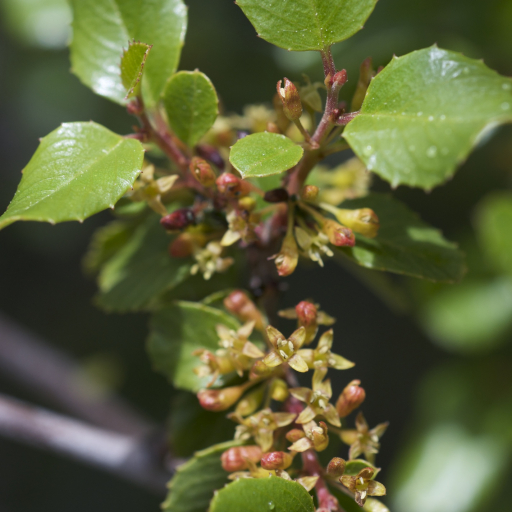
Meet the Hollyleaf Redberry, a tough-as-nails evergreen shrub that acts as a festive centerpiece for the California chaparral. Often nicknamed "Hollyleaf" for its striking resemblance to Christmas holly, this plant isn't just a holiday look-alike; it is a vital survivalist in dry, rocky landscapes. From its jewel-toned berries to its armored leaves, it tells a story of adaptation in the American Southwest.
🔍 How to Identify
- 🍃 Holly-Like Foliage: The most distinctive feature is the small, oval leaves with sharp, spiny teeth along the edges. They are stiff, leathery, and a deep, glossy green.
- 🍒 The "Redberry" Fruit: In late summer and fall, the plant produces clusters of small, translucent bright red berries that look like tiny garnets nestled among the thorns.
- 🎋 Rigid Architecture: It grows as a dense, mounding shrub with gray-toned, rigid branches that can occasionally reach the height of a small tree in ideal conditions.
🏡 In Your Garden
- 🐦 A Bird's Best Friend: If you want to transform your yard into a sanctuary, this is the plant to choose. The dense, spiny branches provide perfect nesting sites safe from predators, while the berries are a high-energy snack for cedar waxwings and robins.
- 💧 Drought Champion: Once established, this plant is incredibly water-wise. It has evolved to survive long, hot summers with almost no supplemental water, making it perfect for xeriscaping or "wild" corners of the garden.
- ⏳ Patience Required: It is a slow grower. Unlike many garden-center shrubs that "creep, crawl, then leap," the Hollyleaf Redberry takes its time to establish its deep root system before putting on significant vertical height.
⚠️ Safety & Toxicity
- 🟢 Low Toxicity: The Hollyleaf Redberry is generally considered safe for humans and pets in passing contact.
- 🚽 Mild Purgative: Like many members of the Rhamnus family (Buckthorns), the berries contain compounds that can act as a mild laxative if consumed in large quantities. While not "deadly," it’s best to keep curious toddlers or pets from snacking on the fruit to avoid digestive upset.
✨ Fun Fact
Native Americans, including the Cahuilla and Kumeyaay peoples, used the Hollyleaf Redberry for more than just food; they harvested the bark and roots to create a vibrant yellow dye for basketry and textiles!

Detailed Care Instructions
To grow Rhamnus Ilicifolia (holly-leaved redberry), follow these steps:
- Obtain seeds or nursery-started plants: You can either collect seeds from mature Rhamnus Ilicifolia plants or purchase nursery-started plants from a reputable garden center or online supplier.
- Choose a suitable location: Rhamnus Ilicifolia thrives in full sun to partial shade. Select a spot in your garden that receives at least 4-6 hours of direct sunlight per day.
- Prepare the soil: Rhamnus Ilicifolia prefers well-draining soil with a slightly acidic to neutral pH. Amend the soil with organic matter like compost to improve its fertility and drainage.
- Plant the seeds or nursery-started plants: If using seeds, sow them directly into the prepared soil, following the packet instructions for planting depth and spacing. If using nursery plants, dig a hole twice as wide and deep as the root ball and gently place the plant inside, making sure the top of the root ball is level with the soil surface.
- Water regularly: Rhamnus Ilicifolia prefers regular moisture but is tolerant of drought once established. Keep the soil evenly moist during the initial growth phase and water deeply but infrequently once the plant is established.
- Mulch around the plant: Apply a layer of organic mulch around the base of the plant to help retain moisture, suppress weed growth, and provide insulation for the roots.
- Prune as needed: Rhamnus Ilicifolia benefits from periodic pruning to maintain its shape and promote branching. Prune in late winter or early spring before new growth begins.
- Monitor for pests and diseases: Keep an eye out for common pests like aphids, scale insects, or spider mites. Treat infestations promptly with organic or chemical insecticides, if necessary. Watch for signs of disease such as leaf spots or wilting and take appropriate action.
- Fertilize occasionally: Rhamnus Ilicifolia generally doesn't require heavy fertilization. However, applying a balanced slow-release fertilizer in spring or early summer can help promote healthy growth.
- Enjoy your Rhamnus Ilicifolia: With proper care, your plant should grow into an attractive shrub with glossy, holly-like leaves and red berries. Appreciate its beauty and the wildlife it may attract, such as birds.
Remember to check your local gardening guidelines, as some regions may have specific recommendations or restrictions for growing Rhamnus Ilicifolia.
To properly water this plant, it is important to consider its specific watering requirements. This plant prefers to be watered regularly, but not excessively. Overwatering can lead to root rot, so it is important to ensure that the soil has good drainage to allow excess water to escape.
To determine when to water, check the soil moisture level by sticking a finger about an inch into the soil. If it feels dry, it is time to water.
When watering, pour water onto the soil around the base of the plant rather than on the leaves or branches. Use a watering can or hose with a gentle flow to avoid causing damage to the plant. Water until you see it flowing out of the drainage holes in the bottom of the container or until the soil is thoroughly moistened.
During the winter months or in cooler temperatures, reduce the frequency of watering as the plant will require less water.
To fertilize this plant, start by selecting a slow release, balanced fertilizer. Apply the fertilizer according to the package instructions, taking care not to over-fertilize as this can damage the plant. It is best to fertilize in the early spring and again in the late summer or early fall. Water the plant thoroughly after fertilizing to help the nutrients penetrate the soil. Avoid fertilizing during periods of drought or extreme heat.
The ideal soil for Rhamnus Ilicifolia plant is a well-draining soil mixture that is rich in organic matter and slightly acidic. It should have a pH range of 5.5 to 6.5. A sandy loam soil that is combined with compost or peat moss will help ensure proper drainage and moisture retention. The plant prefers to grow in a soil that is moderately fertile and absorbs water evenly. It is important to avoid using heavy clay soils that can cause waterlogging and prevent the roots from accessing essential nutrients. Furthermore, the soil should be deep and loose to provide excellent aeration and drainage as well. Adequate soil preparation is crucial to the long-term health and growth of the Rhamnus Ilicifolia plant.
To propagate this plant, first ensure that the parent plant is mature and healthy. Then, choose a healthy stem that is at least 6 inches long and without any signs of damage or disease.
Next, cut the stem with a sharp, clean pair of pruning shears or a knife. Remove the lower leaves from the stem, leaving just 2 or 3 leaves at the top. Dip the cut end of the stem into rooting hormone powder to encourage root growth.
Prepare a pot with dampened soil, making a hole in the center with a pencil or similar object. Insert the stem into the hole and gently pat the soil around it. Water the soil to ensure that it is moist but not overly wet, and then cover the pot with a plastic bag to create a humid environment. Place the pot in a bright, warm location that is out of direct sunlight.
Check the cutting daily, removing any leaves that show signs of wilting or disease. After a few weeks, the cutting should start to develop roots. Once the roots have grown to a few inches in length, the plant can be transplanted into a larger pot or into the ground. Water the plant regularly, and provide it with bright, indirect light until it has become established.








