Plant Overview
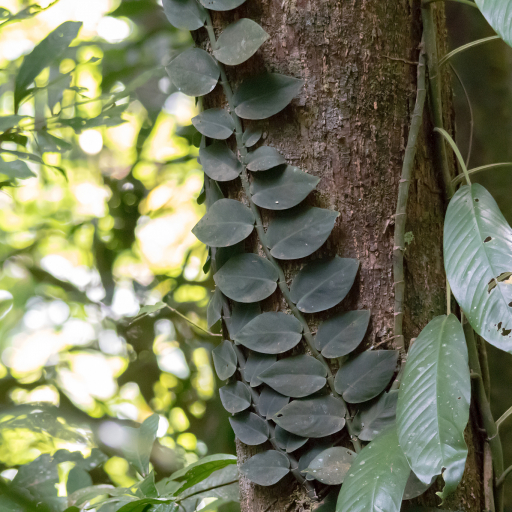
Commonly known as the Shingle Plant, Rhaphidophora hayi is a botanical architect that literally hugs its surroundings. Native to the humid rainforests of Southeast Asia and Northern Australia, this plant is famous for its "shingling" habit, where leaves press themselves perfectly flat against tree trunks to save energy and space. In a home setting, it transforms any vertical support into a living, green mosaic.
🔍 How to Identify
- 🍃 Leaf Arrangement: The most striking feature is the way the oval, deep-green leaves overlap one another like the shingles on a roof.
- 🧗 Climbing Mechanism: It produces tiny aerial roots along the stem that act like biological glue, allowing the plant to "stick" to flat surfaces.
- 📏 Juvenile Form: In most indoor environments, the leaves stay small (about 2–4 inches) and heart-shaped, maintaining a symmetrical, organized appearance.
🏡 In Your Garden
- 🪵 The Support Essential: This plant has a biological "need" to climb. Unlike a Pothos that is happy trailing from a basket, Rhaphidophora hayi will actually decline in health or grow tiny, stunted leaves if it doesn't have a wooden plank or moss pole to grip.
- ☁️ Micro-Climate Needs: Because it uses its climbing roots to drink, it appreciates a very humid environment. It is one of the few plants where "misting" actually serves a functional purpose—keeping the support surface damp helps the climbing roots stay hydrated.
⚠️ Safety & Toxicity
- 🚫 Status: Toxic to pets and humans.
- 🐾 Details: As a member of the Aroid family, it contains insoluble calcium oxalate crystals. If the leaves are chewed or swallowed, they can cause intense oral irritation, drooling, and swelling of the throat in cats, dogs, and small children.
✨ Fun Fact
The Rhaphidophora hayi exhibits a behavior called skototropism in its search for a home. Instead of growing toward the light like most plants, the young vines grow toward the darkest shadows they can find, instinctively knowing that a dark shadow usually means a sturdy tree trunk is nearby to climb!

Detailed Care Instructions
| Color | Green |
| Soil Ph | 6-7 |
| Humidity | Normal |
| Lighting | Part Sun |
| Soil Type | Rich, Well-Draining, Airy |
| Bloom Time | Not Applicable |
| Difficulty | Medium |
| Plant Type | Vine |
| Mature Size | Up To 24 Inches Tall And 15 Inches Wide |
| Native Area | New Guinea, Northeast Queensland Australia |
| Temperature | 18°C - 28°C |
| Sun Exposure | Bright, Indirect Light |
| Hardiness Zones | 9-11 |
Here are some tips to help you grow Rhaphidophora Hayi plant successfully:
- Light: Rhaphidophora Hayi plants thrive in bright, indirect light. Avoid exposing them to direct sunlight as it can scorch their leaves. Place them near a window with filtered light or use artificial grow lights.
- Temperature and Humidity: These plants prefer temperatures between 65-85°F (18-29°C). They also require high humidity levels, so consider using a humidifier or placing a tray of water near the plant to increase humidity.
- Watering: Keep the soil evenly moist but not overly wet. Allow the top inch of soil to dry before watering again. Avoid letting the plant sit in standing water as it can lead to root rot. Ensure good drainage by using a well-draining potting mix.
- Fertilizer: Rhaphidophora Hayi plants benefit from regular fertilization during the growing season (spring and summer). Use a balanced, water-soluble houseplant fertilizer diluted to half strength every 2-4 weeks.
- Pruning: Regularly pinch or prune the plant to encourage bushier growth. Remove any yellowing or damaged leaves to promote healthy development.
- Potting and Repotting: Use a well-draining potting mix that is rich in organic matter. Rhaphidophora Hayi plants prefer to be in slightly tight containers, so repot sparingly. Repotting is usually done every 2-3 years or when the roots start to fill the pot.
- Support: Rhaphidophora Hayi plants naturally vine and climb, so provide a support structure like a moss pole or trellis to help the plant grow vertically. This will also enhance its beauty and prevent the leaves from overcrowding.
- Propagation: You can propagate Rhaphidophora Hayi plants by taking stem cuttings with at least one node. Place the cutting in water or a moist potting mix until roots develop, then transplant it into a new container.
Remember to monitor your plant regularly and adjust care as needed based on its specific conditions. With proper attention to light, water, temperature, and other care requirements, your Rhaphidophora Hayi plant should grow well and look beautiful in your space.

Place in a window with dappled sun or a spot in the middle of a room. Or directly in a window facing west or east.

To water this plant, you should have a watering can with a narrow spout to avoid getting water on the leaves. Before watering, check the soil to see if it's dry 2-3 inches deep. Don't water if the soil is still moist. When watering, pour water slowly at the base of the plant until it drains out of the pot's bottom. Avoid leaving standing water in the pot's saucer to prevent root rot. Water the plant regularly but make sure not to overwater it. Also, make sure to avoid using tap water that is high in salt or chemicals, which can harm the plant.
To fertilize this plant, use a balanced liquid fertilizer during the growing season (spring and summer) every two to three weeks. Dilute the fertilizer to half strength and apply it to the soil around the base of the plant. Avoid fertilizing during the dormant season (fall and winter) as the plant's growth slows down during this time. Additionally, make sure the soil is moist before applying fertilizer to prevent burning the roots.
The most suitable soil for Rhaphidophora Hayi plant is a well-draining organic mix with good water retention capacity. The soil should be moderately acidic with a pH range of 6.0 to 6.5. It should have a balanced nutrient profile to support the growth and development of the plant. A mix of peat moss, loamy soil, and perlite or vermiculite in a ratio of 2:1:1 is recommended. Avoid using heavy clay soils as they do not drain well and can lead to root rot. Additionally, the soil should be free from pests, diseases, and weed seeds to avoid any potential harm to the plant.
Rhaphidophora Hayi plant can be propagated successfully through stem cuttings. Firstly, find a healthy mature vine to take cuttings from. Using clean and sharp pruning shears, cut a section of the vine about 6-8 inches long and make sure there are a few leaves attached to it.
Next, remove the leaves from the bottom 2-3 inches of the stem, leaving only a few at the top. Dip the cut end of the stem in rooting hormone powder and plant it in a container filled with a well-draining soil mix. Keep the soil moist but not waterlogged and place the container in bright, indirect light.
In a few weeks, new roots will start to emerge from the cut end of the stem. This is a sign that your cutting has successfully rooted. After a few months, your new plant should be ready to be transplanted into a bigger pot with fresh soil. With proper care, your propagated Rhaphidophora Hayi plant will soon grow into a healthy and beautiful specimen that will bring joy and beauty to your home or garden.
Common pests of the shingle plant include Mealybugs, spider mites, fungus gnats, thrips. Make a habit of checking your shingle plant frequently for pests so that any infestations can be caught and managed early.








