Plant Overview
Known across the Middle East as Ishgin or Syrian Rhubarb, this is not your average garden-variety rhubarb. High up in the rocky, cold slopes of Turkey, Iran, and Lebanon, this hardy perennial has been harvested for centuries as a wild delicacy. Often called the "Gourmet Rhubarb," it is prized for its intense tartness and its status as a herald of spring in mountain communities.
🔍 How to Identify
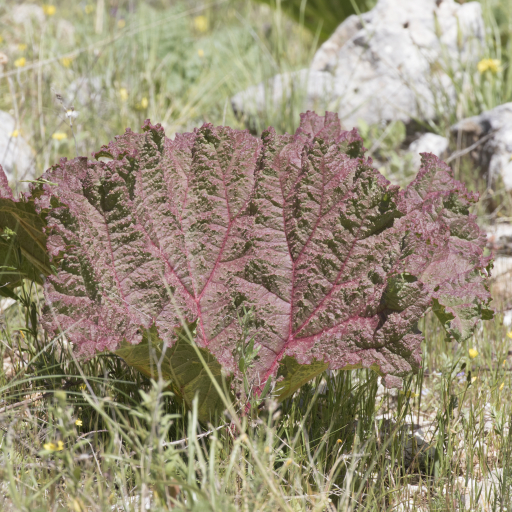
- 🍃 Broad, Rugged Foliage: The leaves are massive, heart-shaped, and deeply veined, often looking slightly "crinkled" or leathery to survive harsh mountain winds.
- 🎋 Thick, Fleshy Stalks: Unlike the slender red stalks of grocery store rhubarb, these are often thicker, pale green with reddish speckles, and possess a distinct, crunchy snap.
- 🌋 Architectural Blooms: In late spring, it sends up a tall, dramatic flowering stalk covered in dense clusters of tiny, reddish-brown flowers that eventually turn into winged seeds.
🏡 In Your Garden
- ⛰️ The Mountain Logic: This plant is a "lithophyte" at heart, meaning it loves rocky, well-draining soil. It will struggle in heavy, soggy clay; it prefers its roots to be cool and its "shoulders" to be in the sun.
- ⚓ The Deep Taproot: Once planted, leave it be! Rheum ribes develops a massive, deep taproot to find water in arid mountains. Because of this, it notoriously hates being transplanted and may take a year or two to recover if moved.
- ❄️ Winter Chill: To produce those succulent stalks, the plant requires a period of winter dormancy. It thrives in regions with cold winters and hot, dry summers, mimicking its native highland habitat.
⚠️ Safety & Toxicity
- ✅ Edible Stalks: The peeled stalks are famously edible and enjoyed raw with a pinch of salt or cooked into savory stews and jams.
- 🚫 Toxic Leaves: Like all members of the Rhubarb family, the green leaf blades contain high levels of oxalic acid. Never consume the leaves, as they can cause kidney irritation or poisoning in humans and pets.
- 🐾 Pet Warning: Keep curious dogs and cats away from the foliage, as ingestion of the leaves can lead to vomiting, lethargy, or more serious calcium imbalances.
✨ Fun Fact
The name "Ribes" actually has a confusing history! In the 8th century, Arabic physicians used the word Ribas to describe this tart rhubarb. When later botanists looked for a name for currants (which have a similar sour taste), they borrowed the name, leading to the modern Ribes genus used for gooseberries and currants today.

Detailed Care Instructions
Rheum Ribes, also known as Ribes rhubarb, is a perennial plant that thrives in cool climates with moist, well-draining soil. Here are some tips on how to grow Rheum Ribes:
- Planting: Start by selecting a suitable location in your garden that receives partial to full sunlight. Make sure the soil is rich in organic matter and has good drainage. Plant Rheum Ribes in early spring or fall, spacing them about 2-3 feet apart.
- Soil and Watering: Rheum Ribes prefers slightly acidic soil with a pH between 5.5 and 6.5. Keep the soil consistently moist, but not waterlogged, especially during the growing season. Mulch around the plants to help retain moisture and suppress weeds.
- Fertilizing: In the spring, apply a balanced fertilizer to help promote healthy growth and flowering. Avoid using high-nitrogen fertilizers, as they can promote leafy growth at the expense of flowers.
- Pruning: Rheum Ribes may benefit from occasional pruning to remove dead or damaged leaves and promote airflow. Cut back any flower stalks after they have finished blooming to encourage new growth.
- Pests and Diseases: Keep an eye out for common pests such as aphids, slugs, and powdery mildew. Use natural or organic pest control methods whenever possible to avoid harming beneficial insects.
- Harvesting: Rheum Ribes typically produces edible stalks that can be harvested in the spring and early summer. Only harvest about a third of the plant's stalks at a time to allow the plant to continue to grow and produce.
- Winter Care: In colder climates, protect Rheum Ribes from freezing temperatures by applying a thick layer of mulch or straw around the base of the plant in the fall.
By following these tips, you can successfully grow Rheum Ribes in your garden and enjoy its unique and flavorful stalks for years to come.
To water Rheum Ribes plant, you should ensure that the soil is consistently moist but not waterlogged. It is important to allow the top inch of soil to dry out before watering again to prevent overwatering. You can check the moisture level by sticking your finger into the soil - if it feels dry, it is time to water. When watering, thoroughly saturate the soil until water starts to drain out of the bottom of the pot. It is best to water in the morning to allow excess moisture to evaporate during the day. Additionally, it is important to avoid wetting the leaves to prevent the risk of disease.
To fertilize Rheum Ribes plants, apply a balanced fertilizer with equal parts nitrogen, phosphorus, and potassium in early spring before new growth starts. Use a slow-release fertilizer and apply it evenly around the base of the plant. Water the plants thoroughly after fertilizing to help the nutrients penetrate the soil. Avoid over-fertilizing, as this can lead to nutrient imbalances and damage to the plant. Repeat the fertilization process in late summer or early fall if desired.
The Rheum Ribes plant prefers well-draining soil that is rich in organic matter. A loamy soil or a mix of equal parts of sandy soil, peat moss, and perlite is ideal for this plant. It is important to ensure that the soil is slightly acidic to neutral in pH. Additionally, adding compost or aged manure to the soil can provide essential nutrients for the plant's growth. Ensure the soil is kept consistently moist, but not waterlogged, to promote healthy root development. Proper soil preparation is crucial for the overall health and growth of the Rheum Ribes plant.
Rheum Ribes plants can be propagated through division or seed. To propagate through division, carefully dig up the plant in early spring or fall and separate the rhizomes or roots into smaller sections, each with at least one bud or shoot. Replant these sections in a well-draining soil mix, ensuring they are watered regularly to promote root development.
To propagate through seed, collect mature seeds from the plant in late summer to early fall. Sow the seeds in a seed starting mix in a warm, bright location. Keep the soil consistently moist and provide adequate air circulation to prevent damping off. After germination, transplant the seedlings into individual pots once they have developed several sets of true leaves.
It is important to note that Rheum Ribes plants may take some time to establish and grow, so be patient with the propagation process. Make sure to provide the young plants with proper care and attention to ensure their successful growth.








