Plant Overview
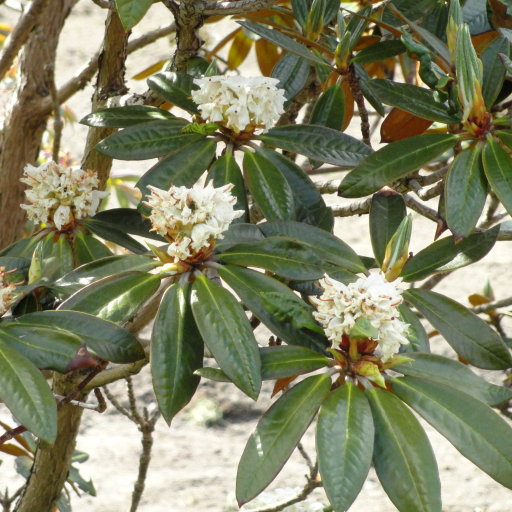
Often referred to as the "Leathery Rhododendron," this high-altitude beauty hails from the misty mountains of Southwestern China and Tibet. It is a true connoisseur's plant, prized not just for its spring blossoms but for its incredible architectural foliage that looks like it was crafted from fine, weathered suede. It brings a touch of the rugged Himalayas to any cool, temperate woodland garden.
🔍 How to Identify
- 🍃 The "Leathery" Leaves: True to its name (alutaceum means "leathery"), the leaves are thick, stiff, and narrow. They are dark green on top with a distinctively rugged, matte texture.
- 🧶 The Woolly Underside: If you flip a leaf over, you’ll find a dense, felt-like coating known as "indumentum." This fuzzy layer usually transitions from a creamy white to a rich, cinnamon-brown as the leaf matures.
- 🌸 The Spotted Blooms: In mid-spring, it produces bell-shaped flower clusters. The petals are typically white or a soft, blushing rose, often decorated with a dramatic "flare" of deep crimson spots on the interior.
🏡 In Your Garden
- ⛰️ Alpine Aspirations: Because this species originates from high elevations, it demands "cool feet." It thrives in acidic, well-draining soil and appreciates a thick layer of organic mulch to keep its roots chilled and moist.
- 🌬️ Sheltered Spaces: While it is cold-hardy, its large, stiff leaves can be damaged by harsh, drying winds. It performs best in a spot with dappled sunlight where it is protected from the afternoon's most intense rays.
⚠️ Safety & Toxicity
- 🚫 Toxic Status: High. Like almost all members of the Rhododendron family, this plant is toxic if any part of it is consumed.
- 🐾 Pet & Child Safety: It contains grayanotoxins, which can cause nausea, salivation, and even heart palpitations in pets and humans. It is best placed in a location where curious toddlers or nibbling pets cannot reach the foliage.
✨ Fun Fact
The thick "fuzz" (indumentum) on the underside of the leaves is an evolutionary survival kit! It acts like a thermal blanket, trapping moisture and protecting the plant from the biting winds and intense UV light of the high-altitude mountain passes it calls home.

Detailed Care Instructions








