Plant Overview
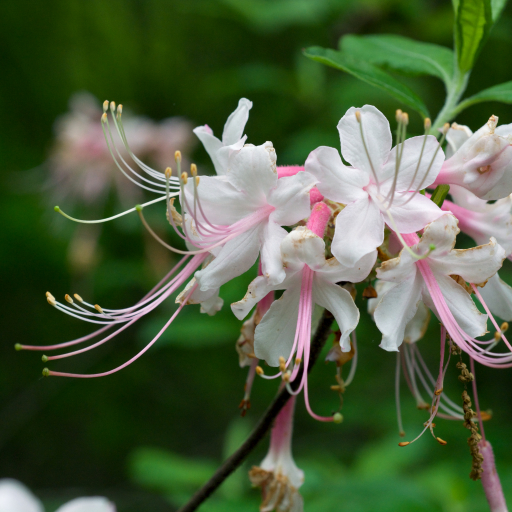
Often called the "Wild Honeysuckle" for its intoxicating sweet scent, the Piedmont Azalea is a Southern classic that signals the arrival of spring. Unlike the common evergreen azaleas found in many yards, this native beauty is deciduous, dropping its leaves to let its elegant, spindly pink blossoms take center stage. It is a staple of woodland gardens, beloved by both hummingbirds and those who appreciate a touch of wild, romantic fragrance.
🔍 How to Identify
- 🌸 The Blooms: Clusters of delicate, trumpet-shaped flowers that range from pale blush to a deep rose-pink. They usually emerge just before or alongside the new spring leaves.
- 🦋 The Stamens: Look for exceptionally long, graceful "whiskers" (filaments) that curve far outward from the flower petals, making them look like delicate insects in flight.
- 🍃 The Foliage: The leaves are soft and "fuzzy" or downy on the underside. In fact, the name canescens actually refers to the grayish, short hairs found on the plant's stems and leaves.
🏡 In Your Garden
- 🌳 Woodland Roots: This azalea is a "forest edge" specialist. It thrives in the dappled light of high-canopy trees. In your garden, it will perform best if it gets morning sun but is shielded from the harsh, drying afternoon heat.
- 💧 Drainage & Acidity: It is a "heavy breather" that requires loose, acidic soil. Because it has a shallow root system, it hates "wet feet" but will wilt quickly if the soil dries out completely. Mulching with pine needles is the perfect way to keep the roots cool and the pH low.
- ✂️ Low Maintenance: Unlike manicured hedge azaleas, the Piedmont Azalea looks best in its natural, multi-stemmed upright form. It rarely needs pruning unless you are removing dead wood.
⚠️ Safety & Toxicity
- 🚫 Toxic if Ingested: Every part of the Piedmont Azalea—from the nectar in the flowers to the leaves and stems—contains grayanotoxins.
- 🐾 Pet & Child Alert: This plant is poisonous to humans, cats, dogs, and livestock. Ingestion can lead to cardiovascular issues, vomiting, and in severe cases, respiratory failure. It is best placed in a part of the garden where pets and toddlers won't be tempted to "sample" the greenery.
✨ Fun Fact
Be careful with the bees! In ancient history, honey produced by bees that fed exclusively on Rhododendrons was known as "Mad Honey." It contains enough toxins to cause dizziness and hallucinations—a phenomenon documented by Roman soldiers who were reportedly poisoned by it during wartime!

Detailed Care Instructions
To grow Rhododendron canescens, commonly known as the Piedmont azalea or mountain azalea, you should follow these steps:
- Location: Choose a suitable location for planting. Rhododendron canescens prefers a partially shaded area with dappled sunlight or morning sun and afternoon shade. It also needs protection from strong winds.
- Soil: Rhododendrons prefer acidic, well-draining soil. If your soil is not naturally acidic, you can amend it with peat moss, composted pine bark, or sulfur to lower the pH. Aim for a soil pH of around 5.5 to 6.0.
- Planting: Dig a hole slightly wider and deeper than the root ball of the plant. Place the plant in the hole, ensuring that the top of the root ball is level with or slightly above the surrounding soil. Backfill the hole with a mixture of the native soil and organic matter, such as peat moss or compost. Water thoroughly after planting.
- Mulching: Apply a layer of organic mulch, such as pine straw or wood chips, around the base of the plant. Mulching helps retain moisture, suppress weeds, and maintain a cool root environment. Keep the mulch a few inches away from the stem to prevent rotting.
- Watering: Keep the soil consistently moist, but not waterlogged. Water deeply and thoroughly, especially during dry spells or hot weather. Avoid overhead watering as it can promote foliar diseases. Rhododendrons prefer moist conditions, so regular watering is essential.
- Fertilization: Rhododendrons are light feeders. You can apply a slow-release, balanced fertilizer specifically formulated for acid-loving plants in early spring. Follow the instructions on the fertilizer package for proper application rates.
- Pruning: Minimal pruning is necessary for Rhododendron canescens. Dead or damaged branches can be pruned back to healthy growth. If needed, light shaping or removal of spent flowers can be done after flowering to maintain a neat appearance.
- Protection: Protect the plant from frost or freeze damage by covering it with a breathable fabric or burlap during cold spells. Avoid using plastic materials, as they can cause moisture buildup and damage the plant.
- Pests and diseases: Rhododendron canescens can be susceptible to pests like lacebugs, aphids, and spider mites, as well as diseases like powdery mildew and root rot. Regularly inspect the plant for signs of infestation or disease and take appropriate measures, such as using insecticidal soap or horticultural oil, and providing proper cultural care to prevent issues.
By following these guidelines, you can successfully grow Rhododendron canescens and enjoy its beautiful blooms.

Place in a window with dappled sun or a spot in the middle of a room. Or directly in a window facing west or east.

Rhododendron Canescens is a deciduous shrub that belongs to the Ericaceae family and is native to North America. Watering this plant can be a bit tricky, but here's how you can do it:
1. Choose the right soil: The soil should be well-draining and rich in organic matter. The pH should be slightly acidic, between 4.5 and 6.0.
2. Watering frequency: Rhododendron Canescens needs moist soil, so it's important to water it regularly. However, overwatering can be detrimental to the plant's health, so you need to strike a balance. Water the plant once a week during the growing season, and reduce the frequency during the winter months.
3. Watering technique: To avoid overwatering, water the plant slowly and deeply. Use a hose or a watering can and water around the base of the plant, making sure the water seeps deep into the soil.
4. Mulching: Mulching can help retain moisture in the soil, reducing the need for frequent watering. Use a layer of mulch around the base of the plant, making sure you leave some space around the stem to prevent fungal growth.
5. Monitoring: Keep an eye on the plant's leaves and the soil moisture level to determine if it needs more or less water. The leaves should be green and healthy, and the soil should be moist but not waterlogged. If the leaves turn yellow or brown, it's a sign of overwatering or underwatering.
- Begin fertilizing in early spring when new growth begins to emerge.
- Use a balanced fertilizer with equal parts nitrogen, phosphorus, and potassium.
- Apply the fertilizer according to package instructions, taking care not to over-fertilize.
- Spread the fertilizer evenly around the base of the plant, keeping it a few inches away from the trunk and branches.
- Water the plant thoroughly after applying the fertilizer to help it absorb the nutrients.
- Continue fertilizing once a month during the growing season, tapering off in late summer to allow the plant to prepare for winter dormancy.
- Avoid fertilizing in late fall or winter, as this can stimulate new growth that will be vulnerable to frost damage.
- Monitor the plant's growth and adjust fertilization as needed based on its overall health and vigor.
Rhododendron Canescens belongs to a plant family that prefers acidic soil with a pH range of 4.5 to 5.5. It is crucial to use a well-draining soil mix that is rich in organic matter and has excellent water retention capabilities. A mixture of sphagnum peat moss, perlite, and coarse sand in equal parts is a great option. The peat moss helps to lower the soil pH and retain moisture, while perlite and sand improve soil drainage. It is recommended to amend the soil with organic matter like compost or leaf mold, as they help to improve soil fertility. It is essential to avoid using any other soil additives like lime or other alkaline substances as they can raise the soil pH, which is not suitable for Rhododendron Canescens plant growth.
There are several ways to propagate this plant. One method is by taking stem cuttings in the early summer. To do this, choose a healthy stem and cut it just below a leaf node. Make sure the cutting is about 4-6 inches long and has at least a couple of leaves. Remove the lower leaves and dip the cut end in rooting hormone. Plant the cutting in moist potting soil and cover it with a plastic bag to create a humid environment. Keep the soil moist and place the cutting in a bright, indirect light location. After a few weeks, the cutting should root and begin to grow.
Another method is by layering. Choose a low branch of the plant, bend it down to the ground and cover it with soil. Secure the branch to the soil with a U-shaped wire. The branch will develop roots where it is in contact with the soil. After a few months, the new plant can be separated from the parent plant.
A third method is by seed propagation. Collect seed pods when they are ripe, and remove the seeds from the pod. Soak the seeds in water for a day or two, then plant them in a moist peat moss and perlite mixture. Keep the soil moist and place the container in a bright, indirect light location. After a few weeks, the seedlings will emerge.








